Karim Ali had done the planning. He had the strategy. Then he launched the product, and it did not work. In his account of the experience, he listened to customers and his team, identified gaps, and revised the approach. It still did not work. For anyone hoping that customer feedback comes with a little certificate guaranteeing success, this is an inconvenient development.
He listened again. Another revision followed. Eventually, he says, the product took off. He leaves the product unnamed, but the lesson is unusually easy to picture: a founder returning to the same problem after the reassuring part of the process has already failed. Even the sensible response needed another attempt.
Ali calls this “learning by doing.” Today he is the founder and CEO of KenKo Ventures, working with entrepreneurs and the institutions around them. His career has moved through customer experience, online education, mentoring and innovation-hub operations. That small launch story gives the larger journey a useful starting point. He has some experience of the gap between knowing what ought to work and making it work.
“Listen ... Listen and listen to customers and your team.”
Karim Ali, on revising a startup strategy
Seven years on the learner’s side
Ali’s working life began in Cairo and took him to Dubai for ten years. His account names employers across banking, aviation, travel and services, including Emirates NBD, Emirates, Travelstart, Aspire Lifestyles and Meraas. The variety matters because customers encounter a company through many ordinary moments. A booking, a request or an unanswered question can make an elaborate corporate promise feel rather small.
At almentor, the Arabic learning platform, he was a founding-team member and shareholder. He spent seven years there and led partnerships and customer experience. His work included helping establish operating functions and relationships as the platform grew. Education became something he helped organize and deliver, with learners at the receiving end of all those decisions.
That background offers a way to read his subsequent career. A learning platform needs people to engage with what it offers. A startup program has a related obligation: somebody must find the teaching useful enough to act on it. Ali’s move into entrepreneurship support carried those questions into a different setting, where the learner might also be the person making payroll, testing a proposition or asking for investment.
- Cairo → DubaiCorporate and service roles
- almentorSeven years building functions and partnerships
- 2023Founds KenKo Ventures
- 2024Creativa Tanta work takes shape
A phone call, then a team
KenKo began in 2023. Ali has explained its origins through his interest in education and entrepreneurship, and through difficulties he had encountered during university and in business. He chose to focus on entrepreneurship education, particularly outside Greater Cairo. Transferring knowledge to other cities was part of the purpose from the beginning.
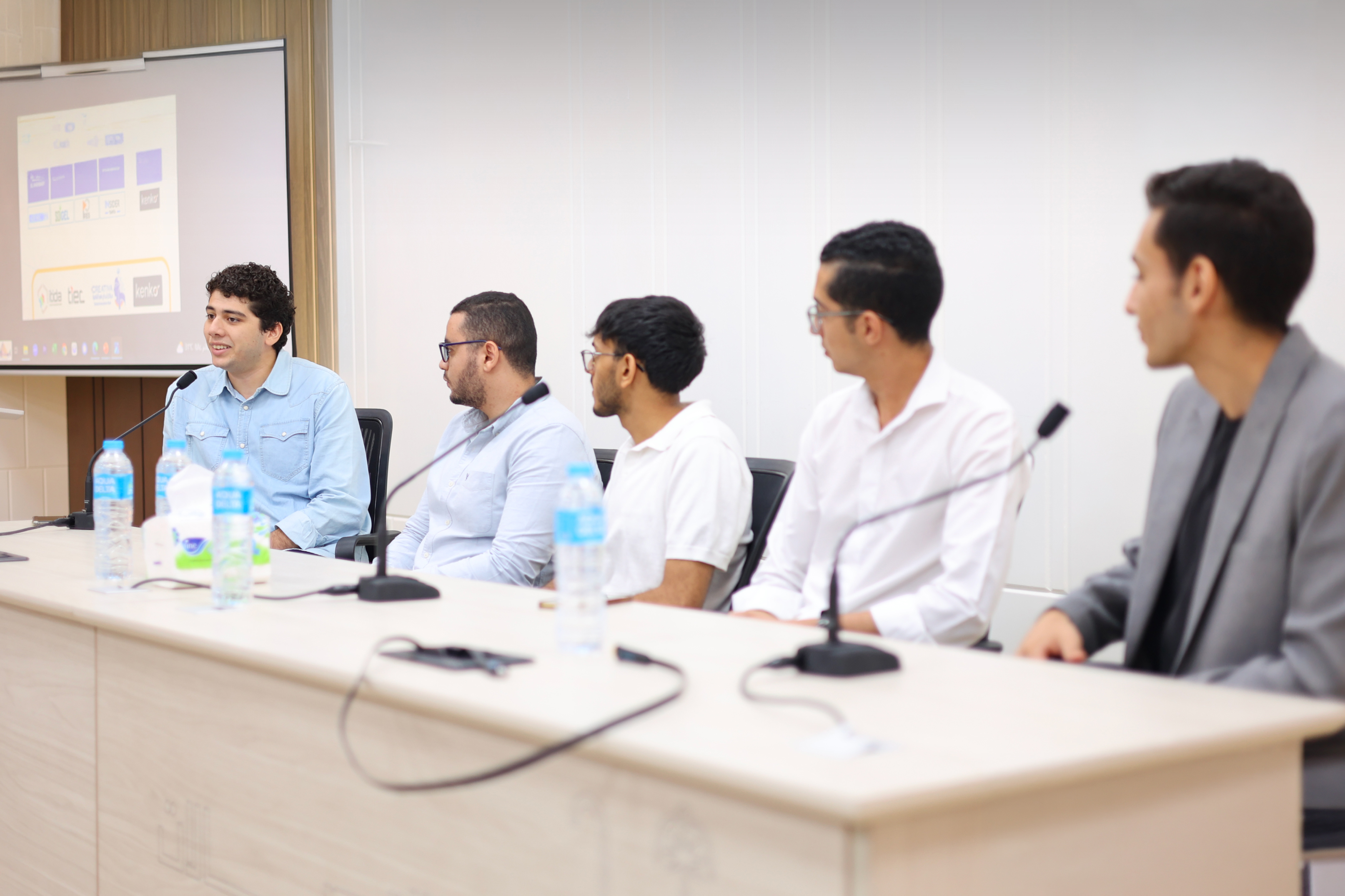
Tanta made that intention concrete. KenKo took on work at the city’s Creativa Innovation Hub, within Egypt’s Digital Egypt Creativity initiative. The institutional relationships include the Ministry of Communications and Information Technology, ITIDA and TIEC. Behind the collection of initials is a practical undertaking: programs need people to design them, run them and help participants use them.
A former team member, Amr Khaled, remembers a precise beginning. On July 29, 2024, Ali called to say the tender had been won and he was assembling the team. Khaled describes joining early, working as a project coordinator and later taking on wider responsibility for the project.
His account includes budgets, performance indicators and reporting. These are rarely the stars of an entrepreneurship photograph. They are, however, the things that allow the next session to happen. Khaled also credits Ali with giving him room to learn and take responsibility. The recollection supplies a human measure of the project: alongside the founders being taught, someone inside the team was learning how to run the machinery.
The room has to keep working
Operating a hub gives entrepreneurship support a recurring deadline. The room needs to be ready again. A mentor has to arrive. Someone has to know what the participants are working toward. KenKo’s public recruitment for a Tanta operations manager makes the operating commitment visible, placing responsibility for the hub alongside its ambition to support innovation.
Ali also teaches within that setting. TIEC has documented a session he delivered on experience management for startups, covering relationships with customers, teams and stakeholders. It is a recognizable continuation of his earlier work. The customer remains in the picture, but so do the people inside the business and the people whose cooperation it needs.
Feedback from a participating venture adds another perspective. In a public reflection, SellioAI thanked Ali for practical explanations and advice during its Creativa experience. The team described leaving with ideas to apply while continuing to develop its product. That is a modest, useful kind of outcome: people who are still building, with a clearer view of what to work on.
Ali has also been willing to ask which forms of support deserve a founder’s time. His announced Techne Summit 2025 panel put venture studios, accelerators and ecosystem builders under the same question: which model works? The lineup included Bahi Hassan and Hassan Mansi, with Abeer Khattab moderating. For someone operating programs himself, the question has practical consequences. A founder’s calendar cannot accommodate every invitation.
A microphone below the celebration
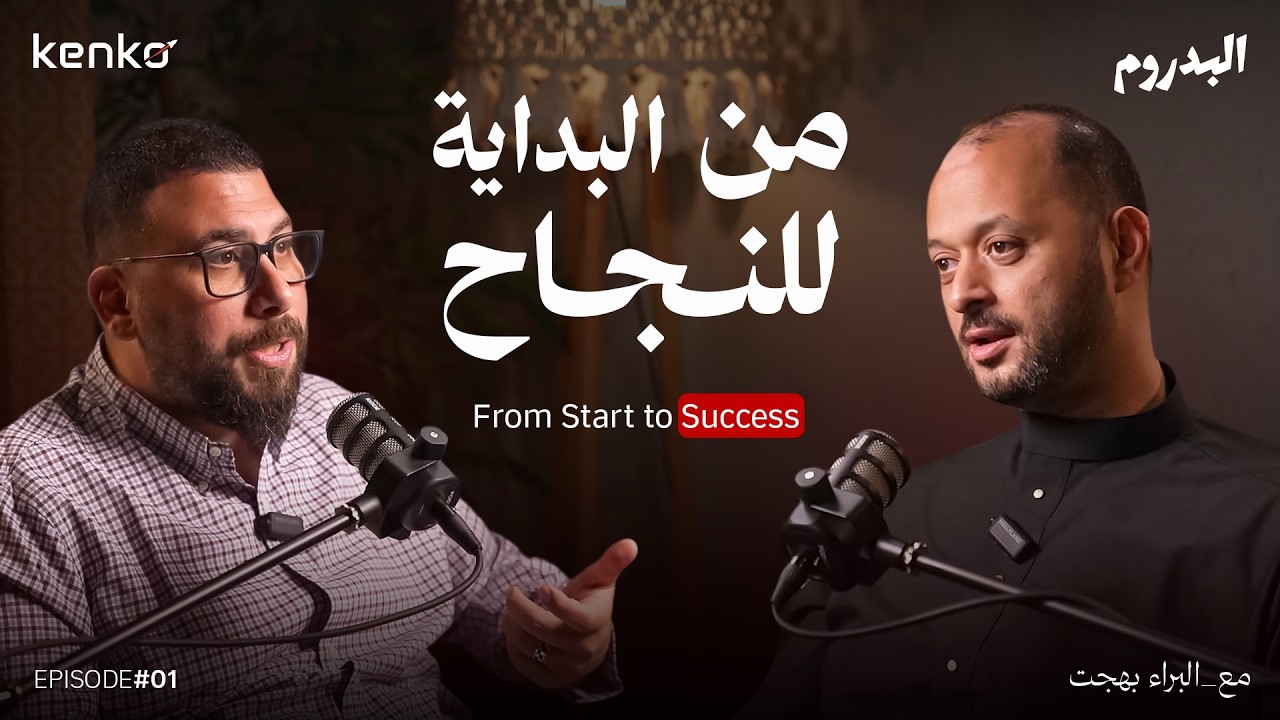
Ali’s Arabic podcast, ElBadrom, gives this interest in company building another format. The name invokes a basement, an apt place to look for the work beneath a public success. A basement has fewer opportunities for a ribbon-cutting ceremony. It does offer space for a longer conversation.
The opening episode features Elbaraa Bahgat, CEO of Smart Technology Solutions. Another conversation brings in Seif Bahgat, an investment manager and director of strategic partnerships at Sanad Partners. The subjects extend beyond the founder alone to the people, capital and relationships around a growing business.
The format fits Ali’s position between entrepreneurs and institutions. A guest can describe the decisions behind an outcome, while the listener can examine the support that made those decisions possible. The show’s stated interests include disrupted plans, difficult periods and recovery. Success supplies the invitation; the work on the way there supplies the conversation.
He has taken the guest’s chair elsewhere, too. A November 19, 2025 episode of the Unicorn podcast featured him discussing investment in education technology with Mohamed Al Noaman and Mohamed Othman. Its published discussion outline includes learner adoption, free content, relationships between founders and investors, and the effect of artificial intelligence on education.
Those topics return him to a problem familiar from the almentor years: offering a learning product does not complete the job. People have to use it. The distance between an attractive proposition and sustained participation is a business question, and an educational one. Ali’s career has put him on both sides of that table.
Riyadh, with Tanta still in the picture
The geography has widened. Ali’s public profile now lists Riyadh, and he has announced moving KenKo’s headquarters to Saudi Arabia. In that announcement, he described plans for innovation and entrepreneurship platforms and a KenKo Accelerator KSA Fund. The language was forward-looking: an agenda for work to build over time.
Tanta remains a place where the work can be seen. In September 2026, KenKo advertised an ESG-readiness session there with Ali and MEA Sustainability Studio CEO Ali Abdo. The partnership connects sustainability requirements with practical questions facing startups and smaller businesses, including investor questionnaires, baselines and access to commercial opportunities.
That collaboration is a useful example of how Ali’s network enters a program. A specialist partner brings a defined area of knowledge. A local hub brings a setting and participants. The business owner arrives with a task that needs doing. The value lies in whether the combination helps that person make progress.
Learning remains part of the job
Ali has kept formal study in the picture, holding an Executive MBA from Quantic School of Business and Technology and pursuing a DBA at the Swiss School of Management. His professional life now includes advising, organizing, teaching and interviewing. In each setting, there is someone else whose response can change the next step.
That is what makes the unnamed product launch a fitting place to return. The plan failed, the revised plan failed, and he went back to the customers and the team. It is a less comfortable story than the version where experience produces the right answer immediately. It is also more useful to a founder sitting with a disappointing first attempt.
At KenKo, the work extends to making another attempt possible for other people: a team assembled, a session delivered, a mentor available, a conversation given enough time. There is plenty to organize before anyone has a success to announce. Ali has chosen to make a business out of some of that work.