A graduation project can earn a good mark and still go nowhere. The demonstration works. The presentation ends. Then come questions the classroom cannot settle: who needs this, what will they pay, and where can the team keep working? Egypt’s CREATIVA Innovation Hubs occupy that awkward stretch between an interesting idea and something with a customer.
The network’s most consequential feature is its address book. University cities across Egypt appear alongside Cairo and Giza. For a student in Aswan or an aspiring founder in Qena, proximity changes the practical calculation: advice, workspace and technical support become things to seek locally. A national entrepreneurship policy begins to look like a place someone can actually enter.
CREATIVA calls its offer Space to Grow
. That modest slogan carries a large assignment. The hubs serve people looking for employment, people trying to sell freelance services, and people building companies. Those ambitions overlap, but they require different kinds of help. The network’s usefulness depends on recognizing the difference. Explore the hub network.
Move the support closer to the student
CREATIVA’s origin is institutional. Egypt’s Ministry of Communications and Information Technology works with the Ministry of Higher Education and Scientific Research, while ITI, ITIDA’s Technology Innovation and Entrepreneurship Center, and NTI contribute services. The arrangement brings technical instruction and business support under a shared initiative. It also gives universities a role beyond supplying the next cohort of graduates.
In September 2020, EgyptInnovate reported six CREATIVA technology innovation complexes at regional universities. The locations included Minya, Menoufia, Mansoura, Sohag, Qena and Aswan. That early footprint explains the project more clearly than a list of fashionable technology sectors: the ambition was to distribute access. The launch announcement described places for mentoring, teamwork, workshops and product launches.
By 2025, the network had reached 23 hubs in 19 governorates, according to the OECD’s 2026 innovation review. These are physical connections between education and enterprise, with coworking, mentoring and facilities for testing or prototyping. The footprint is substantial; its value comes from what users do there. A building count measures access, while customer sales and sustained employment measure something further downstream. The OECD review places the hubs within Egypt’s wider university-industry effort.
Geographic reach reported in the OECD’s 2026 innovation review.
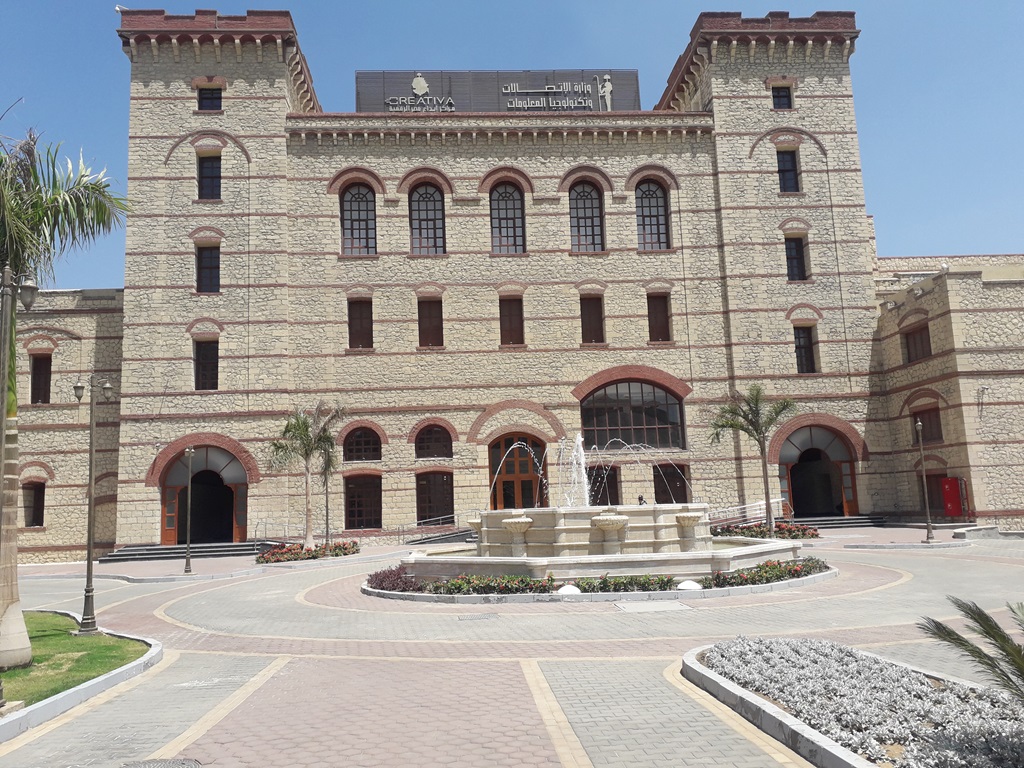
Three ambitions walk through the door
A jobseeker needs a route from skills to an employer. CREATIVA’s career consultation offer addresses planning and understanding the employment market. The practical question is specific: which capabilities should this person develop next? A course becomes more useful when it belongs to a plausible career plan. Career consultation is part of the published service offer.
A freelancer faces another task: turning an ability into a service a client can understand and buy. CREATIVA’s stated remit explicitly connects technical skills with freelance and remote work demand. Its emphasis on local needs also matters. A hub can serve people who want independent work without requiring everyone to pursue the investment-backed startup route. CREATIVA’s operating description sets out those distinct audiences.
A founder needs to investigate the market, develop a product and assemble a viable business. Here the hub connects with Egypt’s broader entrepreneurship machinery. ITIDA describes university-based CREATIVA locations with external access for startups, and TIEC support that extends from ideation to incubation and market connections. The intended journey crosses the university boundary. ITIDA’s ecosystem overview explains that division of work.
Identify a role → develop relevant skills
Define a service → prepare for clients
Test a problem → build a viable venture
Read the small print on EGP 360,000
The CREATIVA Incubation Program gives the startup offer a concrete shape. Its published benefits include up to EGP 360,000 in financial support and services, with zero equity advertised on the program page. Mentoring, business and technical consulting, and office space are part of the package. The headline amount should therefore be read as a support ceiling, rather than assumed to be an unrestricted cash transfer.
Selection brings obligations. The program lists a functioning prototype or minimum viable product, a business plan, technology content, innovation, scalability and a real problem to solve. Applicants must reside in Egypt; at least two founders are preferred. A person with a promising thought may need preparation before this particular application makes sense. Read the incubation criteria.
In April 2025, TIEC and CREATIVA announced 38 startups across the first two incubation batches. The list included Game3at+, Bekya Pay, HNDL Fleet Management and Insala Robotics, among others. The announcement covered fields including education technology, renewable energy, ecommerce and smart cities. That gives the program a visible cohort, although admission itself is an early milestone in a company’s life. Meet the announced startups.
For earlier ventures, CREATIVA Tech Launchpad offers preparation. MCIT promoted the program in 2025 for early-stage and pre-seed technology startups. Business planning makes particular sense at this point: a team can identify an expensive assumption before it becomes an expensive product. MCIT’s Launchpad announcement describes that audience.
The taxpayer builds; partners bring the programs
Putting facilities across a country requires public money. In its account of the ibTIECar Marathon winners, ITIDA reported EGP 1.5 billion for the first two hub development phases: seven hubs initially, followed by nine more. That is a historical project figure for those phases. It explains the scale of the infrastructure commitment, without pretending to price every subsequent building or workshop.
The same account shows what participants wanted from the investment. Winners described help with business planning, market study, product development and correcting misconceptions. They also described using electronics labs and prize money to develop their projects. That is the relevant change of mind in the public record: participants testing and revising ideas. Their experience points to a useful role for the hubs: making a mistaken assumption cheaper to discover. The marathon account connects facilities to those activities.
Program delivery draws on outside organizations too. Plug and Play’s 2022 Cairo announcement placed a three-month program at the CREATIVA hub in Sultan Hussein Kamel Palace, with free office space and opportunities to meet corporations, investors and mentors. An ornate address makes a memorable setting for a pitch; access to a potential business partner gives the meeting its purpose. The Cairo platform announcement sets out the arrangement.
CREATIVA Giza also hosted the 500 Global Scale Up Program Showcase in November 2023. The network can thus provide a venue and public infrastructure while specialist partners bring programs and connections. This makes the competitive picture more interesting: an accelerator can be an alternative for a founder and a delivery partner inside the same wider system. The Giza showcase is one documented example.
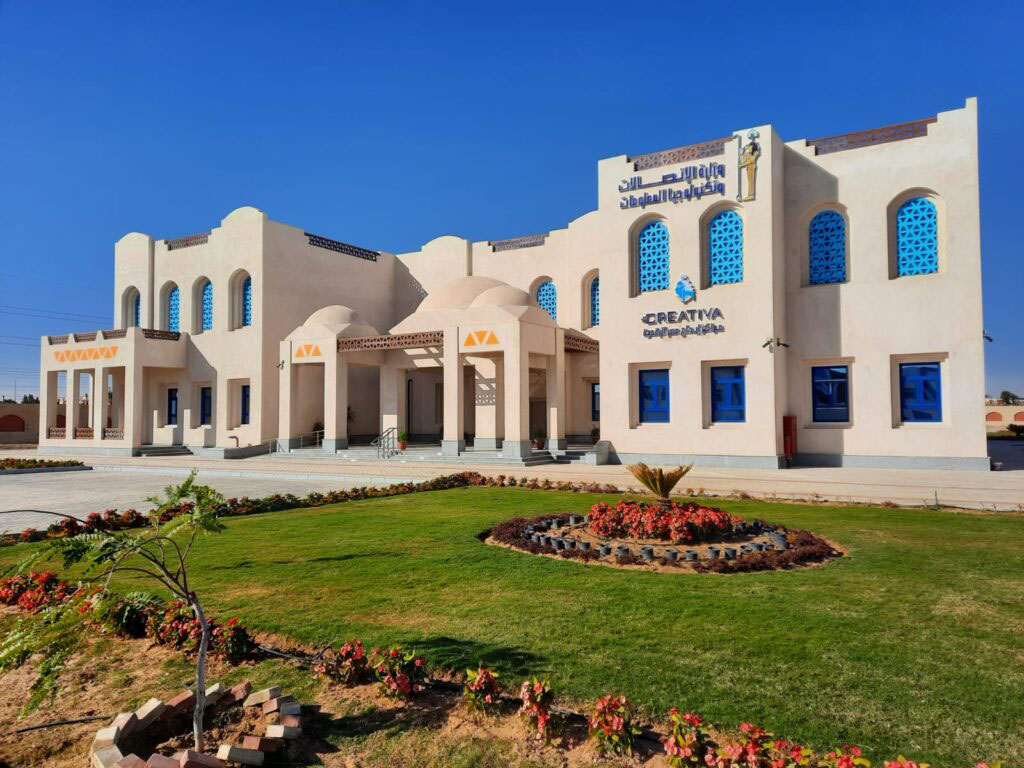
Banha’s numbers tell a more useful story
ITIDA’s second-quarter 2025 newsletter reported that the CREATIVA hub at Banha University had served more than 3,500 trainees, supported 65 ideas, produced 30 prototypes and incubated four startups over one year. Those figures deserve separate columns. Training, prototyping and incubation are different activities; dividing one count by another would imply a tracked conversion funnel the announcement does not establish.
Still, the progression is instructive. It invites better questions about what a hub is doing. How much activity reaches a tangible prototype? Which teams need another round of customer conversations? Which participants are seeking jobs instead? A public hub can have several legitimate outcomes, provided they are measured clearly. ITIDA’s Banha update offers a useful starting point.
Banha · one-year activity reported in Q2 2025. Separate activity counts, not conversion rates.
“Space to Grow”
CREATIVA’s stated promise
Borrow the arrangement, then test the result
The transferable idea is straightforward: place complementary services close to people already learning and building. Use the university connection, bring in outside commercial expertise, and help participants choose a next step. Another city could copy that arrangement without copying the palace. The hard work would remain in scheduling useful programs and finding mentors who understand the participants’ actual markets.
The curriculum also has to keep moving. CREATIVA advertised an August 2026 AI hackathon with Orange Digital Center and INSTANT, combining three days at hub branches with two online days. Its promotion emphasized building projects and presenting them to judges. That is a contemporary example of the network combining distributed locations with a shared practical exercise. CREATIVA’s updates carry the program details.
The model has practical limits. A team seeking incubation without a working prototype may be applying too soon. An established company seeking a large expansion investment needs a different financing conversation. And a region can have an attractive facility while its founders still struggle to reach buyers. This is the central operating challenge implied by the design: physical access needs commercial connections to become useful business support.
For someone considering a hub, the sensible first move is to name the immediate problem: choosing a career, preparing a freelance offer, validating a prototype or seeking incubation. Then check the local calendar and the relevant application criteria. A desk and a mentor can reduce the cost of experimentation. The decisive encounter still happens when the work meets a user who has a reason to want it.