Karen Wood has a degree in creative writing, an MFA in writing, and an English teaching credential. Naturally, she became the chief marketing officer of a company that would like artificial intelligence to run marketing around the clock. Careers have a sense of humor. Hers also has a plot: learn how words work, learn how data works, then spend years introducing the two without letting either dominate the conversation.
Wood is based in Portland, Oregon, and leads marketing at Treasure AI, the company known as Treasure Data until April 2026. Her résumé runs through a tidy history of modern marketing technology: Webtrends, Ensighten, AgilOne, Acquia, Windfall, Infopro Learning, and then Treasure Data. Web analytics became tag management. Tag management fed the dream of a single customer view. That dream became the customer data platform. Now the platform has acquired agents, a conversational interface, and the confidence to work while its owners sleep.
Through it all, Wood's job has been translation. She stands between engineers who can explain every moving part, marketers who need an outcome before lunch, and executives who quite reasonably want to know what any of it does for revenue, cost, risk, and loyalty. Enterprise software tends to generate nouns. Product marketing has to make those nouns behave like verbs.
The writer enters the machine room
Wood completed a BA in creative writing at Humboldt State University in 1992. She later returned for an English teaching credential, then earned an MFA in writing from Vermont College between 2004 and 2006. These are not decorative facts tucked at the bottom of an executive bio. They explain the work. A writing workshop trains a person to notice where an argument loses the reader, where a sentence hides behind abstraction, and where the impressive-sounding paragraph has failed to say anything at all.
Technology marketing offers abundant practice. Wood held roles at Tripwire and CBS Interactive, then became a senior product marketing manager at Webtrends. In Portland, Webtrends was part employer and part historical marker: the company had been measuring online behavior since the early web, teaching businesses to treat a click as a clue. The data was useful, but never self-explanatory. Someone still had to turn a report into a decision.
By 2015, as director of product marketing at Ensighten, Wood was explaining a new version of the old problem. Mobile apps and websites produced different signals, with different conventions and gaps. She described marketers struggling because app tagging did not arrive with metrics as clearly defined as web tagging. The proposed answer was a unified view. Bring app and web analytics together, and perhaps the customer would stop appearing as a collection of unrelated shadows.
The language dates the moment. The problem does not. Every generation of software promises to gather the shadows. Each succeeds enough to reveal a harder question: once the company can see more, can it understand more? And once it understands, can it act without becoming strange, intrusive, or merely noisy?
Five years chasing one customer
Wood spent the next five years across AgilOne and Acquia, working in senior marketing and product marketing roles around customer data platforms. AgilOne made the single-customer-view promise explicit. It aimed to pull fragmented records together, apply machine learning, and help marketers create useful audiences. When Acquia acquired AgilOne, Wood's product-marketing remit continued inside a larger digital-experience company.
The webinars from that period read like dispatches from a long-running domestic dispute between marketers and their data. There was more information than ever, yet brands still struggled with duplicates, silos and incompatible systems. Stores closed and reopened during the pandemic. Business models changed quickly. The data stack, less quickly. Wood's role was to explain where a CDP fit, how it differed from the neighboring acronyms, and why a cleaner understanding of customers could support retention rather than just another campaign.
At the start of 2022, Wood announced that she was leaving the combined AgilOne and Acquia chapter to join Windfall as vice president of marketing. Her phrase was “double-down” on data and analytics. Windfall worked with people intelligence and propensity modeling, another angle on the same enduring puzzle: infer something useful about a person without mistaking the model for the person.
She also co-wrote an article about acquisition marketing after third-party cookies had begun their retreat. Privacy demands, regulation, and platform changes were shrinking the old targeting toolkit. The center of gravity moved toward information a company already had permission to hold. In other words, the industry was rediscovering loyalty after years of behaving as if acquisition were the only interesting verb.
The product marketer takes the CMO chair
After a product marketing leadership role at Infopro Learning, Wood joined Treasure Data in 2023. She rose through product marketing leadership, including vice president of product marketing, and became chief marketing officer in 2025. The promotion makes sense in the grammar of her career. Product marketing had placed her close to the machinery, the buyer and the sales motion at once. The CMO title widened the room, but the essential task remained: connect what the product can do with a reason for anyone to care.
Colleagues describe a leader who links marketing with the rest of the business, stays close to product detail and supports her team. Those descriptions matter because Wood reached the C-suite during a particularly awkward season for marketing leaders. They were expected to adopt AI quickly, use it responsibly, improve productivity, protect the brand voice, and forecast the results of a technology whose own builders revised the vocabulary every quarter.
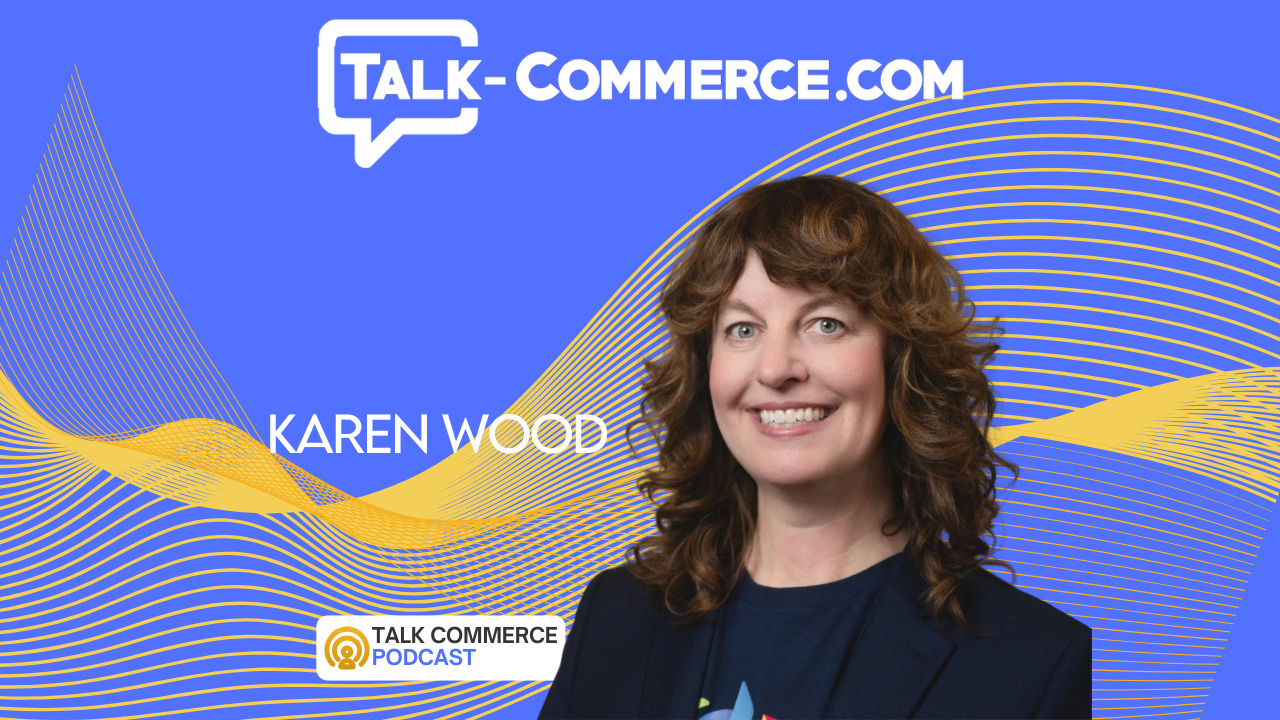
Wood's public answer has been refreshingly unarmored. During a 2026 Talk Commerce interview at Shoptalk in Las Vegas, she offered a “hot take” that was really a pin aimed at the balloon of executive certainty.
The second half is the better half. She does not ask listeners to reject expertise. She asks them to test it with conversation. Ask what worked. Ask what failed. Ask how the system was evaluated and which human still owns the decision. Certainty is easy to perform at keynote distance. It becomes more expensive after the third follow-up question.
Months become minutes, judgment stays on the clock
Wood is not an AI scold. In the same conversation, she described concrete uses. A retailer may already possess years of purchases, web behavior and store interactions, yet fail to identify the people most likely to become advocates. Propensity models can help find them. A marketer may once have filed a technical request to define an audience, waited for data work, checked the result, and then activated a campaign. A natural-language interface can compress that chain dramatically.
Her shorthand is “months to minutes.” The line is persuasive because anybody who has waited on an analytics queue can feel the old clock in their bones. It is also incomplete in an instructive way. Minutes describe execution speed, not decision quality. A bad audience found quickly is still a bad audience. An efficient message can still be an unwelcome one. The human work moves upward, toward the question, the guardrail, the review and the decision to stop.
That distinction became central as Treasure Data introduced an AI marketing cloud in late 2025 and moved toward agentic systems. Wood joined CEO Kaz Ohta in public conversations about replacing fragmented workflows with a trusted data foundation, then appeared at NRF 2026 to moderate a session with leaders from Hilton and Universal Music Group. The examples were large, but her Shoptalk remarks also made room for mid-market companies. Smaller teams, she argued, may benefit disproportionately when one system can handle work they lack the staff to divide among specialists.
A new name for an old assignment
In April 2026, Treasure Data became Treasure AI. The company described a move from software that people operate toward agents that can continuously collect, unify, understand, decide and engage, with people setting direction and guardrails. For a CMO, the rebrand was more than a change of sign. It repositioned a data infrastructure company around outcomes, introduced a new category phrase, and asked the market to understand continuity and change at the same time.
Wood's career is unusually suited to that sentence. She has already watched the industry rename its ambitions several times. The web analytics report, the unified engagement view, the CDP and the agentic experience platform all contain a related hope: see the customer clearly enough to be useful. The risk is also related: turn a person into a profile, then become so enchanted by the profile that the person disappears.
A writing education cannot solve that problem. It can, however, cultivate respect for point of view. A teaching credential cannot govern a model. It can teach a leader to notice whether the room actually understands. Product marketing cannot guarantee wisdom. It can force technology to answer a human question in language that can be challenged.
This is where Wood's blunt skepticism and her enthusiasm for faster tools belong together. She is not choosing between belief and doubt. She is treating doubt as part of competent belief. Use the platform. Learn from customers. Admit that the playbook is unfinished. Keep the people who know the brand, the business and the customer close to the controls.
The machines in Wood's world can now draft, segment, predict and activate. Her assignment has changed, but not beyond recognition. The work is still translation. Only now the machine talks back, fluently and at speed. Someone must decide when it is making sense.