The home care agency had a problem that looked, at first, like a calendar problem. More clients meant more visits. More visits meant more caregivers, more changes, more records. Its collection of customized tools and manual processes required constant attention. Eventually, the software meant to organize the business had become another thing to organize.
- Kanda builds custom software and supplies engineering teams.
- Its public work runs from care scheduling to cloud infrastructure and laboratory AI.
- The buying question: which recurring problem justifies a dedicated engineering effort?
Kanda Software’s account of this engagement describes an eleven-person team, introduced gradually. They built an integrated scheduling platform on AWS, carried over existing records, and used open-source scheduling tools. Meetings happened weekly and sometimes daily. The resulting system could assign caregivers using location, availability, qualifications, and care requirements.
That last detail matters. A calendar displays an appointment. A care business needs to know whether the right person can get there. Kanda’s opportunity begins in the distance between those two things.
01 / The business behind the interface
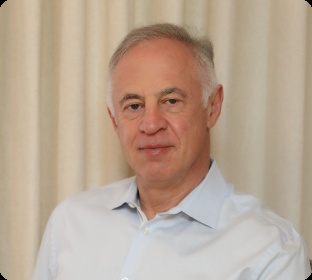
Kanda is a custom engineering company based in Newton, Massachusetts. Alex Karpovsky is its founder and CEO. Its work spans applications, mobile development, cloud systems, data engineering, quality assurance, and maintenance. Customers buy people and delivery capability, assembled around a particular problem.
A buyer can commission a product or add specialists to an existing team. Kanda describes US-based delivery management paired with distributed engineering talent. Its dedicated-team offering includes architects, business analysts, designers, developers, testing specialists, and DevOps engineers. That combination makes sense when the obstacle moves: requirements this month, a difficult integration next month, release testing after that.
The company positions itself between a small agency’s limited bench and the formality of a large outsourcing organization. Its stated offer is flexible staffing with access to management. That is a positioning claim. The practical test is whether the proposed team understands the customer’s workflow and can keep working effectively as priorities change.
Its customer list helps explain the breadth. Kanda names Astellas, Lionbridge, and Lookout among the organizations it has worked with. On its proven-success page, it says sixteen former Lionbridge employees brought referrals to new companies after that relationship began in 2008. Treat that as Kanda’s account, but the mechanism is familiar: a manager changes jobs and takes a trusted supplier’s name along.
Such referrals would reward continuity. A developer who understands a release process, a data model, or a customer’s awkward exception has knowledge that is expensive to reconstruct. Kanda’s offer includes keeping software running after the initial build. For a buyer, that makes documentation and knowledge transfer part of the purchase, alongside the next feature.
02 / Follow the broken handoff
Consider a fleet-solutions customer with more than fifty Microsoft SQL databases. Data sat in separate systems. IoT information occupied transactional databases, contributing to costs. Kanda introduced an Azure Synapse warehouse, built APIs, and updated the application stack. The visible application was only part of the assignment. Information had to move somewhere useful.
In an online retailer’s project, a different obstacle appeared: missing documentation about architecture and integrations. Missing test cases also made automation coverage difficult to track. Kanda established a process for tracking automated tests. It is the kind of detail that rarely survives a sales presentation, yet explains why adding a feature can take longer than anyone expects.
For a buyer, these cases suggest a useful starting exercise: trace one task across the business. Find every place someone re-enters information, checks another system, or asks a colleague what happened. Those handoffs give an engineering partner a concrete assignment and a result worth measuring.
03 / A smaller bill requires different machinery
A cybersecurity customer faced rising AWS infrastructure costs and trouble handling growing demand. Kanda says Google Cloud recommended it for a migration. Four DevOps engineers worked with the internal team, beginning with decentralized DNS and a service for capturing malicious traffic.
70% projected reduction, reported by Kanda for this engagement. Starting cost normalized to 100; not a dollar estimate.
The changes included autoscaling, load balancing, and a redesigned logging pipeline. Kanda reports a performance target of 100,000 requests per second achieved, with projected costs reduced by 70%. It also trained the customer’s team. The transferable idea is to examine architecture and workload together. Simply moving the same inefficient system to another provider does not establish a saving.
04 / The prototype needed a team
Kanda’s bioprocessing case offers a revealing variation. A customer had already begun a generative AI assistant for experiment design. The effort showed promise but stalled without dedicated engineers. Researchers still needed a complete path from an experimental goal to usable parameters and a recipe.

Kanda extended the workflow, adding statistical constraints, platform validation, and review by a scientist at each stage. The company reports experiment design accelerated by as much as 90%. The useful lesson is in the controls: the output must fit the equipment and the process, and somebody qualified must decide whether to accept it.
The company’s recent direction fits that work. In June 2026, Kanda announced an acquisition of Kupsilla assets, adding scientific-data and discovery expertise. It also announced subsidiaries in India and Georgia that month. Earlier in the year came an AWS Life Sciences Competency announcement and renewal of its information-security certification.
05 / Buy the relationship with the code
What does this arrangement cost? Clutch lists $50-$99 per hour and a $100,000-plus project minimum. Historical reviews describe other arrangements: Sermo’s former technology executive reported roughly $300,000 annually; Docurated’s architect described about $6,000 monthly for QA-related work. Those figures describe different scopes and periods.
“good at following instructions almost to a fault”Daniel Ruvinsky, Docurated / Clutch, 2020
Ruvinsky’s criticism identifies an obligation on the buyer’s side. Outside engineers need room to question assumptions. A customer still needs someone who can settle priorities, explain the business, and make decisions. Hiring a team does not remove those jobs.
My reading of Kanda’s model: it fits organizations whose distinctive workflows justify custom engineering and continuing support. A standard tool may be the sensible purchase for a standard task. Where requirements keep crossing systems, specialties, and releases, a continuing engineering relationship becomes easier to justify. Start with the handoff that hurts. Ask what changes, who owns it, and how everyone will know it works.