newton-massachusetts
(7)
Kanda builds the software behind the promise.
A care visit, a cancer treatment decision, a laboratory experiment. Kanda Software works on the systems that turn an ambitious idea into something people can actually use.

Beth Monaghan’s experiment in going home
Beth Monaghan built Inkhouse around a wager: people could do ambitious work and still have lives of their own. The agency grew, the employees wrote books, and eventually its co-founder made room for a different kind of work herself.

Assaf Melochna and the Twenty-Second Apprenticeship
After a decade inside field-service software, Assaf Melochna saw the industry's most valuable database was walking out the door each evening. Aquant is his attempt to make experience available on demand - without pretending the machine knows everything.

Peyton Marshall
Peyton Marshall is the founder, Chairman, and CEO of LeveragePoint, a Newton, Massachusetts SaaS company that helps B2B firms quantify, communicate, and capture the economic value of what they sell. An economist by training with a PhD from MIT, he spent twelve years in investment banking in London at UBS and Goldman Sachs, then fifteen years as a CFO and operator in healthcare and IT companies, before founding LeveragePoint in 2009 to turn value-based pricing from a theory into an everyday sales tool. He has grown the company to multi-million-dollar revenue without raising venture capital.

Abcuro, Inc.
Abcuro is a clinical-stage biotechnology company in Newton, Massachusetts developing first-in-class immunotherapies that selectively deplete highly cytotoxic T cells implicated in autoimmune tissue damage and certain cancers. Its lead program, ulviprubart (ABC008), is a monoclonal antibody targeting the KLRG1 receptor, advanced primarily for inclusion body myositis (IBM) - a progressive muscle-wasting disease with no approved treatments - alongside pipeline work in T-cell large granular lymphocytic leukemia and T/NK-cell lymphomas.
Adaptilens
Adaptilens is a pre-clinical biotechnology company in Newton, Massachusetts developing the first biomimetic accommodating intraocular lens (A-IOL) - a soft, flexible artificial lens that responds to the eye's natural focusing signal from the ciliary muscle. Founded by ophthalmologist Dr. Liane Clamen, the company aims to replace the cataract-clouded natural lens with one that restores clear vision across near, intermediate, and distance ranges without glasses, contacts, or the halos and glare common to multifocal alternatives. Adaptilens raised a $17.5M Series A in April 2024 to advance its A-IOL toward first-in-human trials.
Liane Clamen
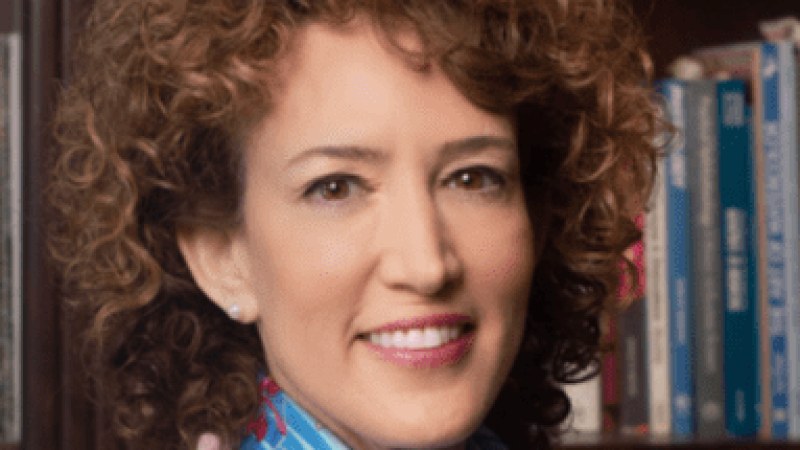
Liane Clamen is a Harvard-trained ophthalmologist and the founder and CEO of Adaptilens, a Newton, Massachusetts biotech building a biomimetic accommodating intraocular lens that imitates the young human lens so cataract patients can see near, intermediate, and distance without glasses. She sketched the idea more than two decades ago, fought the patent office to a 2019 grant, and in April 2024 closed a $17.5 million Series A to push the device toward its first human trial.