A service company can own every work order it has ever issued and still misplace its best answer. The answer may be sitting in the memory of a veteran technician: the misleading error code, the winter-only fault, the repair manual's polite fiction about which part usually fails. At five o'clock, that database puts on a coat and goes home. One day it retires.
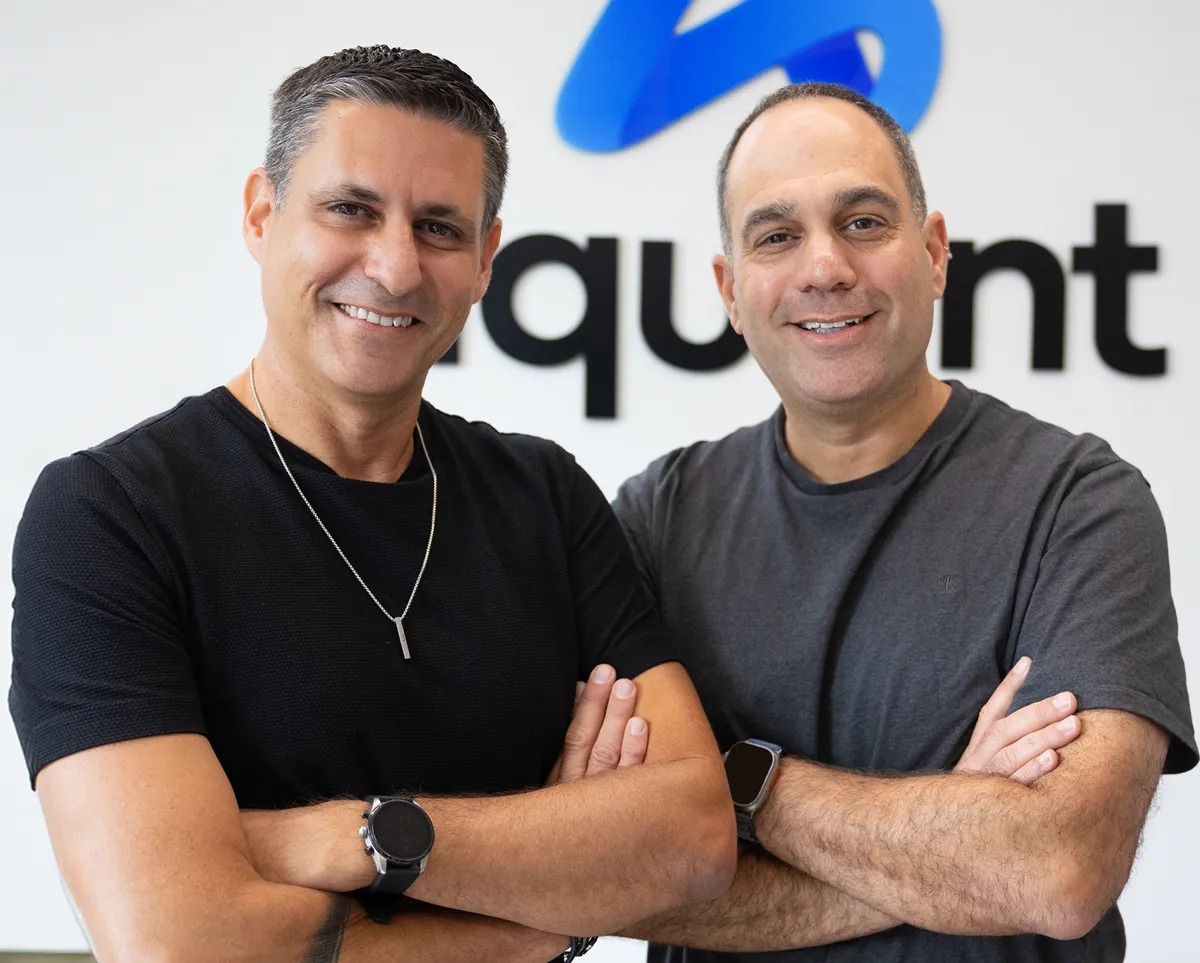
Assaf Melochna had watched this peculiar information system from close range. Before becoming president and co-founder of Aquant, he spent ten years at ClickSoftware, moving through consulting and innovation in the field-service business. He and Shahar Chen worked together there long enough to learn the industry's paradox. Service organizations possessed enormous volumes of data, yet the useful knowledge remained difficult to reach. The records were plentiful. The answer was scarce.
Melochna had encountered another version of the same puzzle while serving as a major in Israeli military intelligence. His work, as he later described it, involved turning large quantities of data into knowledge, then turning knowledge into action. Field service had less camouflage and more spare parts, but the intellectual plumbing was familiar.
Chapter oneThe apprenticeship before the company
Melochna and Chen founded Aquant in 2016. Their starting point was not a general ambition to make machines intelligent. It was narrower and more stubborn: a widening skills gap was making complex equipment harder to service, while companies had no simple way to convert their accumulating records into guidance. They set out to join historical data with the judgment that experienced people carried in their heads.
The distinction matters. A work order can report that a component was replaced. It may not explain that the replacement was unnecessary, that the error code pointed in the wrong direction, or that a certain vibration changed the diagnosis. Service notes are often hurried, idiosyncratic and written for the next administrative step rather than the next apprentice. Aquant's problem was partly linguistic and partly institutional: how do you teach software to read the paperwork while allowing experts to correct the lesson?
The company's early vocabulary was machine learning, deep learning and natural-language processing. Melochna has recalled that “AI” was once a word to avoid. Then fashion performed one of its swift reversals, and every boardroom wanted it. Aquant's less fashionable labor continued: ingest service histories, make sense of free text, invite expert edits and return an answer that fits the person asking.
Chapter twoThe colleague who lives inside the question
Melochna's favorite explanation is not a robot. It is a coach. In traditional field work, a technician facing an unfamiliar failure may “phone a friend,” occupying a veteran at one end of the line while a second person stands beside the machine. Aquant proposes to put accumulated service knowledge beside the technician instead. The hoped-for result is ordinary in the best sense: a faster fix, fewer unnecessary parts and less time with an expensive machine out of service.
Consider the farmer Melochna used as an example in 2025. A tractor fails during the narrow period available to tend a crop. Downtime is not an abstract service metric; it is the season advancing while the machine sits still. If the diagnosis arrives sooner, the benefit travels outward from technician to manufacturer to farmer. Enterprise software rarely receives such a plain moral test: does the tractor return to work?
Manuals
Machine history
Role rules
AI reasoning
for this person
at this machine
The last clause is where the glossy AI story meets the workshop floor. The same answer cannot go to everyone. A customer operating a machine, a contact-center representative and a certified field technician have different permissions and capabilities. An instruction that requires opening a hood or handling a dangerous component must not be offered merely because the system has found it. Aquant calls these role distinctions personas. The software has to understand not only the question, but who may safely act on the answer.
That choice creates a small design problem with large consequences. The operator may be looking at a phone beside the equipment. A contact-center agent may be speaking to a customer while reading a desktop screen. A manager wants patterns across many jobs rather than instructions for a single repair. Melochna describes these as different applications under one platform, each exposing a different layer of the same knowledge. Convenience must yield to certification. If a person lacks the tools or training for a procedure, an elegantly written explanation does not make the procedure appropriate.
This is also why the “coach” metaphor earns its keep. A good coach does not recite the entire playbook whenever somebody asks a question. The coach selects what matters now, accounts for the player's role and understands the boundary between encouragement and recklessness. Aquant's promise rests on a digital version of that selection. The intelligence is not simply in retrieving a passage. It is in refusing the wrong passage, recognizing an equivalent question and placing the useful instruction inside the worker's existing routine.
Melochna also emphasizes expert editing. Documentation begins to age as soon as it is released. New fixes appear; conditions change; the same question arrives in different words. Aquant lets designated experts revise responses through an approval process, then attempts to recognize the same intent when another person phrases the problem differently. This is less like installing an oracle than tending a peculiar garden. The knowledge improves only if somebody notices the weeds.
Chapter threeMoney arrives; the question survives
By October 2021, Aquant's argument had attracted a $70 million Series C led by Qumra Capital, Insight Partners and Pitango Growth. The company said it had raised $110 million in total. The round was intended to expand engineering, client services and go-to-market teams across the United States, Europe and Israel, and to continue developing technology that combined structured records, unstructured language and expert knowledge.
Funding announcements tend to dress the future in confident tailoring. Melochna's own line was more revealing: service, he said, stood “on the cusp of once-in-a-lifetime advancements.” Beneath the ceremony was the same labor problem Aquant began with. Experienced technicians were retiring. Newer workers needed access to decades of account history and technical judgment. The company was selling continuity.
Its product map widened accordingly. Aquant moved from triage and insights toward mobile guidance, knowledge agents, parts recommendations, schematic interpretation, offline generative AI and an agentic platform for service. The industries remained stubbornly physical: industrial machinery, medical devices, food equipment, appliances and other assets for which a bad answer may cost far more than an awkward chat response.
The progression says something about the founders' patience. The 2016 problem did not disappear when a new model or interface arrived. Each product layer returned to the same awkward materials: service logs, manuals, equipment histories and human corrections. New technology expanded the ways a person could ask and the places an answer could appear. It did not repeal the need for domain knowledge. In Melochna's account, the point of a platform is to carry that knowledge through the service lifecycle, from the first customer contact to the person in the field and the leader studying performance later.
Chapter fourAn intelligence that changes its mind
Melochna's more recent argument concerns adaptability. Businesses rarely keep one priority fixed. A service leader may begin the year trying to improve first-time fix rates, then face pressure to reduce parts spending or lift workforce productivity. Those goals can collide. Carry too few parts and a cheap first visit becomes an expensive return. Optimize one number blindly and another starts smoking.
In his essay “AI That Moves With You,” he asks a useful purchasing question: “Can your AI adapt as fast as your business evolves?” His preferred system can rebalance recommendations around changing key performance indicators without a long cycle of retraining and reconfiguration. It must also understand the metrics peculiar to its domain. A generic model may produce a plausible suggestion; service work requires one that survives contact with inventory, certification, customer commitments and the actual machine.
That view places Melochna slightly apart from the grander prophecies attached to AI. His unit of progress is not a machine that knows everything. It is a person who knows what to do next. In a 2025 conversation after Aquant received a manufacturing product award, he returned to augmentation: the AI becomes the buddy beside the professional, not the professional's dismissal notice.
There is a quiet symmetry in his career. Intelligence work taught a progression from data to knowledge to action. ClickSoftware supplied a decade of exposure to the untidy reality of service organizations. Aquant turned both lessons into a product thesis. The raw material may be a database, a manual or an expert's correction, but none of it earns its keep until somebody can act.
The twenty-second apprenticeship of the headline is the ideal, not a measured promise: years of another person's experience compressed into the moment between a technician asking and the system replying. It is also a useful warning. Apprenticeship has always included judgment, permission and the humility to ask someone senior. Software that wishes to imitate it inherits those obligations.
Melochna's project is therefore less about preserving the past than lending it out. The veteran's memory becomes available to the new hire; the new hire's outcome becomes another piece of evidence; the guidance changes when the business changes. If the loop works, the database no longer leaves at five. The expert, one hopes, still can.