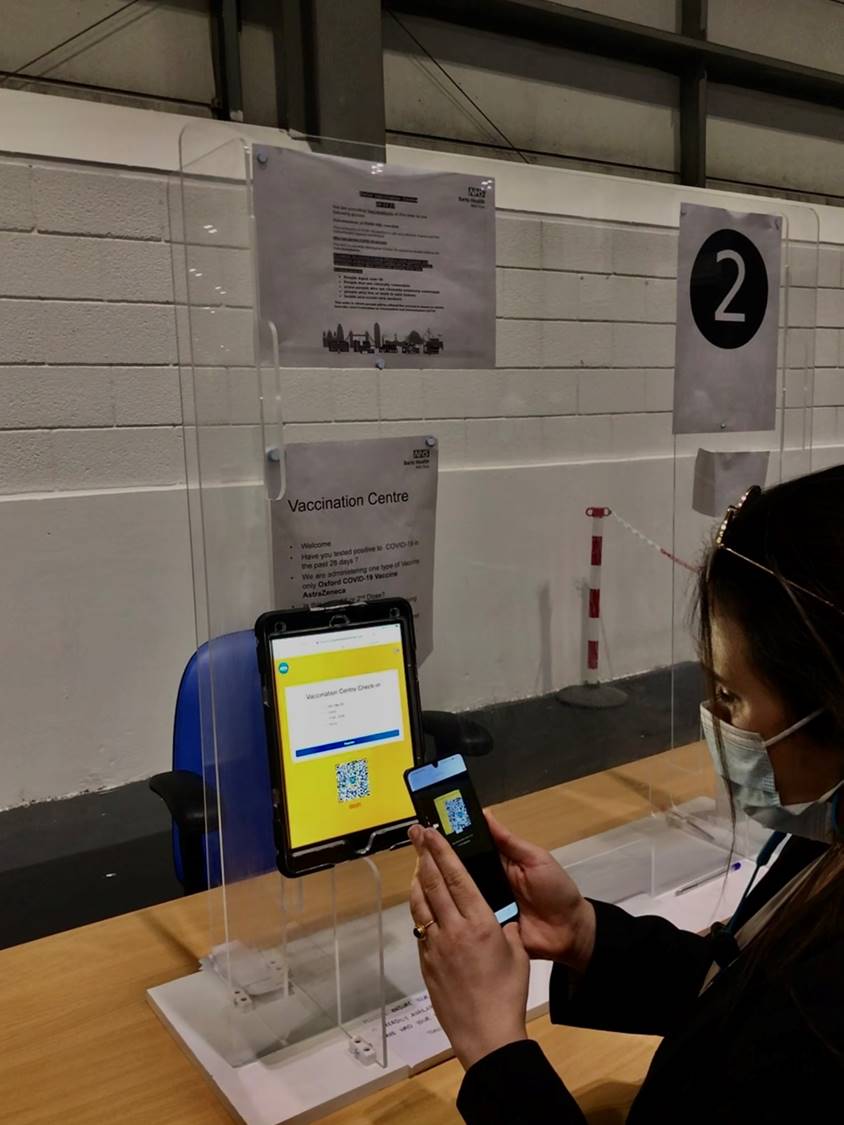
At the ExCeL vaccination centre in east London, a small administrative problem came with a very large audience. Staff needed training. Someone had to record who attended and who was competent to work. Barts Health used CATQR, co-developed with Shinetech Software, to turn a phone and a QR code into a check-in system. The trust reported replacing about 25,000 individual paper signatures. Picture the alternative: a mountain of handwriting, followed by someone trying to read it.
- Dedicated developers who work inside a client’s delivery routine.
- Custom software, system modernization, commerce integrations and AI work.
- A SaaS product with documented use in NHS training.
- A trial-first approach that lets buyers test a working relationship.
That is one way into Shinetech. The other begins with a less visible problem: what happens when the people who understand your software keep disappearing?
The expensive thing nobody invoices
In 2007, chemical formulation software provider Formpak began working with Shinetech. In the company’s account of the relationship, developers first spent weeks understanding business rules and user workflows. Its team lead, Bin, remained a central figure as the product changed. New developers learned from people who had already built it.
The technical changes were substantial: Windows to Linux with Docker; Java 1.5 to Java 17; a database architecture that could accommodate DB2, Microsoft SQL Server and PostgreSQL. The account also describes work toward an AWS-hosted SaaS model. Across those changes, knowledge of the customer’s business remained with the team.
Here is the economic idea underneath that story. Replacing a developer can mean replacing a map of the business: which rule is regulatory, which exception belongs to a large customer, which strange-looking feature prevents an operational disaster. An hourly rate captures very little of that.
A developer with a longer memory
Jerry Zhang founded Shinetech in Beijing in 2001. The U.S. entity followed in 2005. His earlier résumé includes a turn as chief editor of Internet Weekly, an unusual stop on the route to running a development company. His company biography dates an explicit push toward an Agile enterprise to 2011.

Today, Shinetech describes a culture of developer autonomy, business understanding and continuing learning. Its careers material mentions weekly technology talks and open feedback. Those are company descriptions, but they explain the intended bargain: developers accumulate useful knowledge, and clients keep access to it.
“We treat them like they are our own employees.”
Marc Greenberg, CEO, American Shipping
In Shinetech’s client testimonials
Choose the work, then the arrangement
Shinetech occupies the services side of the software market. A buyer can add developers to an existing team, commission a dedicated group, or hand over a broader development lifecycle. It builds web and mobile applications, SaaS products, internal systems and integrations. It also repairs and modernizes software that a business already depends on.
The distinction matters. Staff augmentation assumes someone inside the client can direct the work. A broader delivery engagement moves more coordination to the supplier. Both still need a business owner who can explain priorities and accept results. Outsourcing a task does not automatically outsource the decisions around it.
There is concrete platform expertise here, too. Shopify’s partner directory lists Shinetech’s Changchun practice as a Select Partner. Its MediNatura example combines a WooCommerce-to-Shopify migration with Microsoft Dynamics GP integration. The storefront is only the visible end of a chain that includes products, orders and back-office records.
There is a similar problem in Shinetech’s published property-retail case. The customer needed Java development across internal applications and commerce. Local staff turnover had increased replacement and training costs; earlier waterfall outsourcing had required considerable management for disappointing results. Shinetech describes starting a remote team on trial, then adding capabilities and using code reviews, automated testing and regular releases. The company reports more than 60 releases. The initial failure, in that telling, was the organization of delivery as much as the software itself.
Trust, purchased in small instalments
A published Australian insurance case starts with an aging platform, slow responses and an outdated interface. Shinetech describes a three-month initial deadline, followed by four more fixed-time, fixed-price projects over seven months. The relationship eventually grew from two developers to nine.
at the start
projects
in the team
The interesting change was contractual. A customer began by buying bounded delivery, then moved toward buying continuing capacity. Shinetech attributes that progression to successful work. It is a more useful buying lesson than simply declaring that trust matters: make the next commitment depend on something observable.
Its current offer includes a one-week free developer trial, with an NDA signed beforehand. A sensible trial uses one real, limited task. Look at the questions the developer asks, the clarity of the handover and the quality of review. One week can reveal working habits. It cannot establish that someone will stay for years.
The rate is only the beginning
Clutch lists Shinetech at $25-$49 per hour, with a $10,000 minimum project size. Treat that as a directory indication. A useful budget also accounts for discovery, testing, migration, cloud services and the client’s own time. Those items depend on the work being bought.
The model makes most sense when there is continuing work and enough business complexity for familiarity to pay off. A tiny, isolated task may not justify assembling a dedicated team. A client unable to provide feedback or controlled system access will struggle to get the promised benefit. Documentation matters, too: continuity should spread knowledge rather than leave one indispensable person holding it.
For a buyer, that suggests a different interview. Ask a prospective team to explain how a requested change moves through the business, who approves it and how it reaches production safely. Ask how a replacement developer would learn the system. A team that answers those questions clearly gives you something to inspect beyond a technology checklist. You can use the same questions with an internal hire, a contractor or another development firm. The value lies in making responsibility visible before the project becomes difficult.
The square on the wall still matters
Shinetech now offers AI development, enterprise knowledge systems and workflow automation alongside its established engineering services. Faster implementation raises a familiar question: does the team understand what it is changing? That is where the continuity argument earns another hearing.
CATQR supplies a grounded answer to what this company can help people do. It made training attendance and competency information usable in a busy vaccination operation. Barts Health’s project won a 2022 Health Tech News case-study award. The practical lesson travels beyond hospitals: find the awkward handoff, understand the people using it, then keep improving the system after the first release.
See the work
Explore Shinetech, its customer work and engineering articles. Follow on LinkedIn, X or Facebook.
▶ CATQR at NHS Nightingale & vaccination centres ↗▶ CATQR in practice at Frimley Health ↗