A virtual clinic has no waiting room, but it still has a queue. Someone must register the patient, collect a medical history, arrange the laboratory work, send the prescription and settle the bill. Remove the building and those obligations remain. They simply acquire passwords.
That is a useful place to begin with Artezio. The company sells custom software development and IT consulting, a description broad enough to accommodate half the technology industry. Its case studies offer a more interesting definition: make the pieces of an organization cooperate. A bank needs its systems to exchange information. A clinic needs its clinical and commercial routines to line up. The work happens at the handoff.
- The work: custom applications, integration, modernization and ongoing engineering.
- The telling examples: a virtual endocrinology clinic, banking message flows and a city-scale medical-record system.
- The buyer’s lesson: define the workflow and the interfaces before debating the technology.
A clinic is a collection of handoffs
In Artezio’s published telehealth case, the customer was a US healthcare startup specializing in endocrinology. The brief covered the clinic’s ordinary business: evaluation, prescriptions, laboratory management, billing and customer service. Artezio integrated third-party services for functions including scheduling, payments, secure messaging and virtual visits.
The patient side included questionnaires and access to laboratory evaluations. Clinicians could review histories, add care plans, prescribe medication and manage messages. The company describes a launch in New Jersey. Its stated first-year capacity of 18,000 patients was a plan, so it should be read as a design ambition rather than a head count.
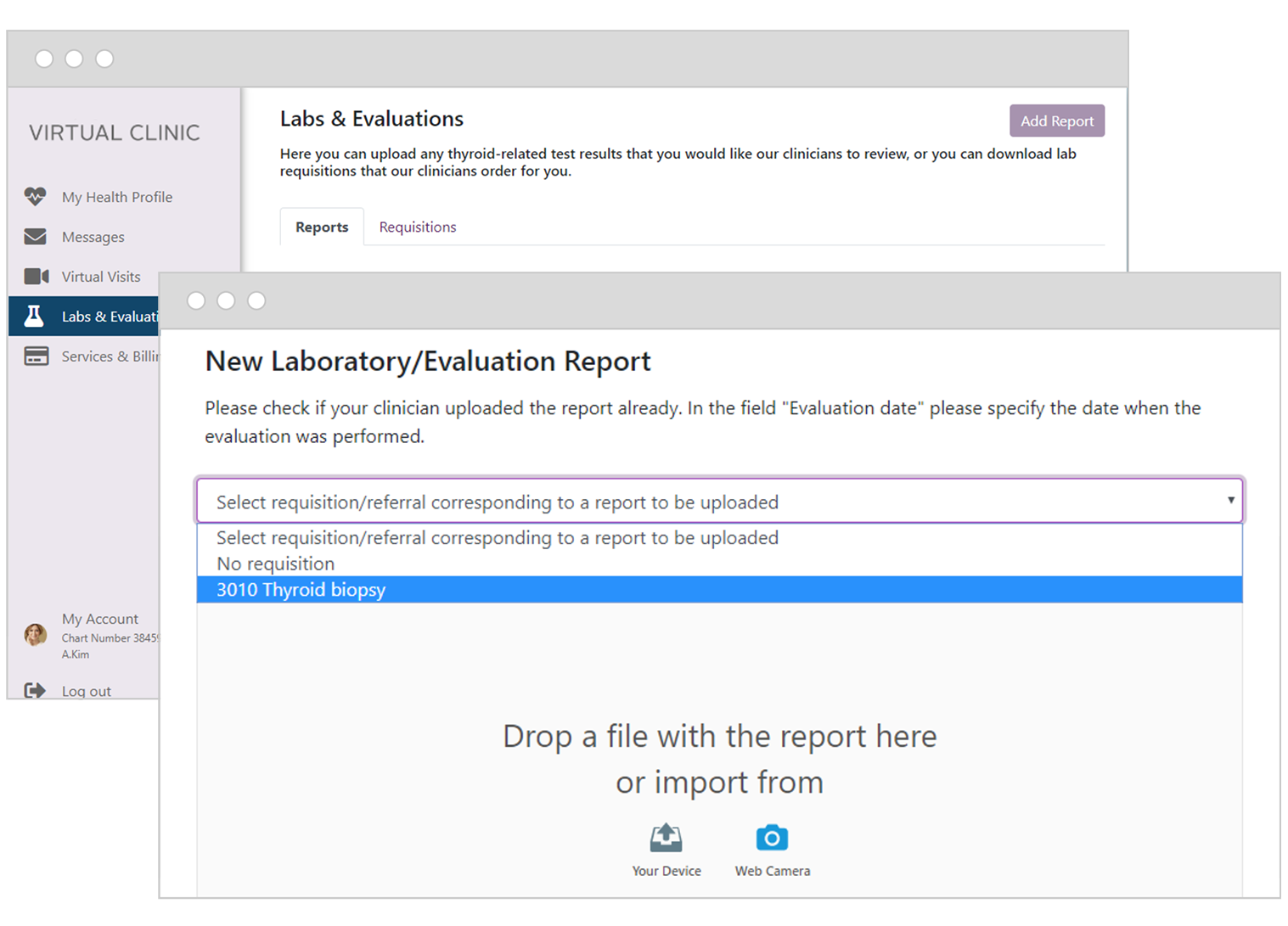
The revealing detail is the division of labor. The team used outside services for several functions and joined them into the clinic’s workflow. For a buyer, that suggests a practical question: which parts deserve custom construction, and which existing tools can do the job? A custom project can be an exercise in selection and coordination as much as invention.
The bank that needed a translator
A banking customer presented a different version of the same difficulty. Its internal systems came from different vendors. Customer records and accounts needed synchronization; payment orders and transactions needed to move between systems. The requirement was stability under more than 3.5 million information messages a day, with room to add systems and redirect flows.
The proposed architecture used an enterprise service bus, essentially a routing and translation layer, plus custom adapters and a unified management console. Artezio’s team worked with the customer on architecture, development and testing through iterations. Its account puts the main phases at five months and total effort above six person-years, with delivery on time and within budget.
Those units deserve attention. Five months measures the calendar. Person-years measure accumulated labor. The distinction matters when a short schedule tempts a buyer to imagine a small assignment. Compressing the delivery window can require substantial parallel work; it does not make the underlying coordination disappear.
existing system
adapters and shared controls
connected systems
Another payment-platform case makes the design preference explicit. Artezio built a core, a gateway and more than ten connectors, including links to verification and creditworthiness systems. The brief required new connectors to be added, and existing ones changed, without changing the platform itself.
“It should be possible to change connectors without changing the platform”Artezio’s payment-integration case study
There is a useful purchasing principle here. Ask what happens when the next vendor arrives. If every new connection requires surgery on the central application, the initial build has left a bill for later. Separating adapters from the core is a way to contain that future work. It still requires careful testing of what crosses the boundary.
A city-sized version of the same problem
Artezio’s city EHR case brings appointments, records, prescriptions and patient flow into one system. It describes independent modules running on separate servers, so that one unresponsive module need not bring down the whole. Workload dashboards and patient routing help organize appointments across doctors and institutions.
The company reports more than one million patients using the system. That is a company-reported case-study figure, rather than a current audited total. The noteworthy feature is less glamorous than the number: scheduling becomes part of the medical information problem. Knowing which doctor is available can be as immediately useful to a patient as storing another document.
In a separate hospital project, Artezio migrated an outpatient management system to a Java enterprise platform, replacing ASP code and moving its database from Microsoft SQL Server to Oracle. It added functionality and tested the result before deployment. This is modernization in its literal sense: alter the machinery while preserving a recognizable job for the people using it.
Buying the team, not just the code
Artezio sits in the custom engineering and outsourcing market. Customers can commission a product, hire specialists to join an existing team, or retain a dedicated development center. Its offering spans analysis, architecture, development, quality assurance, deployment and support. The buyer is purchasing both engineering capacity and a way to organize it.
Its published delivery models include onsite/offshore collaboration, project outsourcing, dedicated centers and onsite staffing. Project contracts can use fixed prices or time and materials. Dedicated centers are individually priced; the company positions them for engagements lasting at least six months. Staffing prices depend on the people required and the length of deployment.
That leaves a responsibility on the customer’s desk. In the outsourcing model, Artezio explicitly relies on a customer coordinator to define tasks and communicate instructions. Hiring engineers does not settle disagreements about what should be built. Someone must have authority to make those decisions, and enough access to users to make them sensibly.
For buyers comparing firms such as EPAM, Itransition or ScienceSoft, Artezio’s public cases provide concrete questions to carry into a meeting. Who will own the interfaces? What existing system must remain usable? How will the team demonstrate that a migration preserves the necessary behavior? Those questions are more discriminating than a recital of programming languages.
Small apps, long institutional memory
Pavel Adylin founded Artezio in 2000 after working as a software engineer and in commercial management. A 2005 announcement records the company joining LANIT while retaining legal independence and management. Inc. lists Artezio at No. 2,254 on its 2018 Inc. 5000 and No. 4,721 in 2021. These dated milestones establish a history longer than the current enthusiasm for AI-assisted coding.

There is also a smaller, consumer-facing branch of the portfolio. Cost Track records income and expenses, organizes entries and supports multiple currencies and CSV exchange. Photo Vault and Meeting Tracker appear alongside it in the product catalog. The distance between a household budget and a bank’s message bus is considerable; both, however, ask software to give unruly information a usable order.
The company’s public GitHub organization adds another glimpse of its engineering work. ART-BPMS-REST provides an interface to Camunda and facilities for process forms and validation. It is a tangible example of the less visible tools that make a workflow application possible.
Artezio’s careers material describes English classes, professional communities, paid conferences and certifications, internships and a book club. Those are employer promises, but they make the company’s view of development clear: skills need replenishing. A service business depends on people who can carry knowledge from one assignment to the next.
The useful question is what must stay connected
By late 2025, Artezio’s writing was giving more attention to AI tools and their economics. A September article discussed recurring model and governance costs; a December piece argued for investing in data foundations before hiring AI specialists. These are statements of its approach, rather than proof that any particular deployment achieved a return.
A reader can borrow the approach without commissioning anything. List the systems involved in one important workflow. Mark each handoff, who owns it and what must happen if it fails. Then choose one measurable improvement: less duplicate entry, a faster appointment, a reliable transfer. That exercise gives a development brief somewhere solid to begin.
Custom engineering makes less sense when a standard product already fits the work and can be configured economically. It also struggles when the buyer cannot provide decisions, usable data or sustained maintenance. The clinic and banking cases suggest the more promising conditions: a defined operational need, several systems that must cooperate, and a customer willing to stay involved. Artezio’s appeal lives in that practical territory, where a successful application must leave the rest of the organization able to work.