Kabir Barday had a pizza franchise picked out. There was a certain family logic to it. His parents ran restaurants and convenience stores; he understood the appeal of a business with customers at the counter and something unmistakable to sell. After Georgia Tech, a job in software would help him save the money to get started. Somewhere along the way, the temporary career became the business.
The pizza shop remained a plan. OneTrust, the company he formally launched in 2016, became a way for organizations to manage privacy and, eventually, the responsible use of data and AI. In February 2026, he handed the chief executive’s job to John Heyman and stayed on the board. To understand that change of seat, it helps to begin with the business he never opened.
A problem that came with the phone
At AirWatch, Barday worked on software that let companies secure mobile devices. Employees were bringing their own phones to work, mixing personal lives and corporate information on the same small screen. Employers had reasons to worry about security. The software gave IT departments ways to monitor devices and the applications installed on them.
The complication was sitting inside the solution. An inventory of someone’s apps can reveal a good deal about the person carrying the phone. A tool intended to protect an employer’s information could expose information that belonged to an employee. Barday began thinking about the permissions, transparency and choices that ought to accompany that access.
He came to see privacy failures as something that could emerge from useful products and ordinary business intentions. That observation made the problem more interesting, and harder to dismiss. A policy could describe what an organization should do. Software still had to make the appropriate behavior possible, repeatedly, across people and systems.
“What am I uniquely positioned for?”
Kabir Barday, on choosing his next business
Against that problem, the restaurant plan began to look different. His experience had given him a particular view of enterprise customers and their data. Loving pizza was a less exclusive qualification. There are worse reasons to reconsider a business than realizing that your appetite is more widely distributed than your expertise.
The education before the company
Barday grew up in Atlanta, the son of parents who had immigrated from India. His father worked in software before moving into businesses that included gas stations and restaurants. Technology and small-business ownership were both close at hand. As a young person, Barday built websites for local businesses, finding customers among the enterprises around him.
Those businesses also offered a practical education in what ownership requires. A shop has to open, customers have to be served, and floors still need cleaning. The work behind a family business is difficult to mistake for the photograph on its brochure. Barday would later describe that exposure as an early lesson in persistence.
At Georgia Tech, where he completed his computer science degree in 2009, he also pursued an entrepreneurship certificate. He has credited faculty mentors Merrick Furst and Ellen Zegura, as well as the local entrepreneurs he met through TiE Atlanta. His preparation crossed classrooms, technical projects and conversations with people already trying to build something.
He served as president of the Student Center and helped raise money for its bowling alley. There is a modest charm to that detail beside the later funding announcements. Getting people to support a bowling alley is useful practice in making a case, organizing a group and dealing with people whose priorities are different from your own.
AirWatch supplied another kind of schooling. Working with large customers put him close to problems that a student business plan might never encounter. He has encouraged aspiring founders to gain that experience rather than rush toward the first available idea. A few years inside someone else’s startup can change the size of the problem you are prepared to tackle.
A basement with international ambitions
The beginnings of OneTrust were close to home. Barday has described putting his savings into the project, with his father as the first investor. His wife created the name and logo. Family, a friend and a small engineering team helped get the work underway. The company’s later corporate language can make it easy to forget how domestic its opening arrangements were.
The commercial opportunity was taking shape beyond Atlanta. Privacy rules were creating demands that organizations would have to turn into working processes. Businesses needed to understand the information they held, respond to requests and manage consent. Barday saw room for a software business serving people who had often depended on legal advice and consulting.
Atlanta gave the company more than a founding address. At a Venture Atlanta discussion, he described its airport and time zone as practical advantages when reaching Europe. He said Europe accounted for half the company’s revenue within its first year. For a business whose customers were dealing with European privacy requirements, the working day mattered.
A five- or six-hour gap leaves more overlapping office hours than an eight- or nine-hour gap. It is an unromantic observation, which is part of its appeal. International expansion eventually becomes a collection of meetings that somebody has to attend. Geography continues to participate, even when the product travels through a browser.
- 2009Computer science degree
Georgia Tech - 2016OneTrust
formal launch - 2020No. 1
Inc. 5000 - 2026CEO handoff
Board role
Growth comes with a filing cabinet
In 2019, OneTrust raised $200 million at a $1.3 billion valuation. In 2020, it ranked first on the Inc. 5000. The acceleration made for a striking growth story, but another part of Barday’s approach was quieter: protecting the technical work the company was producing.
He worked with Brient IP on a patent strategy early in OneTrust’s life. The process began with identifying potentially patentable features and planning how to protect them. It was a deliberate piece of company building, alongside the more visible work of finding customers and hiring people.
Patents offered a way to explain the substance behind the product to investors, customers and analysts. Barday also described the portfolio as a means of recognizing the inventors inside the company. For an enterprise software founder, even the filing cabinet can have a part in the sales presentation.
Funding announced in July 2023, at a $4.5 billion company valuation. A dated financing milestone in OneTrust’s story.
That 2023 round was led by Generation Investment Management, with participation from Sands Capital. It took the company’s total funding beyond $1 billion. By then, OneTrust was describing a broader business across privacy, security and other organizational responsibilities. The product and the story being told about it had both expanded.
The founder who uses an alias to order dinner
For Barday, privacy also appears in small personal choices. In a 2024 podcast conversation, he said he used aliases on apps such as Uber and DoorDash. He described using a routing number for wider contact while keeping his direct mobile number for a smaller circle. The privacy software founder would prefer his dinner delivery to require a little less of his identity.
His public life is selective, too. He identified LinkedIn as the social platform where he maintained a presence and posted updates. The distinction between being reachable and being exposed runs through these habits. A person can want customers to get in touch while still deciding which details belong in the transaction.
Another revealing anecdote concerns hiring. Barday once had a formula that favored strong academic records. Successful hires with lower grades persuaded him to reconsider it. The episode gives his career a useful human scale: a founder can arrive with a rule and discover that the people in front of him are better evidence.
The question grows larger
As AI moved further into business, Barday’s public argument returned to the use of data. Collecting information does not automatically make it appropriate for a new purpose. At RSAC in 2025, he discussed the gap between the data companies possess and the data they can responsibly put to work with AI.
His proposed approach has been operational: understand where information exists, apply consistent controls, monitor risk and build privacy into development. In a 2024 interview, he advocated repeatable processes and automation so that privacy teams could spend more time on strategic work. The underlying concern is recognizable from the phones at AirWatch: access brings decisions about use.
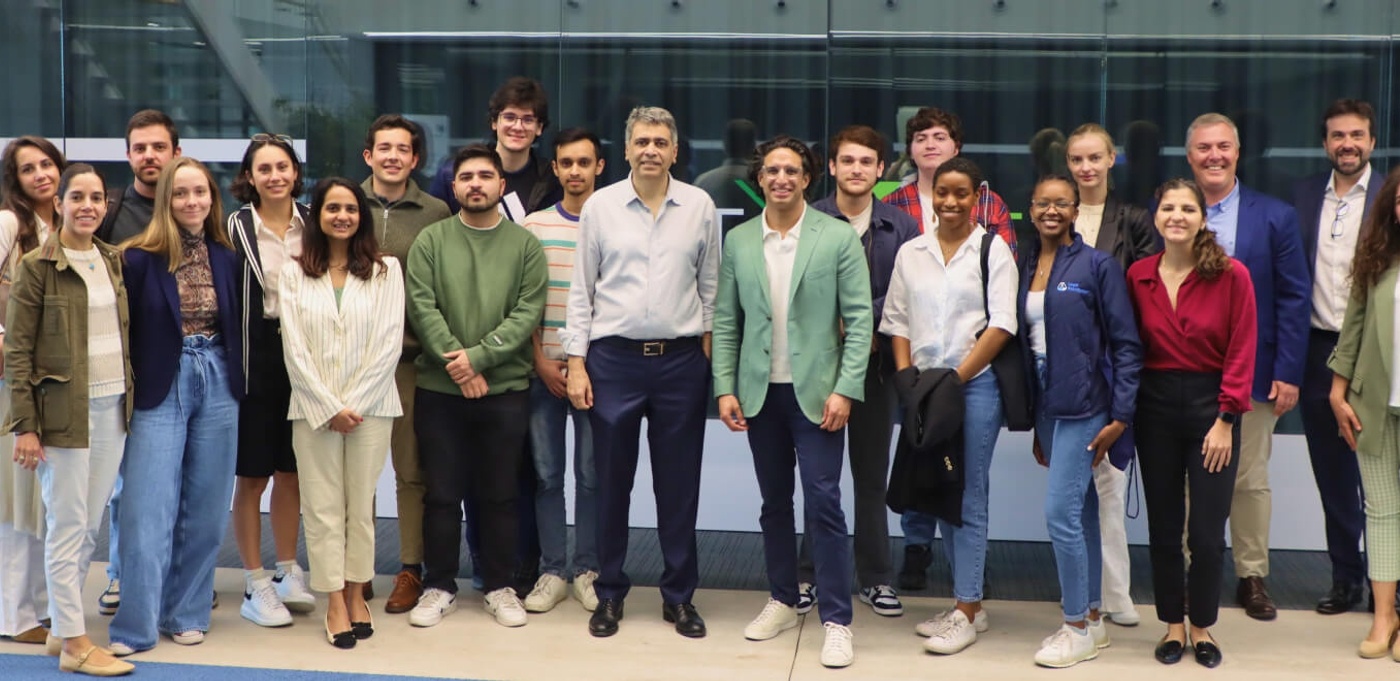
At IE University in 2024, he spoke about reading constantly and the danger of failing to notice changes in a market. His concern was speed: new competitors, new technologies and shifts in who buys the product. It was a founder’s view of uncertainty after several years spent trying to build an organization around it.
The next change came inside OneTrust. On February 9, 2026, the company appointed John Heyman chief executive. Barday remained on the board in a strategic advisory role, focused on long-term vision and strategy. Heyman brought experience leading Radiant Systems and Snap One; the daily responsibility for execution moved to him.
For Barday, the move leaves a continuing relationship with the company he started. His career has already included a family business plan, a software apprenticeship and a privacy company built from a basement. Now it includes helping guide that company while someone else runs it. The pizza franchise never acquired a customer. The problem that displaced it is still producing work.
Keep the conversation going
PROFILES, CONVERSATIONS & FURTHER READING