At LKQ’s investor day in Nashville in June 2022, Justin Jude had a practical reason to welcome visitors to the headquarters of the North American wholesale business. He and finance chief Rick Galloway had been spared a trip to the airport. In a room assembled to discuss billions of dollars in vehicle parts, this was a modest opening dividend: two executives who did not have to catch a flight.
It was a small joke, but a useful introduction. Jude was running the North American wholesale operation, and his audience needed an explanation of what that operation actually did. Was it collision repair? Used parts? Something else? He began by sorting the business into the products and services it sold. Before the financial argument came the inventory.
Two years later, he would become president and chief executive of LKQ Corporation. The promotion put a familiar insider in charge of a company whose complexity had accumulated over decades. His career had taken him through supply chain, information systems and two major operating businesses. He had spent considerable time in the places where an attractive corporate plan meets a stubborn practical detail.
For a distributor, those details have consequences. A part has to be identified, acquired, stored and delivered before a customer can use it. A strategy may look quite composed on a presentation slide while a repair shop waits for a component. Jude’s route to the top makes sense against that everyday test: can the organization do what it has promised?
Twenty years, several vantage points
Jude joined LKQ in February 2004. The company was still young enough for a long-serving employee to have witnessed much of its development. Founded in 1998, it had grown from automotive recycling into a wider vehicle parts business. He entered an organization that would keep changing around him, then moved into jobs concerned with how its various pieces connected.
From March 2008 to February 2011, he was vice president of supply chain. From February 2011 to May 2014, he was vice president of information systems for North America. The sequence matters. Supply chain concerns the physical journey of a product; information systems concern the records and decisions that make that journey possible. His experience covered both.
In June 2014, Jude became president of Keystone Automotive Operations, LKQ’s specialty business. By July 2015, he had moved to lead Wholesale - North America, a responsibility he held through the end of 2023. These were distinct assignments inside the same company. He gained an operating perspective that crossed business lines without having to arrive as an outsider.
His education has an accounting foundation: MEKO’s 2023 director nomination materials list a Bachelor of Science in Accounting from Franklin University in Ohio. There is a pleasing fit between that degree and a career spent attending to the workings of distribution. Inventory may be tangible, but understanding what it earns, what it costs and how long it sits requires another kind of attention.
- 2004Joins LKQ
- 2008Supply chain
- 2011Information systems
- 2014Keystone president
- 2015North American wholesale
- 2024COO, then CEO
The succession came with an assignment
LKQ announced its succession plan in November 2023. Dominick Zarcone would retire as CEO at the end of June 2024; Jude would spend the first six months of 2024 as executive vice president and chief operating officer before taking over on July 1. The board’s choice followed a succession process begun more than a year earlier.
Zarcone pointed to the North American wholesale business when explaining the appointment. Under Jude, he said, it had expanded margins and improved cash flow while strengthening its market position. That endorsement helps explain the decision. The incoming CEO had already been responsible for the sort of operating improvement the larger company wanted to sustain.
Before taking the top job, Jude described priorities that were readily understood and demanding to deliver: integrate businesses, simplify the operating model, grow profitably, generate cash and invest in the future. He also put communication, accountability, integrity and respect into his account of the culture he wanted. Those commitments would have to coexist with decisions about costs.
An internal promotion can look like continuity from a distance. Here, continuity came with a request for change. Jude’s experience made him familiar with the business; it also made him answerable for knowing where the complications lived. Becoming CEO turned years of institutional knowledge into a much broader obligation to act on it.
A second life for a useful part
LKQ’s work offers a concrete version of the circular economy. Its customers can buy recycled original equipment, aftermarket products and remanufactured components. The commercial proposition is that useful vehicle parts can have another working life, and that repairers need dependable alternatives when deciding how to put a vehicle back on the road.
Jude connects that proposition to the way the company operates. In his reflections on his first year as CEO, he emphasized reducing waste, simplifying operations and applying a lean mindset. He also described the value of visiting frontline teams and research facilities, as well as talking with people in the corridors of the Nashville headquarters.
“Success means achieving profitable longevity,” he said when discussing what sustainability success would look like toward 2030. The phrase is revealing because it keeps commercial survival in the sentence. A recycled component needs a buyer; a remanufacturing operation needs to earn its place. Environmental usefulness and an operating margin must share the same warehouse.
In May 2026, he again tied sustainability to operating discipline as LKQ released its 2025 sustainability report. He described investment in people, technology and operations as part of strengthening performance and resilience. For Jude, the environmental argument keeps returning to work that an operator can recognize: fewer inefficiencies, better use of resources and a business that lasts.
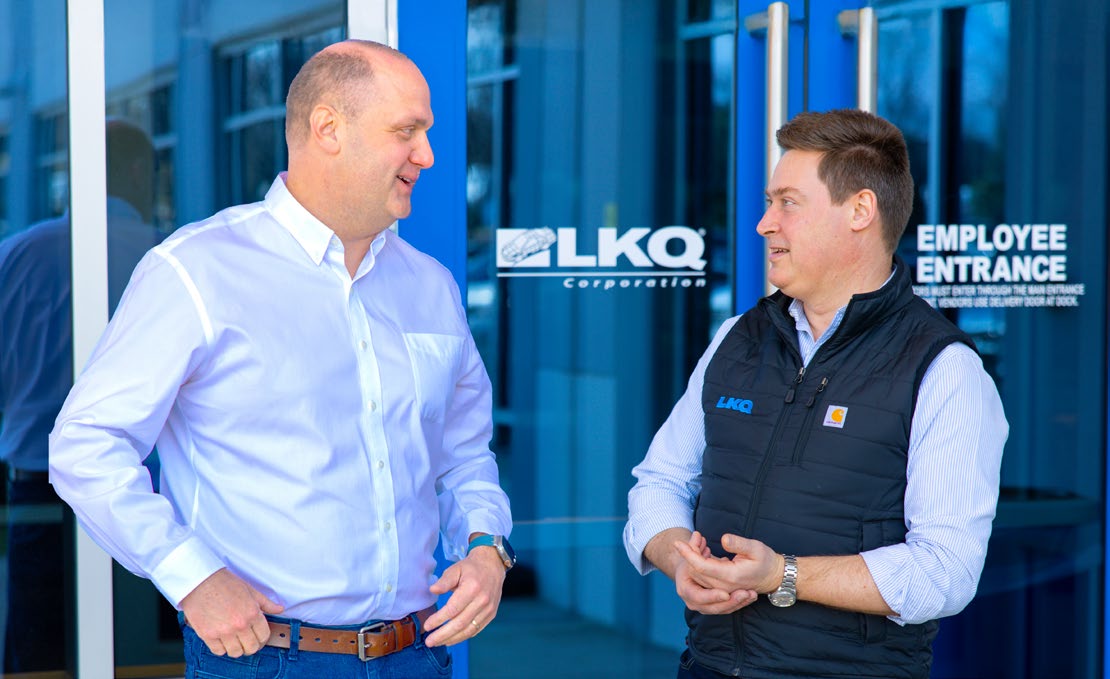
“Success means achieving profitable longevity.”Justin Jude, reflecting on sustainability toward 2030
A large company, with room to speak
In a public radio interview, Jude described growing up in Columbus, Ohio, and moving to the Nashville area for LKQ in 2008. Murfreesboro became home. He spoke about relocating with his family and about Tennessee as a place to recruit colleagues. For an executive responsible for international operations, his account of the company had a distinctly local starting point.
His public descriptions of leadership also return to contact with other people. After LKQ’s 2023 leadership conference, he wrote about reconnecting with colleagues and hearing speakers including Jocko Willink, Rick Galloway, Genevieve Dombrowski and Zarcone. His enthusiasm was attached to an actual gathering: people in the same place, exchanging ideas they would later have to use.
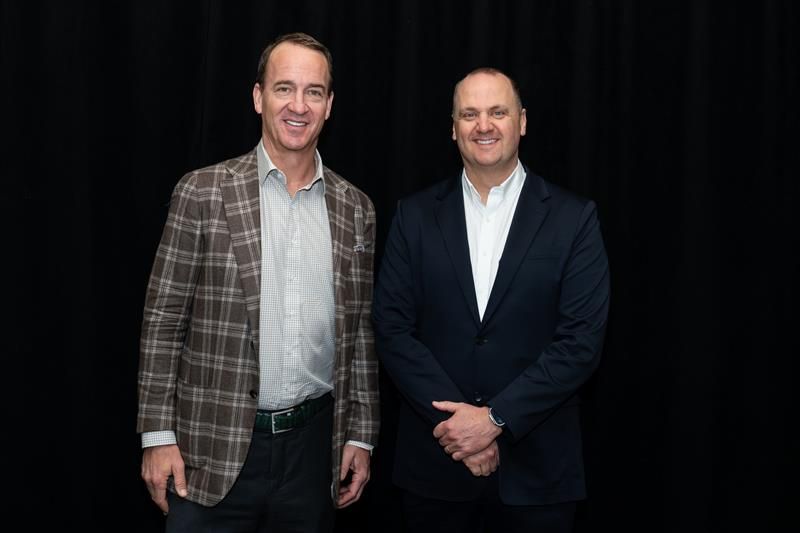
At the 2026 leadership conference in Denver, nearly 1,000 leaders came together. Jude’s photographs included a picture with Peyton Manning. A football figure makes a recognizable conference guest, but Jude’s reflection on the event stressed the less photogenic work: preparation, accountability and steady execution. A celebrity photograph is easier to circulate than a week of consistent decisions.
“Performance isn’t about one big moment,” he wrote. The observation sits comfortably beside his own career. His appointment could be dated to a single day in July 2024. The preparation stretched across twenty years of assignments. His stated leadership approach gives those accumulated daily decisions as much attention as the public milestone.
When the systems become the story
The test became sharper in 2026. LKQ’s second-quarter figures showed different businesses moving in different directions. North American parts and services organic revenue increased 0.5 percent, while Specialty grew 4.5 percent. Europe declined 12.6 percent on the same measure. The contrast made it difficult to discuss the company as though it were experiencing one uniform recovery.
In Europe, an enterprise resource planning implementation in Germany disrupted operations. On the July earnings call, Jude acknowledged that customer effects had lasted longer than expected. He also described weaker commercial execution in the UK and Benelux. These are particularly direct challenges for a CEO whose earlier responsibilities included information systems and supply chain.
The company reported second-quarter revenue of about $3.4 billion, down 3 percent from a year earlier, and lowered its full-year outlook. There were improvements in North America, yet they sat beside an unfinished European recovery. An operating career supplies relevant experience for such a situation. It does not supply an exemption from difficult results.
A second uncertainty concerned LKQ’s shape. In July, the company said its strategic review remained active and included consideration of a possible sale of the company. A potential sale of Specialty was being evaluated within that broader process. There was no definitive timetable or assurance of a transaction. Jude was leading operating changes while the board examined larger alternatives.
Q2 2026 organic parts and services revenue growth
Bar length shows the size of the change; the sign shows direction. Organic growth excludes acquisition, divestiture and currency effects.
The work after the promotion
That leaves a more interesting portrait than the usual climb to a corner office. Jude reached the CEO role with a long record inside LKQ and an assignment to simplify it. The very subjects that prepared him for the job - systems, inventory, organizational connections - have become central to the difficulties he must now address.
His public vocabulary can be measured against practical outcomes. If simplicity is the goal, customers should experience a business that is easier to deal with. If accountability matters, regional shortcomings have to be named. If sustainability is tied to profitable longevity, the company has to make resourcefulness pay. Each idea comes with a test outside the speech.
The airport joke still feels like an apt introduction. Jude began that investor presentation with a small saving in unnecessary travel, then got down to explaining the business. Today, the scale of the decisions is larger. The underlying question remains familiar to anyone waiting on a repair: will the right part arrive when it is needed?