A battery can become less valuable by becoming better. Remove nickel and cobalt from its chemistry, and you can make a useful battery without two expensive ingredients. But eventually somebody must recycle it. The recycler opens the economic equivalent of a treasure chest and discovers that someone has thoughtfully removed much of the treasure. This is the awkward invitation facing lithium iron phosphate, or LFP.
- Li Industries develops automated sorting and direct battery-material recycling.
- Its LFP project targets 10,000 tonnes of cathode material annually.
- A $42 million Series B and a separate $55 million DOE selection back the ambition.
Li Industries, founded in 2017, approaches that problem by asking what else the recycler might be throwing away. A cathode contains more than a shopping list of elements. It contains the result of manufacturing: materials processed into something that can do a particular job. Recover those materials in usable form, and the business has a different starting point.
The value is in the work
The Pineville, North Carolina company calls its approach Direct Electrode-to-Electrode recycling, or Direct E2E. Its aim is to recover and rejuvenate electrode materials so they can return to battery production. Think of the distinction between salvaging a chair and selling its timber. The analogy has limits, but it captures the economic question: how much of the original manufacturing effort can survive?
Conventional recycling routes include high-temperature processing and chemical extraction. Direct recycling seeks to preserve more of the material’s existing value. That makes LFP an intriguing test. With no nickel or cobalt to recover, the case for taking everything apart becomes harder to make. Li Industries is pursuing a route back to cathode material, the product a battery manufacturer actually needs.
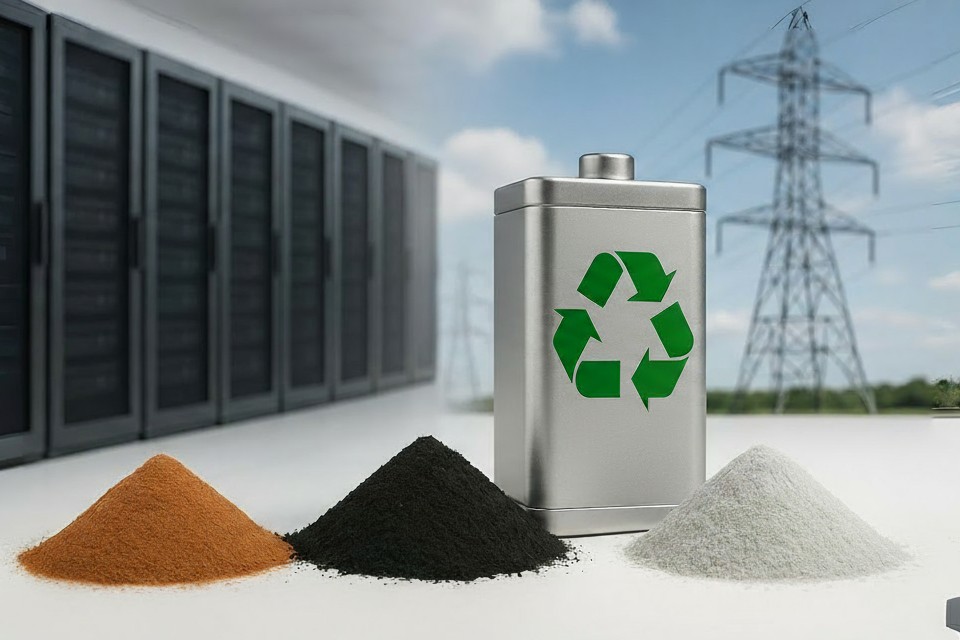
The company serves businesses along that route: battery manufacturers, cathode producers, recyclers and collectors. Its stated market spans electric vehicles, consumer electronics and stationary storage. Commercially, the proposition combines recycling services with battery materials. The useful output is a production input; the customer needs something that belongs in a manufacturing process.
First, know your battery
There is an unglamorous complication. Used batteries arrive with different shapes, sizes and chemistries. Preserving useful material means knowing what you have. Li Industries therefore developed a Smart Battery Sorting System using machine learning, cameras and other sensors. Its sorting work is part of the recycling argument: better information upstream can improve what happens downstream.
In April 2022, Call2Recycle announced a partnership with Li Industries to commercialize chemistry-based sorting and refine battery processing. That paired a technology developer with an organization experienced in collecting batteries. It also supplied a practical setting for the question every automation project faces: what should the machine recognize, and what economic difference does recognizing it make?
- 01Identify
& sort - 02Recover
electrode material - 03Rejuvenate
the material - 04Return to
manufacturing
The answer involved a spreadsheet. Argonne National Laboratory customized its EverBatt model to compare automated and manual sorting, including their effects across the supply chain. The analysis found lower overall costs for automated sorting, driven by reduced labor costs. It also found that putting sorting beside pretreatment or recycling could avoid extra transportation costs.
This is a lesson another industrial business can copy: evaluate the machine together with the journeys around it. A faster operation can still sit inside an expensive system. Li Industries’ modeling examined different features and processing capacities, giving decisions about equipment a wider frame than the equipment’s purchase price.
“This helped us to optimize the system for maximum economic benefits to the recycling industry.”Zheng Li, on the EverBatt analysis
Two cheques. Two jobs.
Money entered in stages. In 2022, Li Industries raised a $7 million Series A led by Khosla Ventures, with Shell Ventures and Xerox Ventures participating. In May 2024, it announced $36 million in Series B financing, co-led by Bosch Ventures, Khosla Ventures and LG Technology Ventures. A June extension brought the round to $42 million, adding GM Ventures, DNX Ventures and Tech Energy Ventures.
Then came a different kind of announcement. In September 2024, Li Industries said it had been selected for a $55 million Department of Energy award supporting an LFP cathode active material recycling and manufacturing plant. Federal presentation materials located the proposed project in Kettering, Ohio. Equity finances a company; this award selection concerned a defined industrial undertaking.
planned LFP CAM capacity
in domestic production cost
The announcement set out annual capacity of 10,000 tonnes, equivalent to 5 GWh of LFP cathode material, and projected production costs 23 percent below traditional domestic manufacturing. These figures describe the project’s ambition. They are targets, rather than evidence of current annual output or a saving every customer will receive. GM was supporting development of technology for the direct recycling process.
A materials problem meets a factory problem
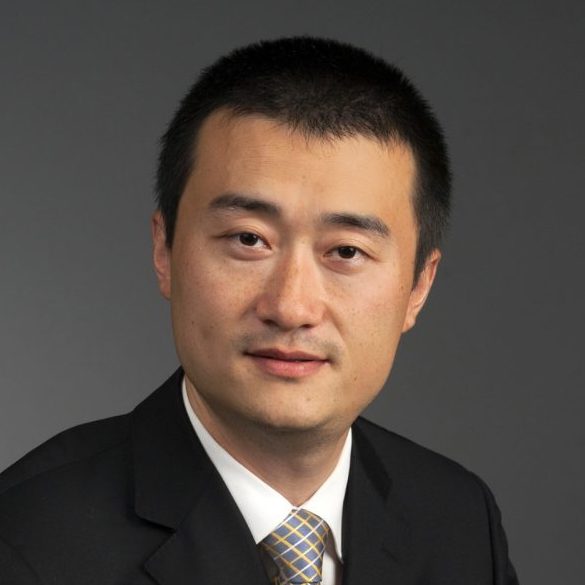
The team reflects those overlapping demands. CEO Zheng Li is the primary inventor of the company’s closed-loop materials technology. Co-founder and president Nolan Schmidt brings industrial leadership experience from BAE Systems. CTO David Young has a materials science background and manufacturing management experience; co-founder Henry Han leads finance. Chief Scientist M. Stanley Whittingham shared the 2019 Nobel Prize in Chemistry.
The company’s hiring language supplies a more everyday view: design experiments, troubleshoot equipment, validate yield, throughput and quality. That is where a recycling idea becomes a production process. J.P. Morgan identifies itself as Li Industries’ primary operating bank and senior lender, another indication that the undertaking involves financing industrial operations as well as scientific development.
The bill still has to add up
Li Industries occupies a battery recycling market that also includes Redwood Materials, Ascend Elements and Cirba Solutions. Its distinctive emphasis is direct recycling and the economics of low-value chemistries. That advantage depends on suitable, well-separated feedstock and a recycled material that manufacturers can use competitively. Sorting problems and unfavorable economics against virgin material can squeeze the proposition.
There is continuing recognition for the sorting work: in July 2026, DOE named Li Industries a Battery Recycling Prize Breakthrough Contest winner, awarding $200,000 and advancement to Phase IV. For a prospective partner, the practical questions remain material specification, available feedstock and delivered cost. A second life becomes a business when the next manufacturer has a reason to buy.