Jun Choi arrived at the radio station with a six-pack of beer and Korean soju. He was running for mayor of Edison, New Jersey, and the hosts owed him an apology. Their comments about Asian Americans had turned a local election into a dispute over who belonged in American politics. Choi brought refreshments. He also brought his campaign platform.
It was May 2005. The encounter ended with an apology, a shared drink and plans for a debate with the incumbent mayor. Choi accepted the apology while calling the remarks unacceptable. He even supplied a serving suggestion: soju went well with Korean barbecued beef. A confrontation had acquired a menu, but he kept the political purpose in view. He wanted airtime for an argument about how Edison should be governed.
That small episode makes a useful introduction to a career that has crossed engineering, public policy, elected office and industrial real estate. Choi now leads Menlo Realty Ventures, which specializes in putting former industrial land back to work. There is considerable distance between a radio studio and a warehouse development. Both, however, require dealing with people who already have opinions about what should happen next.
A hometown, with complications
Choi’s parents were Korean immigrants who owned dry-cleaning businesses. He grew up in Elizabeth before his family moved to Edison, and he graduated from J.P. Stevens High School. His later campaign was therefore a return to familiar territory, although familiarity offers no exemption from electoral arithmetic. The town you know still gets to decide whether it knows you well enough.
His early ambitions pointed upward. As a teenager, he earned a pilot’s license and wanted to become an astronaut. He went on to study engineering at the Massachusetts Institute of Technology and later earned a master’s degree at Columbia in public policy. Aviation, engineering and government make an unusual educational itinerary. They also give the eventual mayor a biography that begins well before anyone hands him a ceremonial shovel.
He started his working life in management consulting, advising companies on strategy and technology. Public service followed, including work on Bill Bradley’s presidential campaign, at the federal Office of Management and Budget, and in New Jersey education policy. His responsibilities included leading a statewide task force that developed NJ SMART, the state’s education data program. Before campaigning to run a municipality, he had worked on how government measured its performance.
The 2005 primary put him against George Spadoro, a three-term incumbent. Choi won. In January 2006, at 34, he took office as Edison’s youngest mayor. The change had a visible significance for Asian American political participation, but Choi’s own explanation of electoral success was deliberately broad. A candidate had to build support across the community, rather than treat one constituency as sufficient.
“You have to appeal to a wide audience.”
Jun Choi, during the 2005 campaign
What a mayor leaves behind
A mayor’s term is usually remembered through a few photographs and a long list of things residents wanted fixed. Choi served from January 2006 to January 2010. His administration’s work ranged across fiscal reform, economic development, public safety, education and environmental protection. The breadth matters. A municipal government cannot specialize quite as neatly as a company can; the next item on its agenda may have little in common with the last.
One tangible part of that record was land. During his tenure, Choi led planning and negotiations for millions of square feet of redevelopment while preserving 37 acres of open space. Those outcomes belong beside each other. The first concerns what gets built; the second concerns what stays unbuilt. Together, they capture the practical choices behind a phrase as comfortable and imprecise as “economic development.”
Edison also received BusinessWeek’s recognition as New Jersey’s best place to raise children during his administration. Such an honor describes a town, with all the people and institutions that make it function. It sits in Choi’s record as a municipal distinction during his watch, rather than a personal trophy. That distinction is useful when evaluating anyone whose job depends on the work of a large public organization.
Open space preserved alongside redevelopment planning and negotiations.
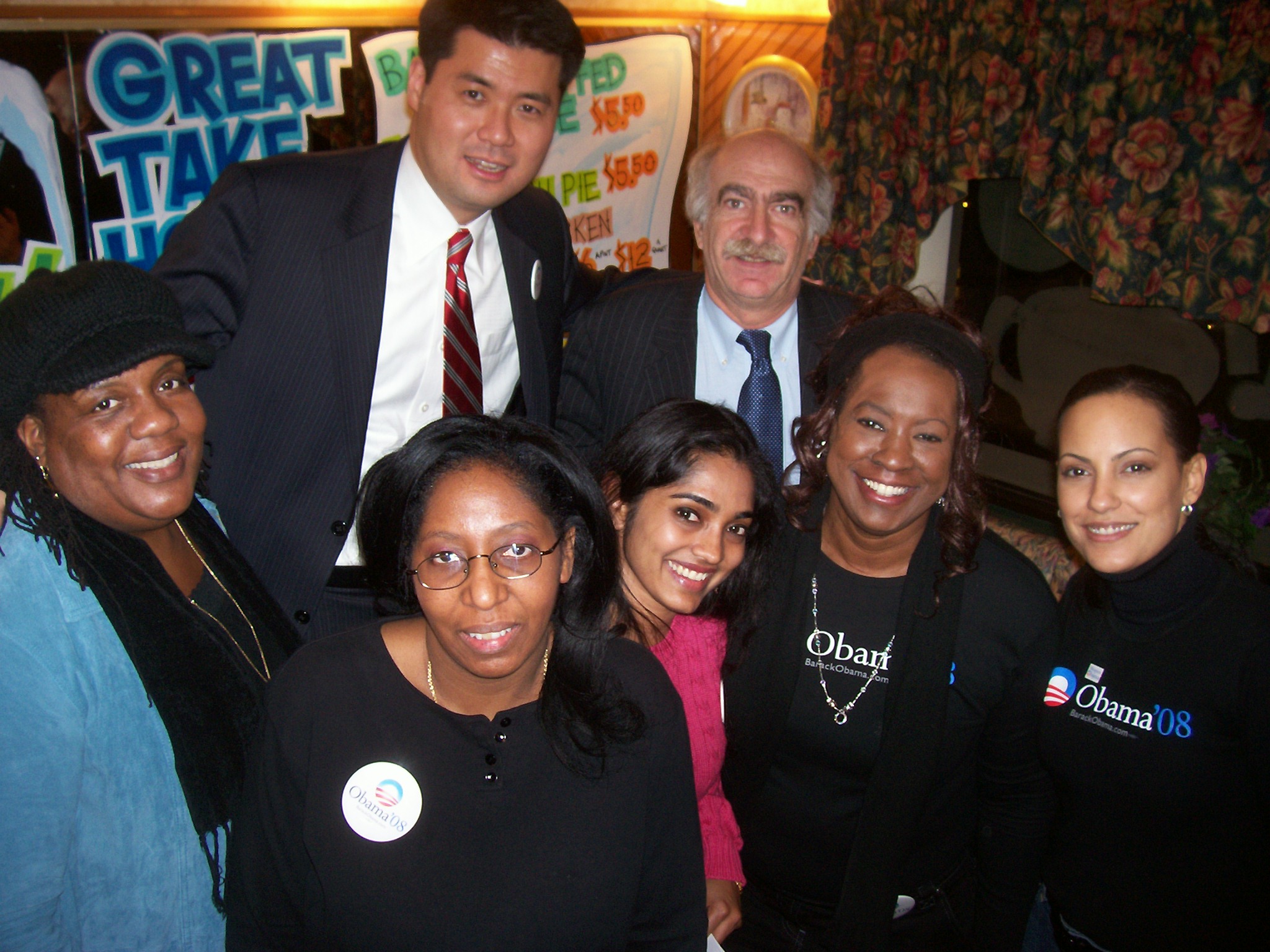
His politics extended beyond township business. In January 2008, he addressed Barack Obama supporters at the Edison Family Restaurant on Oak Tree Road. He invoked Thomas Edison and Menlo Park, connecting the township’s history of invention with his hope for innovation in government. Around him were supporters, campaign organizers and a diner’s thoroughly terrestrial offerings of casserole, spinach pie and pasta. Presidential politics had pulled up a chair.
The other side of the planning table
After municipal office, Choi worked at Cushman & Wakefield, advising industrial developers on strategy, acquisitions, sales, leasing and public policy. By January 2016, he was identified as a director there. The work moved him into the commercial decisions that bring redevelopment proposals to a town in the first place. An address on a plan can be somebody’s investment, somebody’s workplace and somebody else’s concern about the neighborhood.
He subsequently founded Menlo Realty Ventures. Its focus is industrial development, particularly converting contaminated brownfield sites into clean, productive industrial uses. These are properties with a previous chapter. Redevelopment has to reckon with that chapter before it can write another one. The appealing drawing of a finished building is only part of the proposition; the existing site is the part already waiting for everyone.
A public speaker biography describes nearly two million square feet of Menlo projects completed or under development since 2018. The wording carries an essential distinction: a project under development has a different status from a completed building. The figure captures the scale of the work described in that biography, and combines both stages. It is a portfolio snapshot, with construction and development still in the picture.
A schematic of the firm’s focus, not a project schedule.
Choi also participated in a regional discussion of e-commerce, land use, workforce and finance, alongside Larisa Ortiz, Kate Wittels and Aditya Sanghvi. A warehouse is where the apparent simplicity of an online purchase meets the geography of delivery. Questions about buildings become questions about roads, labor and the uses a region makes room for. His business placed him inside that discussion; his earlier public role supplied another relevant set of experiences.
Public work after public office
Leaving the mayor’s office did not end Choi’s involvement in policy organizations. He joined New Jersey Policy Perspective’s board in 2013 and was elected its chair in December 2015, with the announcement following in January. The organization’s work concerns state policy and economic opportunity. Choi’s arrival brought a former municipal executive and a practicing real estate adviser into its board leadership.
Gordon MacInnes, then the organization’s president, described his judgment, warmth and commitment to progressive goals. It is a colleague’s assessment, with a more personal register than a list of appointments. Choi, meanwhile, spoke of growing the organization’s impact while continuing its advocacy for middle- and lower-income families. The aspiration was attached to a specific institution and a specific job.
He helped announce Brandon McKoy as the organization’s next president in February 2019, emphasizing the incoming leader’s policy record and the perspectives he brought to decision-making. Marcia Marley succeeded Choi as board chair that July. The dates give this part of his story a beginning and an ending. Institutions keep moving, and leadership includes handing the role to someone else.
Choi also co-founded Jersey Promise with Richard Sun, a former Summit councilman. The group’s 2019 report examined the position of Asian Americans in New Jersey, with Choi among its authors. Its recommendations included further research on the Asian American and immigrant workforce, workforce training and support for small-business growth. The concerns connected civic participation to the practical conditions in which people earn a living.
That year, he spoke about discussions with the New Jersey secretary of state’s office on increasing Asian American representation. The issue reached census participation and redistricting, where counting people and representing them become closely related tasks. For a former mayor whose own election had drawn attention to Asian American participation, this was another concrete arena for advocacy.
A region bigger than one town
In 2017, the Regional Plan Association announced Choi’s appointment to its board. His subsequent roles included its executive committee and co-chairing the New Jersey committee. Regional planning asks officials, business leaders and advocates to consider connections that exceed municipal boundaries. A town’s decisions sit within a larger system of housing, transport, jobs and land use. Choi’s career had already taken him through several of those subjects.
At the association’s 2021 Assembly, he opened the program in conversation with Senator Cory Booker. They discussed income inequality and housing, including Booker’s proposal for a renter’s credit comparable to the mortgage-interest deduction. Choi was serving as the interviewer, bringing a policy question to a public discussion. It was another form of participation beyond running for office or leading a firm.
In 2023, the association honored him with its Above and Beyond award, recognizing his public service, six years of board commitment and leadership of its New Jersey committee. By October 2026, he was listed among the hosts of its forthcoming Celebrate the Tri-State benefit, scheduled for October 15. The sequence shows a civic relationship that continued after the award dinner had ended.
The beer and soju episode survives because it is funny, specific and slightly unexpected. The later career is more often expressed in board appointments, development descriptions and acres of land. Put the two together and Choi’s story acquires its human scale. At a microphone, in municipal office and in industrial development, he has repeatedly worked where a place’s existing history meets a proposal for its future. Edison was an early version of that problem. The next site brings another.
Keep reading, keep watching
- Jun Choi on LinkedIn ↗
- Career and development biography ↗
- The 2005 radio appearance ↗
- The Edison diner gathering ↗
- His appointment at New Jersey Policy Perspective ↗
- Jersey Promise’s 2019 report ↗
- The 2023 regional planning award ↗
- Celebrate the Tri-State, October 15, 2026 ↗
- Video: Jun Choi on civic participation (PBS, 2021) ↗