Before Genoveva Arellano had a company, she had a Rolodex. In 1994, after leaving her job, she wrote to the people whose names she had collected through years of transportation work. There was no grand unveiling. There was an offer to help, sent through the mail. A business that would eventually employ more than 70 people began with the practical question of who might need her.
The object seems almost comically modest beside the projects that followed: a 28-mile freeway, subway extensions beneath Los Angeles, California’s proposed high-speed railway. Infrastructure has a taste for enormous machinery. Arellano’s starting equipment could sit on a desk. It held something useful, though: relationships with people who knew how she worked.
That relationship between the monumental and the personal runs through her career. A transportation agency may be planning across counties and decades. The person attending its meeting may want to understand what happens to a familiar street. Arellano has built her working life in the space between those two views, where a regional ambition needs an answer someone can actually use.
The eighth child, with somewhere to go
She was born in West Covina in 1964 and grew up in Baldwin Park, the eighth of nine children. Her parents had moved to Los Angeles from Mexico in 1948. Her father built the family’s house; her mother made limited resources meet the household’s needs. Long before she organized public participation for a living, she belonged to a household with plenty of participants.
At Baldwin Park High School, she became student body president and graduated as salutatorian. Public administration took her to the University of Southern California. During her final year, she interned at the White House Office of Management and Budget as an assistant intergovernmental liaison. She graduated cum laude in 1985, with a bachelor’s degree in public administration and a minor in Spanish.
By 1988, the Hispanic Women’s Council had named her its Woman of Promise. A scholarship would take her to Harvard’s Kennedy School, where she earned a master’s in public policy. The sequence is striking for its consistency: student leadership, public administration, intergovernmental work, public policy. She was learning how institutions function before making a business of helping them speak with the people outside.
A letter, a license, a freeway
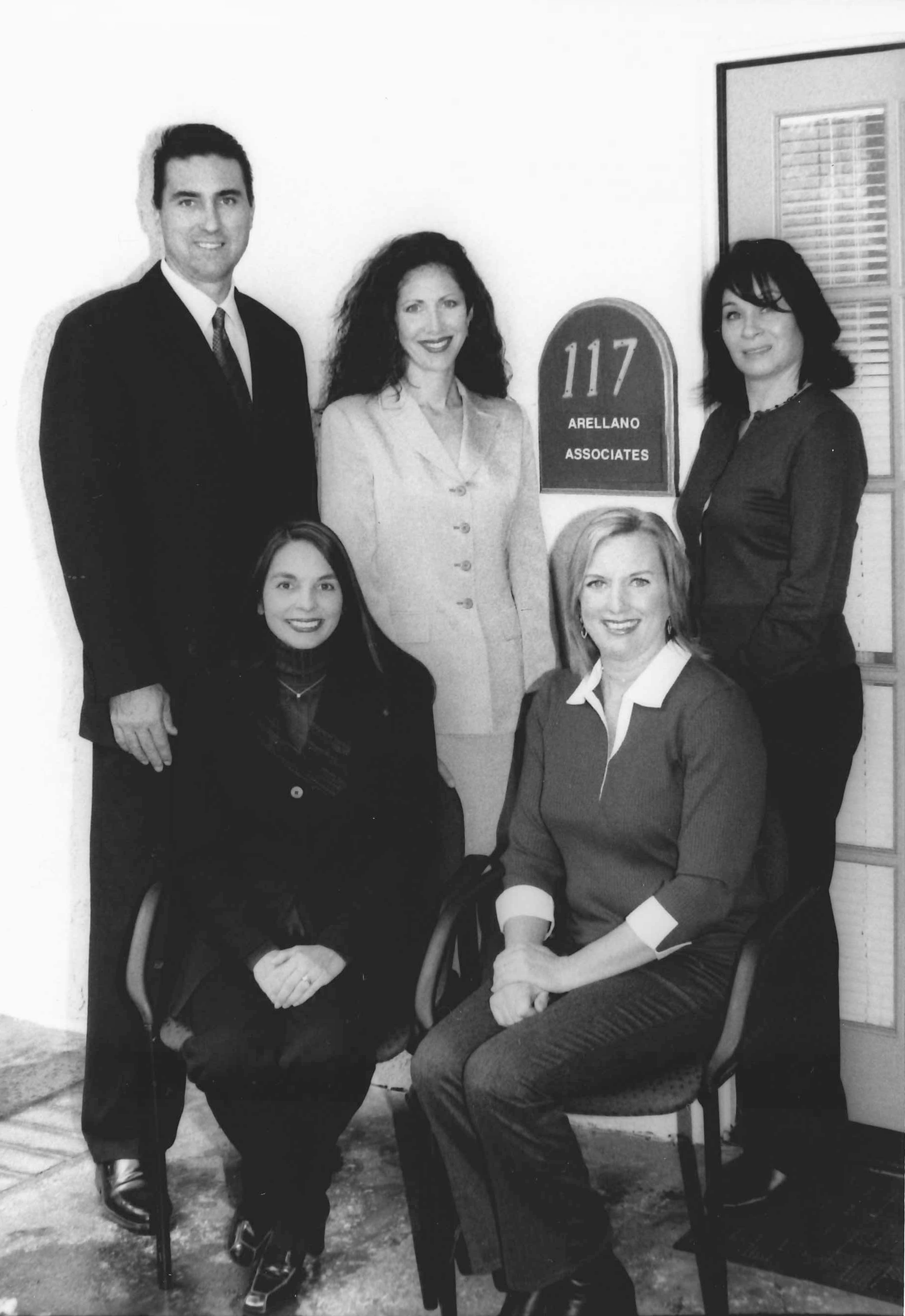
Arellano entered transportation work at Cordoba Corporation in 1990. Four years later she left. Her account of the transition includes marriage and buying a home, followed by the decision to pursue work on her own terms. Her contacts offered a starting point. Firms that knew her were willing to team with her.
“I sent a letter to everyone in my rolodex,” she recalled. On December 9, 1994, she secured her business license. The name on it was Arellano Associates. There is something pleasingly untheatrical about that beginning. The first move was to tell people she was available and explain what she could contribute.
In 1997 came the firm’s first large contract, with the San Bernardino Associated Governments, now the San Bernardino County Transportation Authority. The assignment covered community relations for construction of the Route 210 Freeway. It lasted 10 years and involved a 28-mile project. For a young consultancy, the contract provided both a foothold and a lengthy education in the public consequences of building things.
A decade of community relations also puts the word “relationship” under pressure. An introductory meeting is easy to arrange. Remaining useful through years of construction is a more demanding proposition. Questions change as a project moves from a line on a plan to work outside someone’s door. The contract made that long middle part of a project central to her business.
- 1985Graduates from USC
- 1990Transportation work at Cordoba
- 1994Establishes Arellano Associates
- 1997Route 210 contract
- 2025WTS International recognition
The work above the tunnel
Her firm went on to work with the California High-Speed Rail Authority, the Orange County Transportation Authority and Los Angeles Metro. On the Purple Line Extension’s second and third sections, its responsibilities included explaining construction impacts and traffic closures. The tunneling could be hidden beneath the surface while its consequences were very much visible at street level.
That is an awkward communications assignment in the most literal sense: how do you describe a machine people cannot see, while answering for disruptions they can? Arellano’s team helps put the engineering into a form the surrounding community can follow. The extraordinary underground work still needs ordinary, timely explanations.
She enjoys the engineering. Yet her description of her own firm’s contribution is deliberately small: “one part of thousands of pieces that make this project happen.” It is a useful corrective to the business habit of placing the founder at the center of every photograph, every success and, occasionally, the known universe.
Her formal training remains relevant here. A policy degree equips someone to understand the institutional machinery; public administration concerns how decisions become action. Her Spanish fluency adds another practical means of communicating. Today, as president and CEO, she continues providing management services for major clients. Leading the company still includes participating in the work it sells.
Who gets into the conversation?
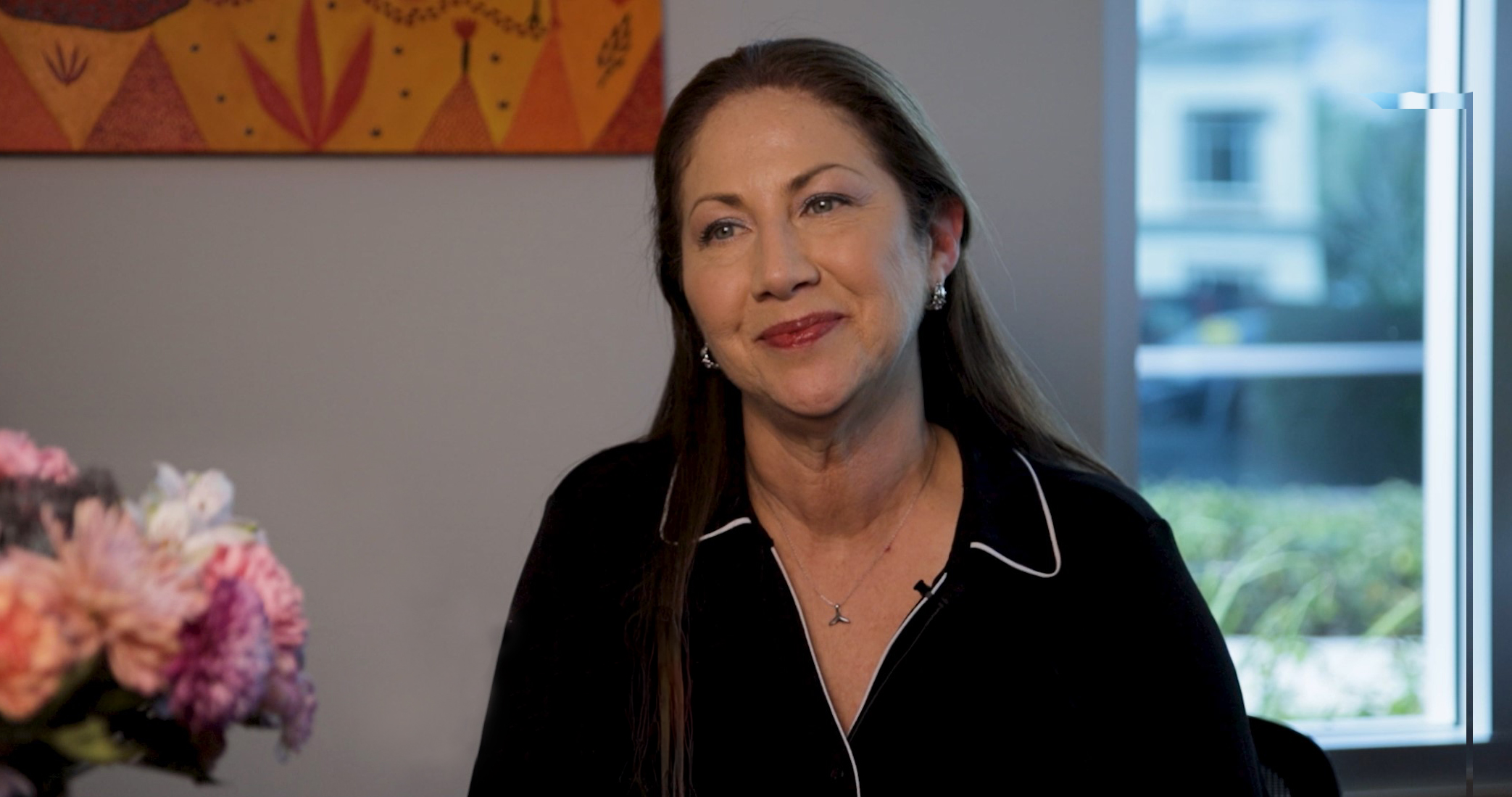
Arellano founded the firm to strengthen relationships between government and communities. Chester Britt joined shortly afterward. Their company grew from a handful of people in the 1990s into a practice with more than 70 professionals, combining outreach with government relations, strategic planning and digital engagement. Its subject matter now includes energy and water alongside transportation.
Inside the firm, that purpose has acquired specific capabilities. Its creative and technical team works in graphic design, photography, video, animation, digital engagement and geographic information systems. Its inclusion work examines barriers to participation and ways to obtain input from historically underrepresented groups. The tools differ, but the recurring question is who can understand the invitation and take part.
A map and a meeting do different jobs. One can make a route legible; the other gives people a chance to question it. Video can explain a process that a paragraph makes laborious. None of those formats automatically produces trust. Their value depends on whether they help someone grasp a decision and respond to it. This is the practical challenge her firm has chosen to take on.
“Diversity is not a goal, it’s who we are.”Genoveva Arellano
The composition of the company offers another view of that commitment. In its recognition of her work, WTS-LA reported a workforce that was 69 percent women and 75 percent minorities, with women making up two-thirds of management. Those figures describe the award profile’s snapshot of the firm. They give the discussion of representation a concrete workplace setting.
Historical recognition figures, not a live employee census. The groups overlap.
WTS-LA recognized her with its Rosa Parks Diversity Leadership Award. In 2025, WTS International also named her the recipient of its Rosa Parks Diversity Leadership Award. The recognition encompassed community outreach and her mentorship of women and minorities in transportation. A profession concerned with moving people was also acknowledging who gets the opportunity to lead.
A room worth returning to
Public infrastructure offers a stern education in patience. For Arellano, the June 2024 environmental clearance of the Palmdale-to-Burbank high-speed rail section followed years of meetings, briefings and conversations with officials and residents. She had worked on high-speed rail since the 1990s. When the board approved the section, she became emotional.
Her response was brief: “We went through a lot. Underscore we.” The sentence assigns the credit before anyone else can make it singular. Environmental clearance was a milestone in a continuing project, and the relationships formed along the way mattered to her as well as the vote. In a career conducted over long horizons, both were reasons to mark the day.
The same interest in opening the profession to others appeared in October 2025, when she moderated a small-business procurement panel at Caltrans District 7 headquarters. Representatives of Caltrans, Pasadena, Metro, Long Beach Transit and Metrolink discussed opportunities with contractors and small firms. The event moved from panel discussion to speed networking, giving attendees a chance to make introductions of their own.
It is an apt setting for someone whose business began with a collection of professional contacts. Her own opportunity came through people willing to work with her. Decades later, she was helping other businesses get into a room with agencies that might need them. A Rolodex has largely disappeared from office desks. The problem it addressed remains quite recognizable.
Her connections also extend to education: she is listed on the Hispanic Scholarship Fund’s Los Angeles Advisory Council and has served on the executive advisory board of the Harvard Kennedy School Journal of Hispanic Policy. The journal’s 2018-2019 editors thanked her as a former board chair for contributing to its strength and continuity.
For the company’s future, she has emphasized leadership continuity, the quality of its work and the people doing it. At her international award acceptance, she returned to a compact set of concerns: “respect, understanding, fairness.” After the degrees, the contracts and the years spent explaining ambitious projects, her terms for dealing with people remain refreshingly plain. A large undertaking still contains individual conversations. She has made a career of staying for them.
Continue the conversation
Explore Arellano’s official biography, her LinkedIn profile and Arellano Associates.
Read about her 2025 WTS International award, the firm’s beginnings, its subway construction work and the 2024 high-speed rail milestone.