A civil engineer can spend a working day thinking about what lies beneath a structure. Foundations. Soil. The conditions that determine whether an elegant drawing will behave itself in the world. Before Sybil Hatch founded Convey, those were among her professional concerns. Her later work moved closer to the surface: the words, pictures, meetings, and websites through which people encounter a project. The practical question survived the career change. Will this hold up when somebody actually uses it?
Hatch founded the communications agency in 1997. Today, Convey lists her as president, with PE after her name. The credential is a small but telling detail on a page populated by writers, designers, developers, and researchers. An engineering background can look like an unusual qualification for a communications business. Spend a little time with the business she built, however, and the connection becomes easier to see.
A transport plan must make its way into the life of someone who has never read a transport plan. A toll website must answer a question before the visitor gives up. A road improvement must be discussed with the people who care about the trees beside it. These encounters are part of a project’s working life. Hatch’s company has made them its occupation.
The engineer keeps her tools
Hatch trained at Virginia Tech and worked on foundations, soil stability, and environmental assessments. She brought civil engineering and writing together in Convey. That origin offers a useful way into her career: she already knew the kind of material that her future clients would need to explain. The drawings and technical terms belonged to a professional world she had inhabited.
The continuity is there in a short observation she made about her work: rigorous standards matter to an engineer. A sentence has no load rating, admittedly. It can still fail a fairly straightforward test. Can its intended reader understand what is proposed, why it matters, and what happens next? For a resident encountering an unfamiliar scheme, those are reasonable demands.
“From an engineering perspective, rigorous quality standards matter.”
Sybil Hatch
The company around Hatch now includes behavioral science, web development, graphic design, video, and editorial work. That mix gives a technical question several possible routes to an audience. Sometimes the useful answer is a clearer page. Sometimes it is a picture, an interview, or a meeting in which someone can ask another question. A founder’s influence becomes visible in the range of problems a business chooses to take on.
The wall before the book
One of Convey’s more revealing assignments began with a room full of engineering history. Magnusson Klemencic Associates wanted a book about its people and projects. Former MKA engineer Tyler Sprague had assembled archival material. Convey’s writer and designer joined the project team in Seattle, where photographs and notes were pinned around a conference room to help decide what belonged in the story.
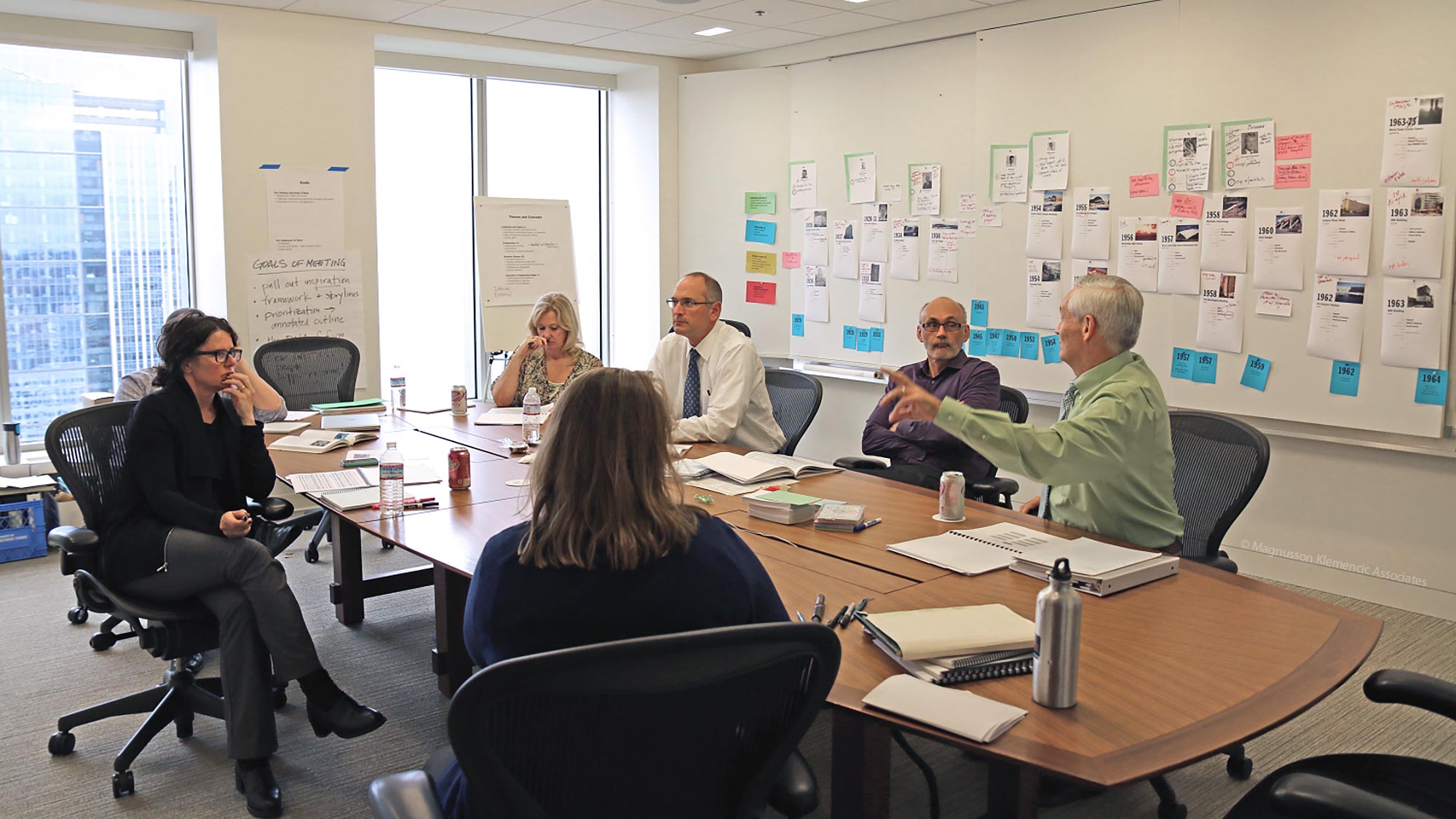
It is a pleasingly physical way to edit. Before a reader can turn a page, somebody has to choose what deserves one. The resulting hardback, We Had to Be Dreamers, ran to nearly 250 pages. Its subject was a structural and civil engineering firm; its materials included careers, decisions, and the stories behind built work.
This was a team assignment, and its value in Hatch’s story is what it says about the firm she founded. Technical expertise and narrative judgment had a shared job. The book needed enough engineering to be faithful to its subject and enough selection to remain readable. A conference-room wall has rather more tolerance for detail than a reader’s evening.
The user gets a vote
The same tension turns up in a much less ceremonious setting: a driver looking for an answer on the FasTrak website. The Bay Area Toll Authority wanted a simpler experience and fewer calls to its call center. Convey worked with Kalamuna on the redesign, testing how people sought information and how they used a prototype.
There is a useful modesty in watching another person operate something you have made. The navigation may seem perfectly clear to the people who named it. A visitor brings a different vocabulary and a more urgent interest in finishing the task. That encounter supplies evidence a design meeting cannot produce by itself.
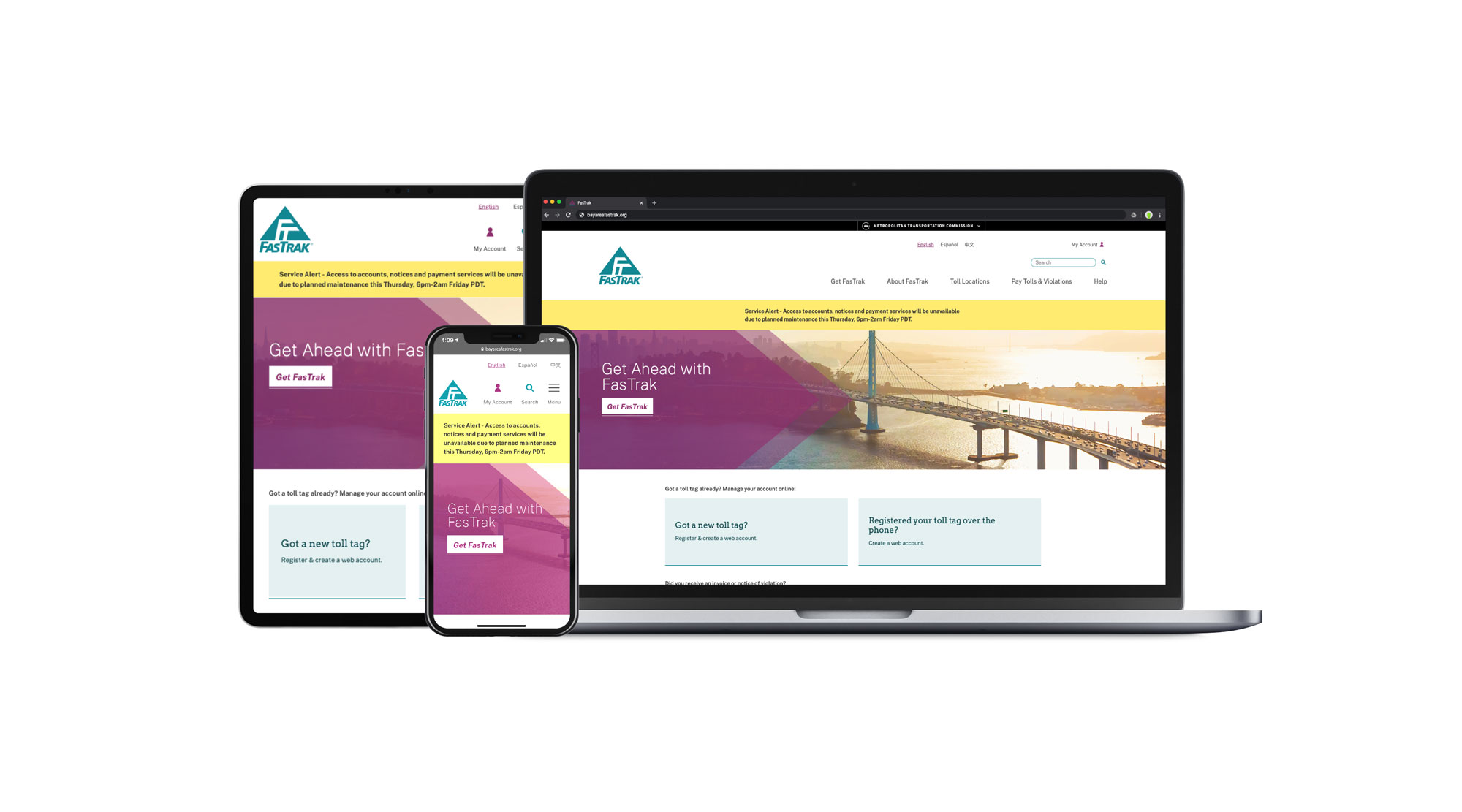
The assignment included rewriting and reorganizing hundreds of pages. Chinese and Spanish translations were part of the result. These are practical forms of attention: fewer verbal obstacles, information arranged around use, and more than one language in which to find an answer. The technical project becomes a sequence of small decisions about somebody else’s time.
For Caltrain’s 2019 Business Plan, Convey worked under Fehr & Peers on a planning microsite. A glossary helped explain terminology. A map connected information to communities. Surveys gave visitors a way to respond. The agency reports that one-third of unique visitors completed a survey. That measures participation on a website; it is a useful result to keep at that scale.
Unique website visitors completed a survey, Convey reports.
A measure of online participation.The interesting connection to Hatch’s first profession is the habit of checking an idea against use. A digital page can invite feedback or bury the opportunity. A glossary can make a discussion less forbidding. None of this requires a grand speech about participation. It requires someone to notice where participation becomes difficult, then do the work of making it easier.
A tree is never just a tree
On El Camino Real in Burlingame, a roadway-renewal project brought competing attachments into the same conversation. Improvements involved the potential removal of historic trees. Some residents prioritized preservation; others emphasized travel connections and roadway needs. Convey’s 2020-2022 assignment for Caltrans involved explaining the technical work and facilitating discussion among people with different goals.
A tree on a drawing is a relatively tidy object. A tree beside a familiar street has a biography in the minds of the people who pass it. Public engagement has to accommodate both kinds of knowledge. Precision about the engineering remains necessary. So does an understanding that a resident’s attachment to a place is part of the matter being discussed.
Convey’s work included collecting concerns, reporting public input, and incorporating landscape drawings into outreach materials. One open house drew more than 200 people. The drawings are a particularly apt detail: a technical explanation could acknowledge the character of the street it concerned. There was room for visual care inside a discussion of practical changes.
For Hatch’s professional story, this is where the two careers meet most plainly. An engineering project has constraints. A neighborhood has priorities. Explaining one to the other requires patience with detail on both sides. Clear language helps people see the choices before them. The choices may still be difficult.
Ask before drawing the route
Another Convey assignment began by asking people about travel itself. For Contra Costa Transportation Authority’s Innovate 680 program, the firm surveyed 1,500 residents near the corridor about their habits and beliefs. Interviews with peer agencies added experience from comparable work. Open-ended questions let residents describe travel in their own words.
The order matters. Before recommending a message, learn what people think is getting in their way. Before assuming a new service will appeal to them, ask how they currently get around. Convey describes research that informed both communication and aspects of project design, including feedback about an app and shared mobility hubs.
Corridor residents surveyed about travel habits and beliefs.
People interviewed and photographed for 30 years of transport work.
For the San Francisco County Transportation Authority’s 30th anniversary, the unit of attention was also a person. Convey interviewed and photographed 30 people, including artists, commuters, business owners, and transit operators. An institutional birthday became an occasion to hear how transport projects were experienced in daily life.
These assignments show different uses for listening. A survey looks for patterns across many responses. An interview can stay with the detail of one experience. Both ask the organization to make room for a perspective beyond its own account of the work. In Hatch’s company, those activities sit alongside the writing and design that carry the results back out.
The next public conversation
Convey’s rail work includes Link21, where it has worked with HNTB and other partners on branding and engagement, and with Kalamuna on the website. Planning a future rail connection requires people to consider something that is still taking shape. The communications have to give that conversation enough structure to begin.
Hatch’s career offers a practical continuity through these different assignments. She started with the conditions beneath a structure. The firm she founded works with the conditions around a public project: how it is explained, how questions are invited, and how people find their way into the discussion. There is craft in a useful map and discipline in a well-edited page.
The most telling detail may still be those two letters after her name. PE. They sit comfortably beside the title of president at a communications agency. After years of foundations, websites, books, and public meetings, the engineer’s question remains available: what happens when this leaves the drawing board and meets the world?