When Cristina Vera Bridges’s agency marked fifteen years, the creative brief came with an unusual piece of audio: her mother talking about her. The team built its anniversary campaign around that recording and the courage her mother heard in her daughter’s story. An agency can commission a brand film. Getting your mother to supply its central argument is a rather more personal production decision.
The campaign was called Fearless 15. Vera Bridges had opened Vera Creative in 2008, during a recession, while raising children as a single mother. By the anniversary, there was a new office, a commemorative video, a zine and a website launch to coordinate. The family recording gave those business milestones a human scale. Behind the company’s name was someone who had taken a considerable chance.
But her account of that chance contains a useful complication. Years later, when she invited women into a leadership program of her own, she acknowledged mistakes and repeated failures. Necessity had helped her begin. It had not supplied all the guidance she needed to keep going. That distinction would become the basis of another organization.
The education at the front door
Before the agency, there were parents arriving at the Mary Crane Center in Chicago’s Lathrop Homes. Vera Bridges worked in its Head Start program and greeted the families bringing their children in. She learned about the neighborhood through those daily encounters, including the working mothers whose responsibilities looked familiar to her.
As a single Latina mother herself, she recognized something of her own life in the people she served. Later, leading Head Start campaigns across Chicago, she carried that experience into decisions about language, tone and how families received information. Her understanding of an audience had begun with introductions.
An early design assignment for the city’s homeless services sharpened the connection between communication and access. The job was a small card directing people toward services. Its usefulness depended on whether someone could understand it and act on it. A modest object could carry a serious responsibility. Her ambition for Vera Creative grew to include being a thinking partner to organizations working through such problems.
A name with an obligation attached
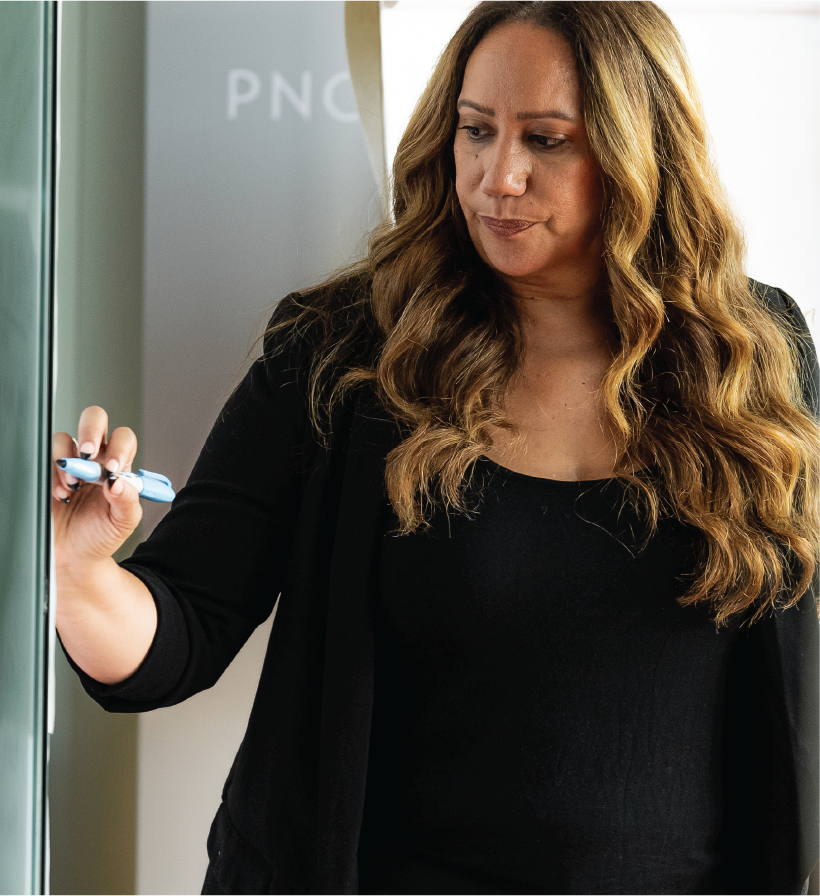
Vera Creative works across strategy, design, production, marketing and community engagement. Its founder ties the name Vera to truth and to the responsibility of doing right by the people a campaign hopes to reach. The agency describes those people as participants in the work, with a stake in what gets made.
That principle has practical consequences. A team can produce an elegant visual identity and still misunderstand the person reading it. Community engagement gives the reader a chance to answer back. The Core, the agency’s outreach operation, puts conversations and canvassing alongside its creative services. Listening becomes part of the assignment.
Within the studio, the argument continues. In an essay about society’s role in design, Camilo Vera invites audiences to criticize and test the work while it is taking shape. Nina Perez describes market research, focus groups and face-to-face outreach as parts of the agency’s process. Those are methods for giving an audience influence before a campaign is finished, when a correction can still change the result.
The room needs more decision-makers
For Vera Bridges, the question of who gets heard is also a question of who has authority. Writing about Latino audiences in 2024, she recalled frequently being the only Latina at the table. The experience informed her criticism of advertising that treats a culture as a collection of interchangeable references.
Her argument reaches beyond translation. Language matters, but so do the people deciding what a campaign should say and how community feedback changes it. She asks how much of a diverse workforce actually holds decision-making power. The question is pointed because representation can be visible while authority remains elsewhere.
In November 2024, Vera Creative hosted a Chicago Advertising Federation discussion about US Latino perspectives on brands. Its announced subjects included age, acculturation, language and the meaning of value. Putting those differences on the agenda gives a useful sense of her professional concerns. A broad demographic label is only the beginning of understanding a customer. The interesting work starts when the label stops being sufficient.
Give the children the microphone
There is room for play in this approach. Tiny Mic Drop, the agency’s short-form series for Chicago Early Learning, brings toddlers and preschoolers into the interview. Sometimes the children answer questions. Sometimes they ask them, with educators, program leaders and Chicago officials taking their turn.
The format puts a little unpredictability into a public-information campaign. An adult can prepare a perfectly serviceable statement about early education. A small child with a microphone introduces other priorities. The series makes that encounter part of the appeal, creating videos families might want to pass along.
Launched in spring 2023, Tiny Mic Drop had recorded more than 130,000 impressions when the agency announced its Silver ADDY in April 2024. Those figures describe the series at that point in time. The underlying aim was specific: help more families encounter Chicago Early Learning and visit its website. The joke has a destination.
What the work asks of her
A Chicago Board of Education agreement makes the responsibility more concrete. Approved in December 2021, it authorized a $250,000 engagement with Vera Creative for 2022 to help Chicago Public Schools pursue its preschool enrollment goals. The assignment included giving parents advance notice of applications, school options and the process of applying.
The scope also required working with people inside CPS who understood the program’s strengths and difficulties. That is a revealing detail in the brief. A campaign needed institutional knowledge as well as creative judgment. Parents needed useful information at a useful time, in communities across the city.
For a founder whose early work involved greeting Head Start families, the connection is easy to follow. The communication has a task beyond attracting attention. A parent should be able to make a decision and navigate an application. The contract describes an assignment; the families give that assignment its point.
The support she wanted, put on the calendar
In 2024, Vera Bridges explained why she was launching La Collective’s Elevate program. Early in business, she had benefited from women who encouraged her and challenged her. What she had lacked was consistency: ongoing mentorship, accountability and guidance. By then, younger entrepreneurs and professionals were approaching her with questions of their own.
Elevate gave that exchange a schedule and a structure. La Collective describes it as a twelve-month mentorship cohort, combining individual coaching with monthly meetings and a network of women across professions. Its curriculum includes negotiation, communication, leadership and confidence. Participants can bring a problem into a relationship that lasts beyond a single introduction.
The distinction matters to her founding story. An encouraging conversation can help someone take a risk. Sustained support can also help with the decisions that follow it. The program makes room for women starting their careers and women considering a next step. Experience has something useful to offer in both directions.
“Do it afraid.”
Cristina Vera Bridges, on advice for women starting their careers
That brief piece of advice comes with a patient companion in her thinking: permission to learn and make mistakes. Confidence need not be complete before someone acts. Nor does taking action remove the need for other people. It is a less lonely proposition than the familiar image of a founder who somehow knows everything before opening the door.
Her mother, her sisters, her city
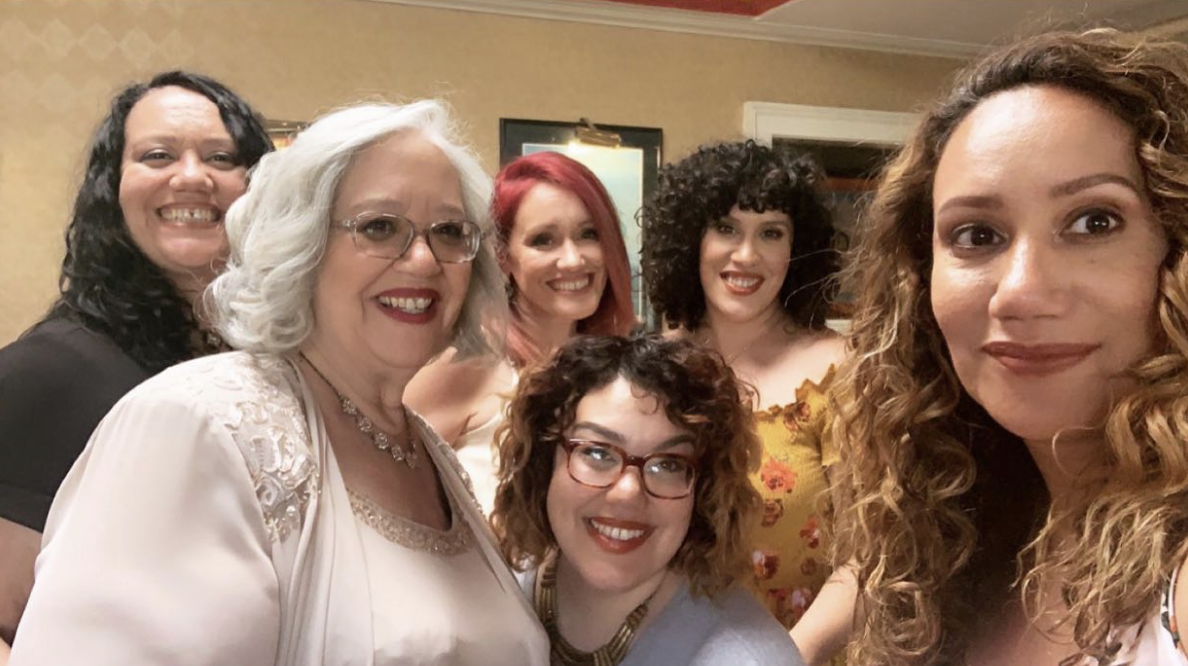
Asked about women she admires, Vera Bridges begins close to home. Her mother is an artist and writer; her four sisters are leaders in their fields. Friends belong in the account too, particularly those willing to challenge her. The family photograph is a useful accompaniment to the business story: the founder’s name may be singular, but the influences around it are plural.
Her civic work follows interests she has named for herself. When she joined the Puerto Rican Arts Alliance board, she connected the role to arts and culture, youth development, community empowerment and her Puerto Rican heritage. The appointment offered a way to work where those interests meet.
Crain’s Chicago Business included her among its Notable Latino Leaders for 2024. Garfield Park Conservatory Alliance’s 2024-2025 impact report also lists her among its board members. These affiliations place her in the ongoing work of Chicago institutions, alongside the clients, colleagues and women involved in her own organizations. They make the city a recurring setting in her professional life.
Learning to hand over the marker
By October 2026, her advice to a new business owner had become distinctly operational. In an essay published that month, she described investing in people whose strengths complemented hers, giving them resources and trusting them with responsibility. Doing so made space for her to concentrate on strategy and new possibilities.
She also credited colleagues with improving the systems behind the agency’s deliverables. Better processes brought more efficiency, fewer urgent scrambles and improved margins. There is a pleasingly unglamorous detail in that account: growth arrived partly through colleagues organizing the work better. Even a creative business has reason to appreciate an orderly handoff.
The lesson sits comfortably beside the rest of her career. At the Head Start center, she learned from parents. In campaigns, she asks communities to influence the work. Through Elevate, she gives mentorship a recurring place in women’s working lives. Inside the agency, she has learned to make more room for other people’s judgment. The next chair can belong to a parent, a colleague or a woman preparing to lead. Vera Bridges keeps making space for it.
Keep the conversation going
- Vera Creative
- La Collective & Elevate
- Cristina on LinkedIn
- Cristina on Instagram
- Her latest business essay
- The founder’s conversation
- Watch Tiny Mic Drop
- Latino audiences & creative decisions
- Chicago’s preschool campaign agreement
- 2024 Latino leaders recognition
- Garfield Park Conservatory Alliance impact report