In February 2025, students at EUDE Business School were asked to consider what advice they would give their earlier selves. Julio Rodríguez Díaz was leading a seminar on leadership. Alongside that backward glance came a buyer-and-seller exercise, questions about personal strengths and a discussion of perseverance. Anyone expecting to spend the session simply taking notes had been given other work to do.
It is a useful introduction to Rodríguez. His subjects can sound imposing: executive development, consultative selling, mentoring methodology. His teaching gets people talking, making choices and examining their own experience. At EUDE, the question about a younger self put a familiar difficulty into unusually compact form. We generally acquire useful advice some time after we could have used it.
Rodríguez has made that delay his business. As founder and CEO of Red de Mentoring de España, he helps arrange the transfer of experience between people. He also writes fiction, teaches public speaking and manages IESE’s Alumni Mentoring Program. Across those occupations runs a practical question: how can something one person has learned become useful to somebody else?
From Oviedo to other people’s problems
He studied Economics and Business at the University of Oviedo. His professional route took him to London and into consulting with Accenture, with work spanning Spain and Latin America. Mexico became an important part of that working life. Long before mentoring became his principal subject, he was dealing with the problems of running and advising businesses.
At Avanda Consultores, where he became a managing partner, his work encompassed training and business consulting. He has led training programmes across more than 50 national and international organisations. The named clients range from telecommunications to financial services. Selling, communicating and leading were practical demands with different company names on the door.
The move towards mentoring grew out of an existing habit. People sought his opinion; he connected them with others. He also asked specialists for help himself, sometimes contacting experts he had never met. An invitation from the Community of Madrid to lead its mentoring network helped him recognise a wider business opportunity. What worked through personal introductions might work through an organisation.
There is an economist’s concern underneath that account. Rodríguez has spoken about making the work financially sustainable while helping people develop. Good intentions still need a workable means of delivery. His network’s services came to include programme management, participant training, mentor certification and technology for operating at scale. The conversation was the point; the organisation made room for more conversations.
Advice needs a little organisation
By 2012, Rodríguez had put the subject into a practical guide for entrepreneurs, published through Fundación madri+d. Its contents treat mentoring as a relationship with a life cycle: expectations, working tools, reflection and development. Even the existence of a guide says something about his approach. Having experience and knowing how to share it are separate tasks.
The guide connects the Madrid mentoring network with a resource that businesses already possess: other people’s accumulated knowledge. It offers definitions, exercises and questions. A mentor brings perspectives and skills; a learner brings a situation in which those resources may help. A useful match has to make those two sides intelligible to one another.
In explaining the Madrid programme in 2014, Rodríguez laid out the less glamorous requirements: participant training, confidentiality, agreed expectations, a start, a finish and evaluation. He described mentors who could listen, communicate and remain willing to learn. His test was succinct: “Un buen mentor ha de saber escuchar más que hablar.” A good mentor should listen more than speak.
That is a demanding instruction for someone invited into a room because they know things. It also explains why a programme needs more than an introduction and a calendar invitation. Rodríguez places responsibility for development with the learner, including the initiative to identify goals and maintain contact. The mentor contributes experience; the participant still has work to do.
The experienced beginner
His 2023 appearance before Asociación Interim Management España extended this picture. He described a sequence of discovering potential, imagining possibilities, designing action and experimenting. The mentor needs time and a willingness to help; the learner needs openness to criticism and an ability to name a goal. Both parties have obligations before either can expect much from the arrangement.
There is a pleasing inconvenience in that model for the established professional. Seniority brings useful experience, but the relationship still asks the experienced person to learn. Rodríguez’s writing about mentoring challenges the idea that only the recipient benefits. A different person’s problem can reveal the limits of an old answer. Knowledge has to survive contact with somebody else’s circumstances.
He also disputes the assumption that mentoring requires an enormous block of time or a meeting in the same room. In his account, a short, focused exchange can be valuable, and distance need not prevent it. Those arguments make the activity easier to begin while leaving a fairly stern condition intact: both people have to see value in the time they give.
At IESE, this work has an institutional setting. He has managed the Alumni Mentoring Network since September 2018. He describes supporting alumni connections, partnerships and access to resources. The emphasis fits a business-school community whose members arrive with experience of their own. A network can become more useful when people have a reason to exchange that experience.
“Un buen mentor ha de saber escuchar más que hablar.”
Julio Rodríguez Díaz · 2014
Across the Atlantic, then across a generation
The international part of Rodríguez’s work has concrete institutional chapters. In June 2018, the Dominican Republic’s Instituto Nacional de Administración Pública hosted his conference on mentoring programmes for public-sector executives, in collaboration with INTRAS. The institute also announced an international certification programme for a group of public servants. Here, mentoring had moved into the machinery of public administration.
His network has described alliances in Chile, the Dominican Republic, Panama, Colombia, the United States and Mexico, alongside its Spanish work. That geography gives the organisation a wider reach than its name might suggest. The shared language supplies an opening; institutions provide a setting in which the relationships can actually take place.
Another setting presents a particularly delicate question: what happens when a business passes from parents to children? In 2024, Rodríguez and Paloma Espino Fernández discussed their work on ESPABROK Talent - Guiding the Future. The programme paired a new generation of insurance-brokerage leaders with experienced business owners who had already built and managed brokerages.
The needs were specific: leadership, succession, change and the demands of a more digital market. A family business can pass on its name more easily than the judgment behind years of decisions. Their programme sought to make some of that experience available through relationships with people who understood the trade. It is mentoring with an approaching handover date, rather than an abstract promise about potential.
The numbers belong to the network
By October 2026, Red de Mentoring de España’s website reported more than 1,500 certified mentors and work with more than 350 organisations over its history. These are the network’s published figures. They describe the community Rodríguez has helped build, rather than a count of people he personally mentors. That distinction matters when the work itself depends on others passing knowledge along.
The current certification offering teaches methodology, practical tools, mentor competencies, programme design and evaluation. It serves professionals working in companies, universities, incubators and associations. The range helps explain the move from a founder’s personal connections to a repeatable programme. An organisation cannot rely indefinitely on one person knowing whom to call.
Certification, in this setting, is an attempt to give experience a method of travel. Someone may know a sector well and still need practice in listening, setting expectations or helping another person define a useful next step. Rodríguez’s business is concerned with that second skill: making what a professional knows available in a form another professional can use.
A microphone, a manuscript, another conversation
Rodríguez also works in formats where a conversation can reach people who never attend a workshop. His involvement in Capital Radio’s Mentoring para emprendedores dates from 2014. In Tinku Mentoring, he has appeared as a presenter alongside Pedro Ángel Corraliza, interviewing people about business, development and mentoring. The questions have an audience beyond the room.
His public-speaking blog puts storytelling beside the mechanics of presenting. A 2018 video introduces ideas for communicating through stories. It is an apt companion to the other half of his writing life: fiction. Rodríguez’s contributions to collective books include a football anthology and stories about people in working environments. He has found more than one way of getting a lesson out of the training room.
The bibliography has some wonderfully uncorporate titles. His contributions include El funeral, La soledad de Arrziber and Todos los hombre que fui. The titles promise characters and predicaments before they promise a management framework. RRetratos HHumanos, a collective volume published by Kolima in 2019, brings business and human-resources professionals into literary company.
Mentoring aplicado: Ocho historias de éxito adds another collaborative form: eight contributors examining mentoring through methodology and practical experience. There is a pattern in these shared bylines. Rodríguez’s work keeps making space for multiple voices, whether the container is a programme, a broadcast or a book. A conversation has acquired a binding.
The route back to Asturias
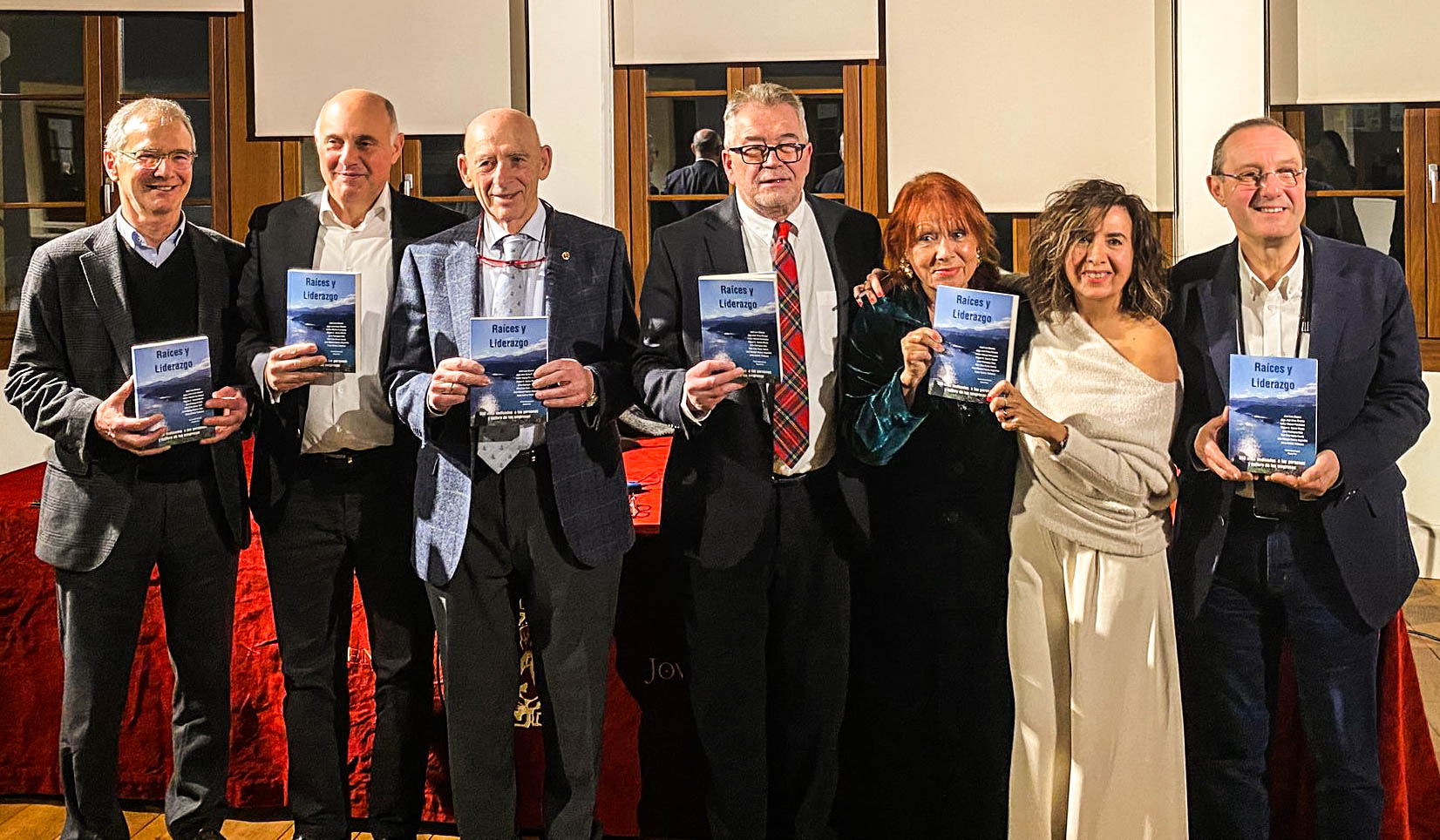
In 2026, Raíces y liderazgo brought that habit back to his home region. Rodríguez and José Manuel Suárez Argüelles helped initiate and coordinate a collective book by eight Asturian authors. Published by Red de Mentoring de España, it gathers reflections on leadership, decisions and experience. Its first presentation took place at Gijón’s Ateneo Jovellanos on 22 January.
For Rodríguez, who was born in Oviedo, the project connected a working life beyond Asturias with the place it began. He described editing as listening, ordering ideas and caring for a collective message. The overlap with mentoring was practical and personal. His hope for the book was to make experience useful across generations.
He wants to keep writing without haste, following his curiosity about stories and lived experience. His explanation is disarmingly modest: “No escribo por obligación, escribo cuando siento que tengo algo honesto que compartir.” He writes when he feels he has something honest to share. For someone whose occupations include teaching people to speak, knowing when there is something to say seems a sensible place to finish.
Keep the conversation going
- Red de Mentoring de España
- Julio on LinkedIn
- Julio on X
- Comunicación en Público
- Relatos y otras pasiones
- Watch: Listening Leaders interview
- Watch: communicating through stories
- Tinku Mentoring conversations
- The Asturian book project · February 2026
- Leadership at EUDE · February 2025
- ESPABROK succession programme · July 2024
- Mentoring and interim management · June 2023
- The founder’s career in conversation · March 2022
- Three mentoring myths · November 2021
- INAP’s mentoring event · June 2018
- The Madrid network · December 2014
- Read: Mentoring para emprendedores
- Rodríguez’s essays at madri+d
- University of Oviedo teaching biography
- Bibliography at Dialnet
- RRetratos HHumanos · publisher’s notes
- Mentoring aplicado · book notice
- Training and certification