A fax machine has comic timing. It squeals. It pauses. It produces a page with the weary confidence of an appliance that knows everyone has mocked it and everyone still needs it. Julie Freguia has spent much of her career on the serious side of that joke: the software, channels and business promises that keep documents moving when the organizations sending them cannot afford improvisation.
Freguia is Chief Marketing Officer at Seattle-based Concord Technologies. Her brief covers secure data exchange, intelligent document processing and interoperability. In ordinary language, Concord moves documents, reads them and helps place their information inside the systems where people actually work. The company serves organizations with complicated rules and little patience for dropped handoffs. Freguia's task is to turn all of that machinery into a story a buyer can repeat without bringing a glossary to lunch.
She arrived at that task by the long route. Product management taught her how software gets assembled. Corporate communications taught her how companies explain themselves. Channel development taught her that a promise must survive many mouths. Consulting taught her to diagnose. Becoming an operator taught her to stay for the consequence.
First, learn the plumbing
Freguia's early public career record begins at Captaris, the enterprise communications software company later acquired by OpenText. Between product and executive marketing roles, she worked near both the object being sold and the language wrapped around it. Concord credits her with leading a global rebranding effort and managing a worldwide distribution channel of value-added resellers.
A rebrand can be treated as a wardrobe change. In a reseller business, it is closer to changing the street signs while traffic continues. Partners need new language, customers need continuity and employees need to recognize the company they still work for. A brand promise that collapses outside headquarters is merely expensive stationery. Freguia learned the operational version: a message has to move through a system, much like a document does.
In 2004, she founded Copperfin, a full-service marketing consultancy for technology companies. Concord's leadership biography names AT&T, LG, NEC and Concord itself among the clients. From 2008 to 2023, she also served as consulting head of marketing for Instant InfoSystems. The spans are telling: patient category work accumulated over years, far from a carousel of quarterly reinventions.
Then came the interesting reversal. After advising Concord as a client, Freguia joined it full time in 2023 as vice president of marketing. On LinkedIn, she wrote that she had “hung up” her consulting hat. The phrase is cheerful, but the move carried weight. A consultant can recommend the turn. An operator rides in the car.
The useful part starts after arrival
The company's story was changing too. Secure delivery remained the foundation, but a delivered document can still create work. Someone must open it, understand it, classify it, copy data from it and route it. A perfectly transmitted pile is still a pile.
Concord Connect, introduced in 2025, gave Freguia a clean narrative bridge from transmission to processing. The platform was framed around straight-through processing: receiving a document, extracting and validating data, then integrating it into a system of record. Later that year, Concord announced the Ignition Program, an implementation service meant to carry those workflows from plan to deployment. The naming is neat, but the more useful marketing choice is the sequence. Product promise first. Implementation reality immediately after.
“The real magic happens when that data is actually useful the moment it hits the system.”Julie Freguia, on the 2026 Direct Secure Messaging launch
Her public language favors the adjective “practical.” It appears in Concord's Practical AI positioning and in how she discusses interoperability. At HIMSS 2026, the company convened a main-stage discussion about whether large language models could change a field long organized around standards and mandates. Freguia's framing was careful: AI might change the equation, but executives still had to evaluate what came next. The technology was invited to the table. It was not allowed to eat the furniture.
This is a useful trick for anyone marketing complex software. Begin one step beyond the feature. If the system receives a document, ask who reads it. If it extracts a field, ask where that field goes. If it saves time, ask whose calendar changes. The questions pull a message away from spectacle and toward work.
The team is part of the product
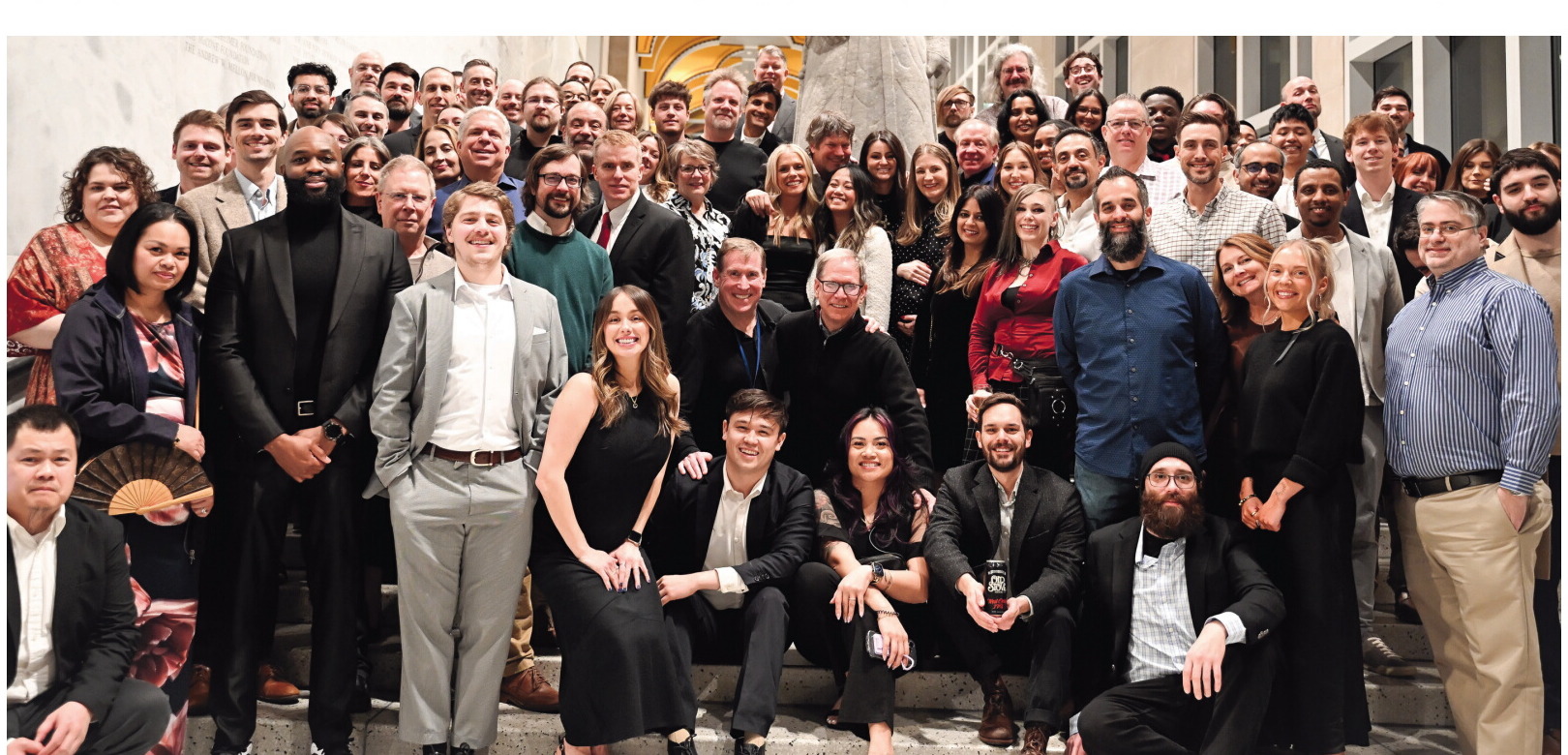
Concord's biography says Freguia is driven to build strong and empowered teams. Former colleagues make the sentence more specific. One recommendation describes a leader willing to coach through the tradeoffs of a strategy, experiment with new tools and preserve the things already working. Another recalls her telling a team member to take a Friday off after an intense run. The gesture reads as maintenance for people asked to produce judgment on demand.
In 2026, Concord was ranked first among midsize employers in The Seattle Times Top Workplaces list and received national recognition from USA TODAY. The programs belong to the wider company, not one executive, and Freguia said the meaning came from employees themselves. Her public praise pointed toward shared purpose and investment in growth. A CMO naturally speaks for an organization. The revealing choice is where she directs the credit.
That credit travels in both directions. Joe Staples, who worked with Freguia for six years, described a marketer who could develop strategy and still execute the plan, challenge colleagues and manage resources carefully. Joe Morris, another former colleague, emphasized coaching and her willingness to explain the tradeoffs among competing tactics. Read together, the recommendations describe a working style with two speeds: zoom out far enough to find the position, then zoom in until somebody knows what to do on Monday.
The distinction matters in a CMO role. Marketing departments can become factories for polished ambiguity, especially when several technical categories are competing for oxygen. Freguia's background cuts across the usual borders. Product management gives her permission to ask whether a claim can survive a demo. Channel work asks whether a partner can carry it. Consulting asks whether the problem is the message or the offer. Operating leadership asks whether the team has enough attention left to deliver either one.
What marketers can borrow
- Explain the handoff, not only the feature.
- Give implementation a place in the product story.
- Let new tools improve the system without erasing what works.
- Build language that employees, partners and customers can all carry.
The same patient temperament appears outside work. Freguia's public volunteer record stretches across Redmond-area schools, tutoring, parent programs and the Redmond High School Cheer Booster Club. She served that board in a succession of roles including secretary, vice president, treasurer and president. At Star Guild, she contributed marketing services to a fundraising event. The pattern is local, procedural and sustained, the sort of service that involves meetings, calendars and remembering which form is due Tuesday.
At San Jose State, she was chapter vice president of Alpha Omicron Pi. Years later, her school volunteering included classroom support, event coordination, math tutoring and scholarship committee work. Rosa Parks PTSA recognized that service with its Purple Paw Award. None of these details belongs in a software launch. Together, they make the executive biography less airless. The person who coordinates a global channel also knows the smaller civic machinery of booster boards and parent groups, where authority is volunteered, budgets are finite and participation cannot be commanded.
A career with a horizon
Freguia earned her business degree at San Jose State University, focused on marketing and advertising. Her profile also records Pragmatic Marketing training, an education in keeping product conversations close to markets and buyers. Decades later, the through line is unusually tidy: understand the product, understand the route to market, then build a team capable of explaining both.
Tidy does not mean bloodless. Her company biography gives her three off-duty coordinates: family, National Parks and new craft breweries. They make sense together. One offers belonging, one offers scale and one offers a reason to inspect the local tap list. A person can spend the week discussing data integration and still prefer a trail whose main interface is weather.
Her career also offers a correction to the cult of the dramatic pivot. Freguia did not flee an old category for a fashionable one. She stayed near communications and document systems long enough to see their center of gravity move. Fax became cloud fax. Delivery became data extraction. Automation met AI. The vocabulary changed, but the underlying question remained: how does important information get from here to where it can be used?
That question is now Freguia's marketing territory. It has room for security, integration, workflow and the occasional squealing machine from the previous century. Her advantage comes from placing the machinery in the right sentence, then pointing to the work waiting on the other side.