A banknote is useful until the thing you need to pay lives inside a computer. Then someone must build the crossing. In Georgia, JSC OPPA has spent years putting that crossing within reach: a PayBox terminal, a screen of services, a place to feed in cash. The interesting part is how much work hides behind such an ordinary encounter.
- The job: connect everyday payments with a nationwide terminal network.
- The scale: more than 8,000 payment points, according to PayBox.
- The lesson: convenience includes the walk, the menu and the software underneath.
The shortest trip to a paid bill
PayBox says it serves up to 350,000 users daily and offers nearly 1,000 services. Treat those as company-reported measures of activity and breadth. They describe an ambition that is easy to understand: bring many destinations for money into one familiar place. A customer can top up a phone, pay utilities or settle a parking charge without treating each provider as a separate expedition.
The business began as Nova Technology in 2007. PayBox became its terminal brand in 2008, with employees assembling machines themselves. By 2009, the company counted 300 terminals. Online payments followed in 2012; terminal exports to Armenia followed in 2013. These were distinct kinds of expansion: more locations, another channel, another market. The legal name changed to OPPA in 2018.
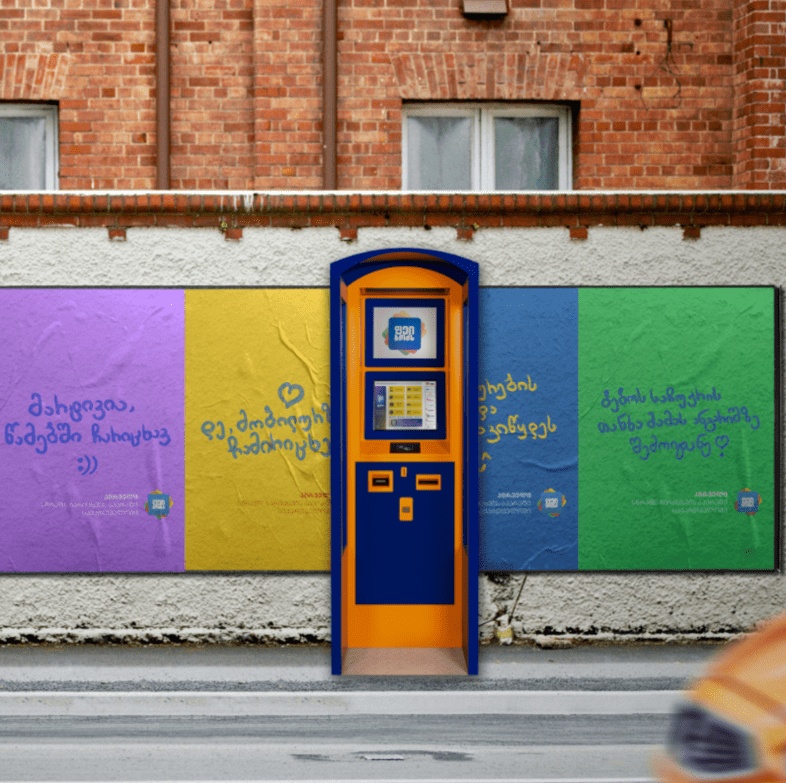
For a business collecting payments, the same machine solves the other half of the problem. Customers arrive with different habits and different ways of holding money. A terminal lets a provider accept a cash-funded payment through a shared network. The attraction is practical: a company can participate in an existing collection route instead of expecting every customer to adopt its preferred channel.
A power company buys the payment route
In February 2014, ENERGO-PRO acquired Nova Technology. Electricity and payment terminals make an instructive pairing. Supplying a household and collecting its bill are separate operations, but the second determines whether the first produces cash. Owning part of the route between customer and supplier puts a payment business close to a recurring, necessary transaction.
ENERGO-PRO’s financing disclosures explain the acquisition in those terms: reducing dependence on third-party collectors and improving collection. They also attribute improvements to other measures, including disconnection policies. Convenient payments deserve only their share of that explanation. A terminal network cannot be credited with every change in a utility’s collection performance.
“We connect the physical and digital worlds”
PayBox’s description of its work
The commercial activity extends beyond receiving a payment. Parent-company reporting describes terminal maintenance, connections and related services; earlier disclosures also include terminal and component sales and advertising. This is a business with machines to support as well as transactions to process. Its expertise sits across hardware, software and the connections that make a payment reach the intended service.
Price remains specific to the transaction. A November 2023 Re|Bank announcement offered Top|Card repayments through PayBox without commission. That is a dated offer for a named service. It gives a useful example of how partnerships can change the customer’s cost, while giving no reason to assume every button carries the same tariff.
There is also a physical cost to making a network useful: equipment needs attention, cash needs handling and customers need support. Those are operating requirements of the model, rather than a published price for OPPA’s rollout. The practical comparison for another business is between paying for access to shared infrastructure and doing the collection work itself.
The website that thought it was a kiosk
The wallet project reveals a different kind of distance. In Wandio’s account, OPPA approached the software company in 2017 with a website whose interface resembled its payment machines. The plan was to extend that experience into a universal wallet.
Early collaboration took adjustment. Then the existing API slowed development: the new web experience needed finer integration with the payment core. The teams changed the API and tested around the work. OPPA also placed a developer at Wandio for a month during handover. A prettier screen had become a systems project.
The team found a cheerful way to test a wallet feature. Late arrivals to sprint meetings paid into an OPPA virtual piggy bank. After launch, the proceeds funded a celebration. The website changed first; wallet features followed months later. There is a copyable sequence here: let users absorb one change before adding another, and let the people building a product try its ordinary uses.
A city gets its own button
In 2023, PayBox added a regional shortcut grouping local services. In Rustavi, a button illustrated with the city’s metallurgical plant opened relevant options, including local water and television services. Adjara received a khachapuri illustration. These are pleasingly concrete choices. A service catalogue becomes easier to approach when the screen recognizes where the customer is standing.
The same period’s coverage describes an invoicing portal: businesses could send an invoice by SMS, email, link or PDF, and customers could pay at a terminal using its unique code. Digital delivery and cash payment fit into the same journey. A message on a phone can direct money through a machine on the street.
The advantage has a street address
OPPA operates in a competitive market. TBC Pay describes more than 4,000 self-service terminals alongside its website and mobile app, with over 1,000 services available across its channels. A long menu alone therefore offers limited distinction. Location, recognizable screens and service-specific terms become sensible things for a customer to compare.
The model is most useful where people want to fund digital payments with cash and connected providers accept the service they need. Its value shrinks when a customer already has a cheaper, easier payment route on a phone. Maintaining physical access must earn its place in that choice.
Access also depends on who can use the machine. PayBox’s history records adapted terminals for people with disabilities in 2016. Its stated values include accessibility, and its Georgian Global Compact profile emphasizes employee development and technological education. Those commitments point to a broader requirement for this kind of business: the network needs people who can operate it and customers who can reach its controls.
The useful lesson travels further than the terminals: start with the customer’s actual money and actual errand. Shorten the route between them. OPPA’s most persuasive product idea is a paid bill that takes less effort.