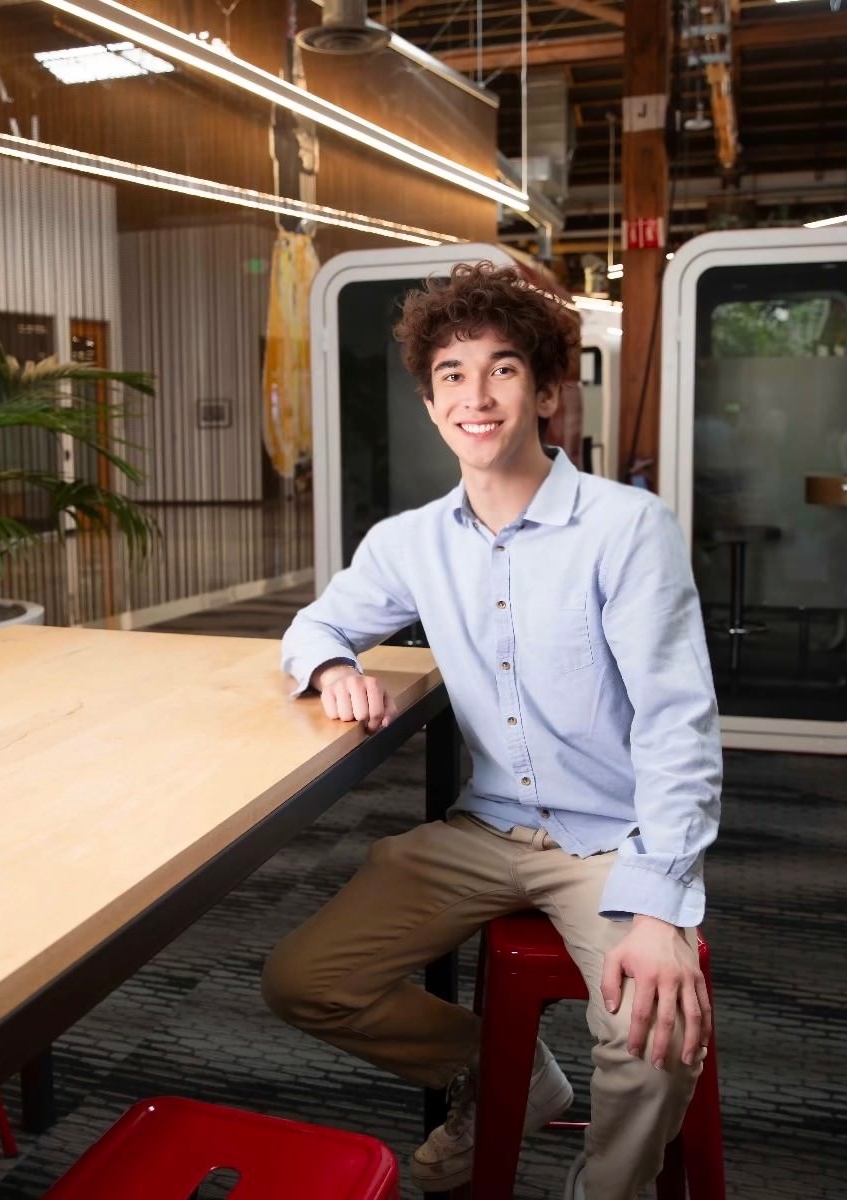
It is 2023. Joseph Semrai is a Stanford freshman. He has a wearable prototype on his wrist that runs GPT-4, connected to the internet in real time, feeding him information and translation and context as he moves through the physical world. He calls it RealityGPT. He posts a demo. It goes viral. The world is not quite ready for it - but Semrai has already moved on.
This is the pattern. He sees the edge, builds something at it, and by the time anyone is ready to talk about it, he is building the next thing.
Before RealityGPT there was Friday - an LLM chatbot connected to the internet before ChatGPT had that feature, before the word "RAG" was in the vocabulary of a typical software engineer. Semrai presented Friday at Y Combinator Demo Day in Fall 2022. It got acquired by Andi Search. He was, at that point, not yet legally old enough to rent a car in most American states.
In 2024 he accepted the Thiel Fellowship - Peter Thiel's standing bet that the most interesting founders do not need a degree - and left Stanford at 20. Not dropped out. Left. There is a difference, in his framing.
He founded Context. The premise is disarmingly simple: office software has barely changed since the 1990s. Word still opens with a cursor blinking at you. Excel still expects you to know the formulas. PowerPoint still requires you to manually assemble slides from information you already have, written down somewhere, in a system you already pay for.
The average knowledge worker loses hours every day to this tax. Across humanity, Semrai calculates, it adds up to 2.5 trillion hours a year. The kind of number that sounds invented until you do the arithmetic.