In October 2004, Jory Bell had an answer to the laptop bag: a computer small enough to leave the bag behind. The OQO Model 01 ran Windows XP, concealed a keyboard beneath its sliding screen, and cost $1,899. You could hold it in one hand. Whether you should pay nearly two thousand dollars for the privilege was the question waiting in the other.
Bell was OQO’s co-founder and chief executive when the machine began shipping. He had spent years helping make portable computers, first at Apple and then at his own company. His argument was physical. A laptop could be portable and still be something you decided against carrying. Make it pocketable, and that small daily negotiation might disappear.
Bell described pocketability as the freedom to take his computer anywhere. The appeal was plain enough for such an elaborate engineering project: the prospect of going somewhere without packing a bag.
“I can take it anywhere.”
Jory Bell · October 2004
Three degrees, then the deep sea
Bell grew up in Rochester, New York, and went to MIT. He earned three undergraduate degrees: architecture, literature, and earth, atmosphere and planetary studies. That is an education with an unusually broad reading list. Buildings, books and the planet all made it onto the timetable.
His next work was equally resistant to a neat career category. In the joint MIT/Woods Hole Oceanographic Institution climate research program, he designed, built and deployed autonomous deep-sea robots. Before the pocket computer, there were machines intended to work far from a desk, in an environment that offered little patience for a loose assumption.
He later moved to the Bay Area and spent six years designing laptops at Apple. Work on the PowerBook put him inside an established portable-computing business. The ocean robotics and the laptops belong to different worlds, but both involve getting useful machinery to function away from a comfortable, stationary setting. Bell’s later work would keep returning to that practical challenge.
The laptop that lost its luggage
OQO was founded in 2000. Its proposition was specific: shrink a full personal computer, keep compatibility with desktop software, and make the result small enough to carry routinely. A personal digital assistant could already manage a schedule and contacts. Bell wanted the applications themselves to come along.
In 2002, the plan included desktop and laptop docking arrangements. You would carry the small computing core and attach it to a more generous screen and keyboard when you arrived. The attraction was continuity: one computer moving between settings, rather than several machines requiring their contents to be reconciled. Bell was selling the convenience of having less to organize.
The name was similarly compact. Paul Rako, who had worked at OQO, recalled that Bell had searched three-letter combinations through a domain lookup and liked this one. OQO did not require a lengthy explanation of its initials. Even the company’s name traveled light.
There was a long interval between the early demonstrations and a machine customers could buy. In September 2004, a launch date finally became definite: October 14, in San Francisco. For a project repeatedly discussed before it shipped, an actual date carried a certain glamour. Engineers may appreciate an elegant prototype; customers tend to appreciate a delivery.
A desktop, reduced to thumb size
The Model 01 measured 4.9 by 3.4 by 0.9 inches. Its five-inch display offered 800 by 480 pixels. Inside were a 1 GHz Transmeta Crusoe processor, 256 MB of memory and a 20 GB hard drive. These are the particulars of a PC, squeezed into dimensions that made the familiar particulars seem faintly improbable.
Slide the display upward and a QWERTY keyboard appeared. There was a pointing stick, a digital pen and a thumbwheel. Bluetooth and Wi-Fi handled wireless connections, while USB and FireWire allowed peripherals. The docking cable let the little machine rejoin the world of larger monitors and keyboards. It could leave the desk without permanently renouncing it.
The compromises came with it. A five-inch screen leaves less room for the windows and menus of desktop software. Thumb typing offers a different rhythm from a full keyboard. Battery life was around three hours, and the price bought a degree of miniaturization that everyone could admire but fewer people could justify.
Bell’s design question remains interesting because it has two reasonable answers. Keeping existing software saves the user from abandoning familiar tools. Designing around a tiny screen asks those tools to behave in quarters they were never expecting. OQO put both arguments into a single object. You could feel the disagreement in your hands.
The encore, and the bill
OQO kept working on the idea. The Model 01+ arrived in September 2005 with 512 MB of memory and a 30 GB drive, alongside USB 2.0 and an internal speaker. The original machine had shipped without a built-in speaker. Improvements could be measured in ordinary conveniences as well as larger numbers.
The first model earned PC Magazine’s Award for Technical Excellence and a 2005 Mobility Award. Recognition mattered, but the company still had to persuade people to purchase the thing. An award can sit quite comfortably on a shelf. A computer manufacturer needs its products to leave the warehouse.
The Model 02 received a conspicuous introduction in Bill Gates’s CES keynote in January 2007. It offered a backlit keyboard and optional integrated cellular broadband. The starting price was $1,499. OQO’s pursuit of mobility was expanding from the size of the object to the availability of a connection when you carried it outside.
Its machines also acquired a second career on television, appearing in series including 24, Chuck and Stargate Atlantis. A handheld PC made a convincing prop for people whose working day involved urgent secrets or an inconvenient alien computer. Fiction supplied enthusiastic users with exceptionally pressing deadlines.
The business had a harder ending. In May 2009, OQO was reported to be shutting down, and it said financial constraints prevented repair and service support. The accomplishment and the outcome belong together. Bell and his colleagues made a pocket-sized Windows PC work. That achievement did not give the company an indefinite future.
- 2000OQO founded
- 2004Model 01 ships
- 2007Model 02 at CES
- 2009Company closes
Taking the other chair
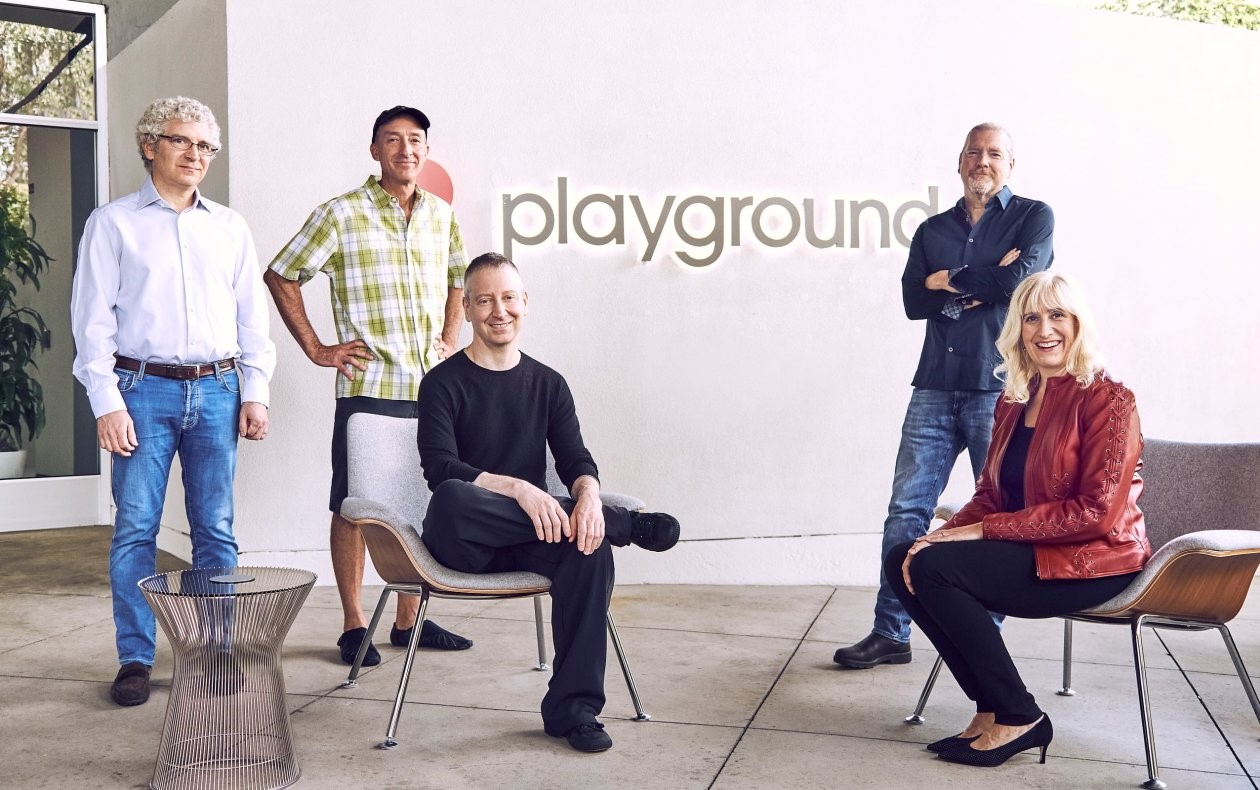
After OQO, Bell became director and chief technology officer at Miselu, with a tenure listed from 2012 to 2015. In 2015 he joined Playground Global as a vice president; he later became a general partner. His professional position had changed: the former founder was now helping finance other people’s difficult projects.
Playground’s early team included people with backgrounds in hardware and software, among them Bruce Leak and Peter Barrett. Bell brought experience that included both product design inside Apple and the much less sheltered task of building a hardware company. At OQO, manufacturing a machine and finding its market had been inseparable problems.
One view of the firm from the other side of the table came from Gary Agnew, co-founder and CEO of Ideon Technologies. After a fundraising process involving more than 200 pitches, Ideon chose Playground to lead its $16 million Series A in 2022. Agnew described access to hardware, sensor and industrial-design expertise, along with recruiting support. His praise was for the team, rather than Bell alone, and it made the value of practical experience unusually concrete.
Bell helped source early Playground investments including Nervana Systems, subsequently acquired by Intel. His investment work has ranged through advanced manufacturing and aerospace. These are fields in which a persuasive presentation eventually has to meet a physical test. Whatever the spreadsheet says, something must operate.
A larger machine to think about
In October 2023, Bell sat down with Relativity Space chief operating officer Zach Dunn for a conversation about rockets. They discussed the launch of Terran 1, 3D printing and the larger Terran R under development. Bell’s opening question was refreshingly direct: “Where were you during the launch of Terran I?”
The exchange moved between the exhilaration of flight and the organization required to produce a launch vehicle. Bell asked about Dunn’s move from a long SpaceX career to Relativity when it was still a much smaller company. He was interested in the decision to join a project before it had demonstrated everything it hoped to do.
Read alongside OQO, the conversation has a pleasing change of scale. Bell had once argued for fitting a computer into a pocket. Here he was talking about manufacturing rockets. The connection lies in the work between a proposed design and an object that can be tested. Size changes; that interval remains full of decisions.
By December 2025, he was also appearing in Tokyo at the Innovation Leaders Summit, delivering a keynote and joining 15th Rock’s Tetsu Nakajima in a discussion of technology and collaboration with Japanese companies. The former hardware founder was carrying his experience between companies and countries, rather than carrying one company’s device from demonstration to demonstration.

The person outside the specification sheet
There is a detail in Bell’s public biography that sits happily beside all the machines: he and his wife practice acrobatics. It is an appealing extracurricular activity for someone whose working life has involved balancing ambition against the less negotiable opinions of physical objects. Gravity, one assumes, remains a demanding collaborator.
His career accommodates more variety than the OQO label suggests. The literature degree belongs beside the architecture and planetary studies. The researcher belongs beside the designer. The founder whose company closed belongs beside the investor helping other founders. Keeping those experiences in view gives the pocket computer its proper size within a longer life.
Bell’s stated interest at Playground is in working with technical founders on substantial societal problems. The ambition has a recognizable antecedent in the younger CEO’s desire to make a familiar computer easier to carry. Both start with a practical inconvenience and ask how much engineering might change it.
The Model 01 is now a museum object. Its sliding keyboard still makes the proposition legible: here was a person prepared to take the pocket seriously as a design constraint. Bell has moved on to other machines and other teams. The little computer remains a useful introduction. Before asking what the future might contain, he wanted to know where we would put it.
Follow the machines
Profiles, conversations and a few places to keep reading.
- Bell at Playground Global
- OQO company profile
- The 2004 launch interview
- Model 01 museum entry
- The early docking idea
- How OQO got its name
- The Model 01+ announcement
- OQO’s 2009 closure
- The television appearances
- Career record
- Playground’s early team
- Ideon’s choice of investor
- The Zach Dunn conversation
- The Tokyo appearance
- Watch: Bell demonstrates Model 02