Jonathan Soffin’s career begins with numbers and quickly becomes a study of choices. He earned a degree in accounting from Michigan State University, started as a financial analyst at General Mills, then crossed the corporate hallway into brand work. The products grew more familiar: Crest toothpaste at Procter & Gamble; Butterfinger, Baby Ruth and Crunch at Nestlé USA. These were not abstract services. They sat on bathroom sinks and convenience-store shelves. People knew what they were, could see the price, and could switch brands in a second.
That early training matters because the products Soffin markets now are nearly the opposite. As chief marketing officer of Marqeta, he works with card-issuing infrastructure: software and services that help companies create, manage and control payment experiences. The consumer sees a card, a wallet or a clean approval screen. The platform underneath is meant to recede. Success often looks like nothing happened, except that the payment worked.
So the arc of his résumé is also the arc of commerce becoming less visible. It runs from packaged goods to prepaid cards, payroll, gift cards and APIs. The common thread is his attention to the instant when a person makes a choice. A marketer can change industries. The moment of decision remains stubbornly human.
Chapter oneThe checkout aisle becomes a financial network
Soffin spent seven years at Green Dot, eventually serving as senior marketing director for the Green Dot Network and Walmart Payments. By 2018, an official conference biography credited him with responsibility for B2B and B2C marketing across more than 100 partnerships. The list included PayPal, Walmart MoneyCard, RushCard and ADP ALINE. It is a telling collection: a technology company, a retailer, a prepaid program and a payroll product meeting on one network.
The retail counter was becoming a financial-services interface. During his Green Dot years, Soffin helped launch PayPal Cash at the Register, a service that let people add cash to a PayPal balance at participating stores. It sounds mundane because good infrastructure often does. A customer brought physical money into a familiar retail setting and turned it into digital value. The cashier, barcode, register and account formed a temporary bridge between cash and the internet.
Consumer-goods marketing had taught Soffin to care about placement, friction and recognition. Prepaid finance added a heavier requirement: trust. Toothpaste must earn preference. Money products must also persuade people that the value will arrive, remain accessible and behave as promised.
His next stretch widened the definition of payment. At Capital Group | American Funds, as marketing director for institutional retirement, he developed a go-to-market strategy associated with a 76 percent increase in annual Target Date Fund sales in 2017. The products were less immediate than a card swipe, but the task was familiar: translate a complicated financial mechanism into a reason to act.
The paycheckA feature becomes a question about work
At ADP, Soffin advanced from senior director of marketing for wage payments to head of marketing for payments. At Oracle HCM World in 2018, he presented a session on generational trends in worker pay. The argument connected payment choice to employment choice: the conference description reported that 47 percent of Gen Z respondents and 31 percent of Millennials would turn down a job if they could not choose how they were paid.
That framing is revealing. A paycard could be described through settlement, access and program administration. Soffin’s public presentation placed it inside a more personal question: what does an employer’s payment system say about how it regards a worker? A back-office decision had wandered into recruiting and retention.
When the method of pay affects the job
Share reported in the 2018 Oracle HCM World session descriptionThe observation has aged well. Money movement keeps migrating into the broader experience around it. Payroll is part of the employee experience. A card’s controls are part of a budgeting experience. Rewards become part of a relationship with a brand. The marketer’s territory expands because payments touch so many other decisions.
The giftResearch, choice and two teenage boys
Soffin spent more than four years in senior roles at Blackhawk Network, first leading global product marketing and later serving as vice president and head of global brand and product marketing. His public appearances there reveal a marketer comfortable using research as the opening move. He moderated a panel on global rewards and, in late 2024, joined a discussion of holiday shopping and gift-card behavior.
The subject produced an unusually tidy family anecdote. Soffin has twin teenage sons. For Christmas, he told the audience, each wanted assurance that the other would not receive a better gift. He asked ChatGPT for ideas. The suggestions included wireless earbuds, gaming accessories and sports gear. At the top sat a gift card for a gaming platform or streaming service.
“If I'm not sure what specific brand of tech or fashion they want, a gift card to their favorite store is a great option.”Jonathan Soffin, discussing holiday shopping in 2024
It was a conveniently appropriate answer for a Blackhawk executive, and also a small lesson in delegated choice. A gift card admits that the recipient knows more about the recipient. It solves for fairness between twins without pretending a parent can rank every game, shoe or gadget correctly.
In the same conversation, Soffin resisted a neat split between physical and digital shopping. “The short answer is that it’s really a blend of both,” he said. He pointed to research finding that 85 percent of consumers planned to shop in stores, while 49 percent also planned to buy a gift card online. The useful word is “also.” Customers do not organize their lives according to an industry’s channel chart.
The platformMarketing what is designed to vanish
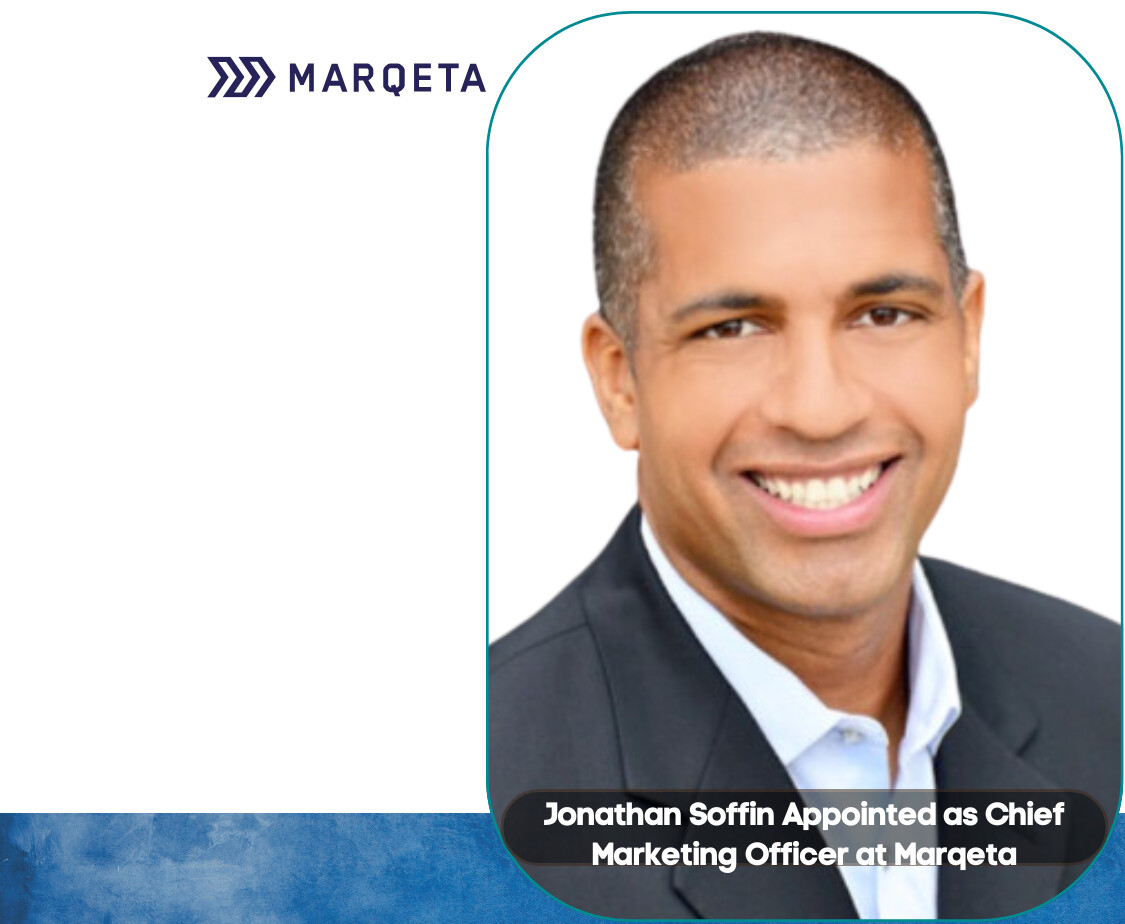
Marqeta appointed Soffin chief marketing officer in September 2025. His remit covers global marketing strategy, brand positioning and go-to-market execution. The move completed a progression upstream. Green Dot’s cards and retail locations were visible. ADP’s wage-payment products met workers at payday. Blackhawk’s gift cards occupied displays and inboxes. Marqeta’s issuing platform works behind the card experiences that other companies present to their customers.
This creates a peculiar narrative problem. The company must explain technical control, scale and flexibility to buyers while keeping the final experience effortless for the cardholder. Too much plumbing and the story becomes a schematic. Too little and every provider sounds interchangeable. Soffin’s background gives him several dialects: finance from accounting and analysis, consumer instinct from packaged goods, channel experience from retail payments, and product language from payroll and branded value.
His recent public posts show where he is placing the emphasis. He has highlighted research into the costs and migration complications of multi-vendor payment infrastructure. He has promoted Marqeta’s expansion in Europe across issuing, payment accounts and money movement. In July 2026, he pointed to Expensify scaling a card program across borders through a single integration. The vocabulary is enterprise software. The promise is the old retail promise of less friction.
A June 2026 post about Marqeta’s State of Credit report made the consumer argument more directly. The research covered 5,000 consumers and small businesses in the United States and United Kingdom. Soffin’s reading was that people actively layer products and switch cards according to context. “For marketers and product builders,” he wrote, “your brand experience is the differentiator.”
That sentence links the entire career. The choice at the toothpaste shelf was visible. The choice among cards in a digital wallet may happen with a tap, a rule or an automated prompt. The marketer still has to understand what earns preference. The infrastructure simply gives that preference more places to appear.
The operating styleClarity with an accountant’s spine
Public recommendations from former colleagues describe Soffin as strategic, analytical, creative, driven and warm. One praises his ability to reduce complicated business issues to key insights and actions. Another emphasizes his insistence on efficiency, effectiveness and quality. These are flattering words, of course, yet they match the visible pattern of his work: begin with data, locate the human decision, then make the next action easier to see.
The accounting degree is the useful twist. Marketing is often caricatured as the decorative department, hired to add color after the difficult decisions are made. Soffin began on the financial side and later worked across products where regulation, distribution and economics constrain every promise. A 76 percent sales increase is a marketing story with a number attached. A card program that crosses borders on one integration is a brand claim that operations must honor.
His career does not offer a grand conversion scene. It offers accumulation: the shelf, the register, the retirement plan, the paycheck, the gift, the API. Each chapter adds another view of how money enters ordinary life. At Marqeta, that accumulated perspective is now pointed at infrastructure modern consumers may never name. They will judge it anyway, in the instant a payment works, a control responds or a card fits the moment.
The product has disappeared into the experience. The decision has not.