The first useful thing to know about Jonathan Salama is that his route into American trucking began with a plan to leave America. Born and raised in Paris, he crossed the Atlantic to study computer engineering at the University of Miami. The arrangement, as he later described it, was temporary: university, an internship, perhaps a first job, then home. He took the internship at Microsoft and moved from Miami to Seattle, exchanging dependable sun for dependable rain. Seattle did not hold him. New York did.
There he joined Gilt Groupe early enough to help build the online retailer's backend architecture and eventually lead engineers. Then came Cherry, an on-demand car-wash startup with a GPS-enabled marketplace. The service matched people who wanted clean cars with people willing to clean them. It was not freight, but the geometry was familiar: demand here, capacity there, location changing by the minute, and software trying to make an untidy physical world arrive on schedule.
New York also supplied the reason his temporary American chapter became permanent. Salama met the woman who would become his wife. She was from Wisconsin and, in his telling, not available for relocation to France. A sensible life plan was defeated by a better one. The engineer stayed.
A cold email and a warm beer
In 2013, a mutual contact sent Salama and Drew McElroy the kind of introduction that sounds efficient only in retrospect. McElroy knew freight. His father had run a brokerage, and he understood the rituals and indignities of the trade: telephones, faxes, uncertain prices, idle trucks, and a great deal of human effort spent carrying facts from one system to another. Salama knew how to build marketplaces. What each lacked was standing on the other side of the table.
They met for beers in Brooklyn. McElroy pitched a digital freight brokerage. Salama agreed so quickly that McElroy asked for a little time to think. Salama's reply has survived because it is both a founding anecdote and a compact character reference: “You go home and do all the thinking that you need. I'm going to go home and start building the platform.” The future partners had scarcely met, but one of them was already assigning himself the weekend.
“You go home and do all the thinking that you need. I'm going to go home and start building the platform.”Jonathan Salama, recalling Transfix's beginning
The new company did not wait for immaculate software. Its first customer was Barnes & Noble, moving regular loads of books from an Indiana printer to a New Jersey warehouse. Freight went down the road while Salama worked from his apartment on the system meant to manage it. By January 2014, the first version was ready. This reversal matters. Transfix did not build a digital model of an imagined brokerage and then introduce it to reality. Reality arrived first, with a pickup number and a delivery window, and the code had to catch up.
The business was also the laboratory
Salama became Transfix's chief technology officer and stayed in the role for roughly nine years. The founding thesis was plain: freight brokerage contained too many manual steps, and software could remove some of them. Pricing, carrier outreach, appointment scheduling, shipment tracking, document handling - each looked like a candidate for automation. The company built machine-learning models not as a showroom exercise but because its own employees had loads to cover before dinner.
That distinction gave the technology an unusual education. A live brokerage produces edge cases with industrial efficiency. A truck is late. A facility changes an appointment. A price that looked sensible at breakfast becomes absurd by afternoon. A carrier prefers a text to an app. A document is missing. Each nuisance becomes data; each repeated nuisance becomes a product requirement. Salama summarized the impulse without embroidery: “We wanted to automate every step… anything that could be automated, we did.”
The ambition was broader than saving keystrokes. Better matching could reduce the empty miles that earn drivers nothing. More reliable tracking could help shippers plan. Consistent pricing could replace a little of the opacity on which traditional brokerage margins had depended. There was an environmental argument, an economic argument, and a simple argument about not making skilled people perform chores a machine could handle.
Yet a technology-powered brokerage remained, inconveniently, a brokerage. It carried the same exposure to freight cycles as the companies it hoped to improve. Transfix explored a public listing, then terminated the planned SPAC transaction in 2022 as market conditions changed. Freight volumes and rates fell. In March 2023, Salama moved from CTO to CEO, succeeding Lily Shen. Seven months later, the company closed a $40 million Series F round led by NEA and G Squared, with Canvas participating. The engineer who had designed the machinery now had to decide what machine the company should be.
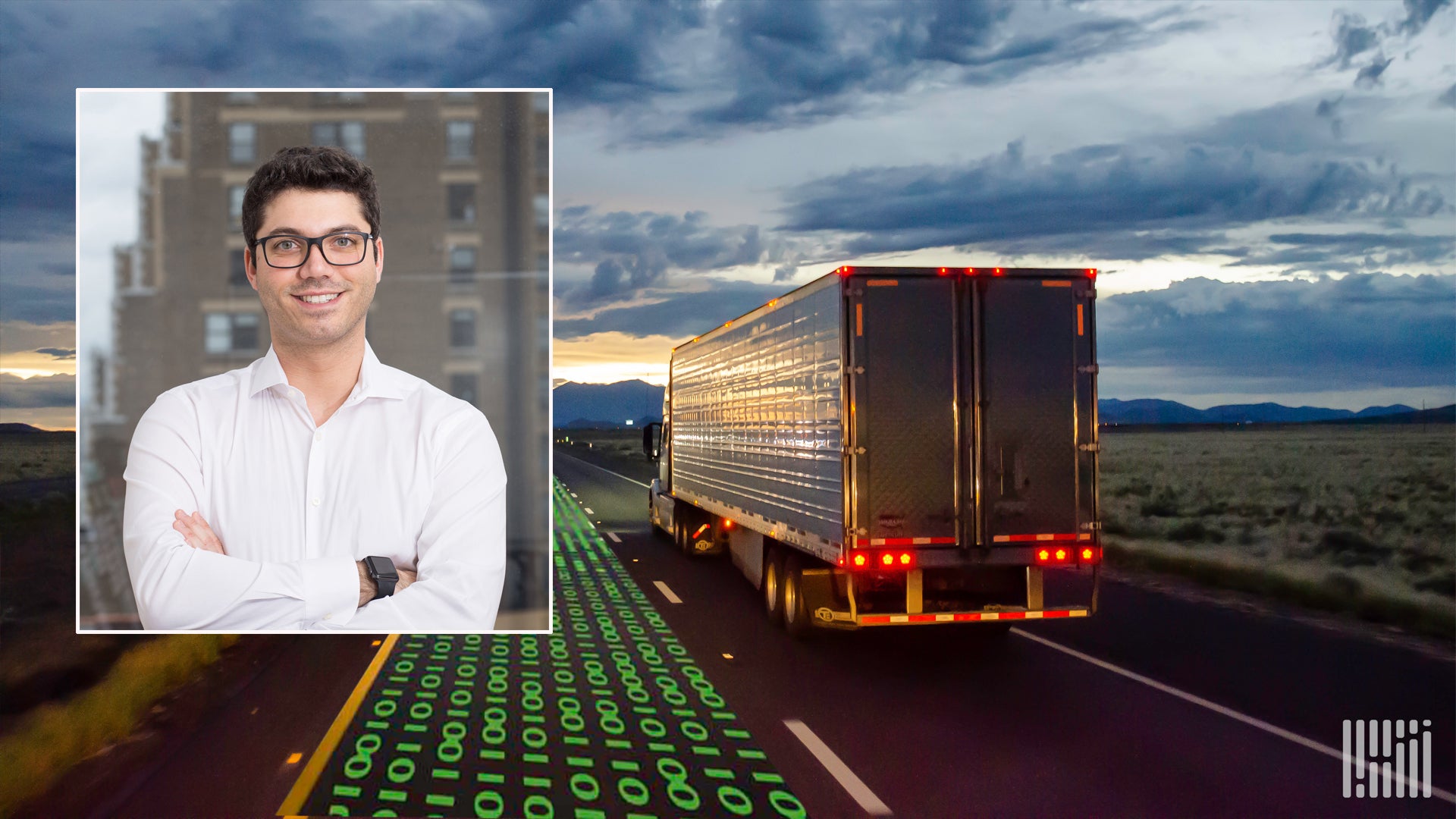
Sell the operation, keep the operating system
The decisive break came in June 2024. NFI acquired Transfix's freight brokerage operation, along with its customers, people, and a network that added more than 15,000 carriers to NFI. Transfix kept the software and data business. NFI became its anchor customer. The company that had built technology to compete as a broker would now sell technology to brokers.
The logic had the chill of an obvious fact noticed late: “I don't believe a broker would buy software from another broker,” Salama said. A customer does not enjoy placing its nervous system in a competitor's hands. Divesting the brokerage removed that conflict. It also revealed that ten years of operational labor had produced something separable from the operation itself: a transportation management platform shaped by millions of practical decisions.
Transfix launched five tools around the pivot - AutoBid, AutoAccept, AutoSched, AutoBook, and AutoValidate - aimed at pricing, tendering, appointments, carrier booking, and document checks. The names possess the poetry of a socket wrench, which is appropriate. Their promise was usefulness. The code had been tested not merely against benchmarks but against impatient warehouses, volatile rates, and the daily improvisation of trucking.
The service business made the data. The data improved the tools. Then the tools became the business.
Salama's later description of a modern TMS is correspondingly ambitious. It should not sit like a filing cabinet waiting for a person to feed it facts. It should behave more like a control tower: connecting pricing, coverage, compliance, and settlement, then making routine decisions while a human watches for exceptions. Transfix says its current platform automates roughly 65 to 67 percent of spot-freight bookings end to end. The emphasis on spot freight is deliberate. Contract waterfalls are orderly. Spot markets are where rates move, capacity hides, and easy claims about automation acquire bruises.
The correction is part of the work
A founder's mythology generally rewards unwavering conviction. Salama's more interesting lesson is about revision. On long-form podcasts after the NFI deal, he spoke about correcting decisions, the difficult calls of leadership, and doing right by people. The brokerage sale was not a repudiation of Transfix's first decade. It was a judgment about what that decade had built and who could use it next.
The company has since pushed deeper into freight procurement, bid workflows, and carrier-risk controls. Its product argument is the same one the young engineer made by going home to build after a first drink: information becomes valuable when it leads to action. A carrier can be safe when booked and risky before pickup. A spreadsheet export is stale the instant the live system changes. An algorithm with fragments of the story is simply confident in partial information. The aim is to keep the facts connected long enough for software to make a useful decision.
There is something neat, though not tidy, in the full arc. Gilt taught Salama to build for scale. Cherry taught him about location and marketplaces. Freight supplied a decade of exceptions. The CTO became CEO just as the old model needed reconsideration. Then Transfix sold the part of itself that moved the trucks and retained the part that remembered how they moved.
The public biography has a quieter coda. Salama lives in Jersey City with his wife, two daughters, and a mini goldendoodle. Colleagues describe a leader who challenges their thinking and still joins them in the weeds. That combination fits the career: architecture from above, debugging from close range. It also complicates the old picture of the technical founder as a solitary person at a keyboard. The first Transfix platform may have been written in an apartment, but the company that survived its own reinvention was made by teams - engineers, operators, brokers, and carriers supplying the reality that the code could never invent for itself.
Salama once expected his American experiment to end after a short internship. It became a marriage, a city, a company, and a career spent translating the physical world into software. He did return to his original instinct in one respect: when the decision arrived, he started building before the story had settled. Freight rarely waits for the elegant answer. Neither, apparently, does he.