The Story
Mid-Stride on a Decade-Long Bet
At Aktana's San Francisco headquarters, a platform is quietly deciding which pharmaceutical sales representative should reach out to a given cardiologist - and whether it should be a phone call, a digital message, or a face-to-face visit. The decisions happen in real time, at scale, for some of the world's largest pharma companies. John Vitalie runs the company behind that engine.
He took the CEO role in June 2023, becoming Aktana's third chief executive in its history. But the narrative that makes sense of his arrival starts much earlier - at Siebel Systems, where Tom Siebel was selling the idea that software could manage every customer relationship, years before Salesforce made it mainstream. Vitalie was there. He absorbed the playbook for how to build enterprise software that salespeople would actually use, and he carried that instinct forward through a career that tracked the entire arc of CRM, cloud, and eventually AI.
When Salesforce absorbed Siebel's healthcare and life sciences division, Vitalie moved with it, eventually leading the scaling of the Healthcare & Life Science business. He then joined Oracle to head its CX (customer experience) division - the kind of role that forces you to think in systems, not features. Each stop added a layer: how large enterprises buy, how global sales teams behave, where software promises outrun delivery, and where it quietly transforms entire industries.
"Reflecting on my decade of pioneering AI in life sciences, I'm reminded of the many challenges we faced along the way. When we first introduced AI-driven recommendations, we realized its success depended on more than just intelligence."
- John Vitalie, CEO, Aktana
The real inflection point came in April 2020, when Vitalie became CEO of Aizon, a Barcelona-and-San-Francisco-based startup applying AI to pharmaceutical manufacturing - the behind-the-scenes processes governed by GxP regulations (Good Manufacturing Practice, Good Clinical Practice). Aizon's pitch was that AI could optimize batch production, reduce deviations, and compress quality cycles in biopharma plants. Under Vitalie, the company carved out a recognized position in that niche. In February 2022, he was named one of the Top 25 Biotech CEOs by the Healthcare Technology Report - a recognition that placed him alongside executives at companies many times Aizon's size.
He left Aizon in mid-2022 and surfaced at Aktana roughly a year later. If Aizon addressed the factory floor of biopharma, Aktana is the commercial layer - the intelligence that tells field teams, marketing operations, and medical affairs how to engage healthcare providers most effectively. Vitalie describes himself as being ten years into pioneering this particular slice of AI. The transition felt, from the outside, like a man finding the final room in a building he had been exploring for a decade.
At Aktana, his philosophy on AI is deliberately unglamorous. Where competitors talk about AI replacing field forces, Vitalie's consistent position is that the technology should augment human judgment - make it faster, better-informed, and more consistent, but keep the human expert in the loop. This isn't a soft PR line; it shapes how Aktana builds its Contextual Intelligence Engine. The platform blends proprietary AI models with human-defined rules, compliance guardrails, and explainable recommendations that sales reps can interrogate and override. Trust is a feature, not a footnote.
"AI should empower your teams, augment their capabilities, align objectives to execution, and elevate human decision-making rather than replace it."
- John Vitalie
The commercial results Aktana points to are striking in a market where AI claims often outpace evidence. The platform can compress commercial planning and execution timelines from up to 18 months down to as little as six - a compression that matters enormously in an industry where a product launch window can be the difference between capturing or losing a market. In 2024, Everest Group named Aktana both a Leader and a Star Performer in its Life Sciences Next-generation Customer Engagement Platforms PEAK Matrix, a recognition that requires demonstrated results, not just architectural elegance.
Under Vitalie's watch, Aktana also moved offensively on the product side. The acquisition of Tact.ai's field engagement and conversational AI technology brought new capabilities into the platform - specifically the kind of real-time, voice-and-chat-driven interaction that field reps want in the field, not just at their desks. The deal fit a pattern Vitalie has executed before: identify the adjacent capability that completes the loop, acquire or build it, and fold it into a unified platform rather than a portfolio of loosely connected tools.
By early 2025, Aktana was publicly championing the concept of agentic AI - AI systems that can plan, execute, and adapt multi-step workflows without human intervention at each step. Vitalie launched an Agentic AI Briefing initiative to help life sciences leaders understand what this means for commercial operations: shorter planning cycles, automated tactic optimization, and real-time orchestration of complex multichannel campaigns. His framing of agentic AI is consistent with his broader philosophy: it should be a "partner in your strategic vision," not a black box that sidelines the professionals who know the science, the patients, and the relationships.
Beyond the company, Vitalie has maintained a presence in the broader technology and healthcare community. He has served on the board of The Tech Museum of Innovation - The Tech Interactive - in San Jose, one of Silicon Valley's oldest institutions dedicated to science education. He has also served on the board of the eHealth Initiative (eHI), a Washington DC-based nonprofit focused on improving healthcare through information technology. These aren't the boards that pad a resume; they are the ones that put a senior enterprise executive in conversation with policy, education, and community in ways that inform how he thinks about the role of technology in society.
His educational background bridges the practical and the executive: a Bachelor of Science from Indiana University of Pennsylvania's Business Honors Program gave him the fundamentals; the Stanford Executive Program gave him the framework for leading at scale. The arc - from a regional Pennsylvania campus to the flagship executive education in Silicon Valley - mirrors the career itself: methodical, deliberate, always aimed at the next rung up.
Aktana, as Vitalie has inherited and shaped it, is now a 210-person company with annual revenues near $91 million, $99 million in total funding, and a customer base spanning global pharmaceutical companies navigating one of the most complex commercial environments in any industry. The company's proposition - that AI can make every interaction between a pharma sales team and a healthcare provider more timely, personalized, and effective - is one that Vitalie has been testing, refining, and proving for longer than most of his competitors have been paying attention to it.
The man is mid-stride. The platform is still accelerating.
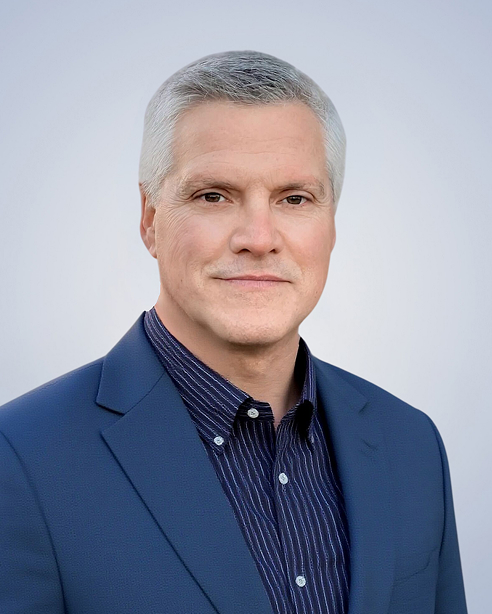 John Vitalie • Aktana CEO