The cleanest proof of John Stewart’s work is an event that never occurs. A microscopic crack does not travel through a flight component. A suspect weld does not reach the launchpad. An inspector, looking at a ghostly radiograph or listening to an ultrasonic signal, notices that the material is telling a different story from the paperwork. The part is stopped. The aircraft or rocket carries on without drama. Inspection, like good editing, is most visible when it has failed.
Stewart has spent nearly three decades in nondestructive testing, the family of techniques used to examine a component without sacrificing it to the examination. The field has the appealing abbreviation NDT and the unappealing burden of being right. Its practitioners use X-rays, sound waves, dyes, magnetic fields and disciplined vision to find discontinuities that ordinary sight cannot. They work in the small, unphotogenic interval between a manufactured object and confidence in that object.
His résumé travels through the machinery of modern aerospace: Applied Aerospace Structures, Northrop Grumman, SpaceX, Virgin Galactic and Vast Space. At SpaceX, from 2010 to 2015, he managed nondestructive evaluation and radiation safety. Today he is identified with Hadrian as a Founding NDT Engineering Leader, bringing inspection craft into a company organized around highly automated factories. Yet the more revealing institution on his résumé is the one he created after deciding a secure technical career was not enough.
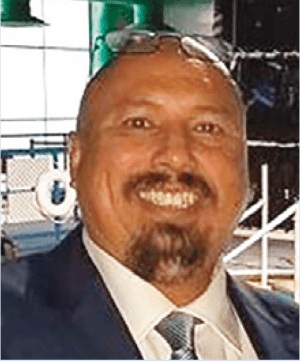
A second kind of inspection
In 2015, Stewart left what a California apprenticeship newsletter called a lucrative and secure NDT career. A Navy veteran who had served as a Seabee with Amphibious Construction Battalion 2, he could see a mismatch. Aerospace companies complained about a shortage of qualified inspectors. Veterans, women and people in economically disadvantaged communities struggled to find a credible entrance into well-paid technical work. The shortage and the surplus were standing in the same room, politely ignoring each other.
Stewart founded the American Aerospace Technical Academy, or AATA, to make the introduction. Its core program offered about 400 hours of training across radiography, ultrasonics, magnetic-particle testing, liquid penetrant, visual testing, phased-array ultrasonics, computed radiography and radiation safety. Students did not merely collect vocabulary. They handled equipment, learned the relevant physics and moved toward the on-the-job hours required for certification. For eligible students, the instruction was tuition-free.
The administrative engineering mattered as much as the curriculum. In early 2016, AATA joined California State University, Los Angeles and LAUSD’s adult apprenticeship operation in winning a $1 million California Apprenticeship Initiative grant. Employers could combine classroom instruction with paid work. NASA’s Jet Propulsion Laboratory agreed to place inspectors and engineers into the program with individualized training plans. Other employers hired graduates. In 2018, AATA ran its first all-women cohort.
Stewart is blunt about the difference between inviting people into an industry and making it possible for them to remain. Technical ability is only one variable. Workplace culture is another. When women entering NDT fail, he has argued, the employer’s environment can be decisive. His answer is not a seminar about inclusion. It is a trained cohort, an employer relationship, a wage pathway and somebody answering the phone when the paperwork develops teeth.
“We are not offering a hand out. We are offering a hand up!”John Stewart, describing AATA’s mission
The old hand and the new machine
There is a satisfying symmetry in Stewart’s two projects. NDT discovers value hidden beneath a surface. AATA discovers capability hidden behind a conventional hiring screen. Both require instruments, standards and judgment. Both can be ruined by treating procedure as a substitute for attention.
That last distinction has become central to his work at Hadrian. In an essay published in April 2026, Stewart proposed a role he calls the “NDT architect.” The traditional Level III engineer selects methods, qualifies procedures and decides what an indication means. The architect goes further. This person asks how decades of human pattern recognition can become part of a larger production system - and where automation remains confidently wrong.
Five ways to ask a solid object whether it is lying
The problem is scale. An experienced radiographer may read weld geometry, thickness and scatter almost at once. An inspector who has seen ten thousand acceptable welds may feel the wrongness of the next one before a formal measurement catches up. This knowledge is real, but it is awkward to store. It leaves when a veteran employee retires. It cannot stand at every machine simultaneously. A high-throughput factory cannot simply add another row of inspectors each time production rises.
Stewart’s solution is neither nostalgia nor surrender. Sensors, robotics, computer vision and automated analysis should carry the craft farther. But first the system must understand what the craftsperson is perceiving. The useful question is not whether a machine can replace an eye. It is why a particular eye hesitated, what physical signal produced the hesitation and whether that reasoning can be made repeatable. Automation becomes an act of translation.
“Evolution isn’t about discarding that knowledge. It’s about making it immortal.”John Stewart, “NDT Architect,” 2026
A career measured in handoffs
Stewart’s professional life is full of handoffs: military construction to aerospace inspection, veteran inspector to first-day apprentice, analog interpretation to digital system. The dates show a technical career gradually becoming an argument about institutions.
NDT technician at Applied Aerospace Structures.
Senior NDT engineer at Northrop Grumman.
Manager of NDE and radiation safety at SpaceX.
Founds AATA and moves full-time into workforce training.
A $1 million grant expands the apprenticeship; AATA later runs its first all-women cohort.
ASNT recognizes his work advancing military members and veterans in NDT.
At Hadrian, he frames the next challenge: engineering inspection knowledge into automated production.
The 2023 recognition from the American Society for Nondestructive Testing honored his contributions to helping active military personnel and veterans enter and advance in the trade. Stewart shared the credit with the employers that took apprentices seriously. That reflex is telling. Apprenticeship is a chain of custody for knowledge. A school alone cannot complete it. An employer alone rarely builds the whole curriculum. A standard can describe competence, but a person must teach another person how competent work feels on a difficult Tuesday.
He knows something about service beyond the uniform. For three years he volunteered as a court-appointed special advocate for children in Los Angeles. He also facilitated cases in the city’s Neighborhood Justice Program. These are not decorative lines on an engineering CV. They fit his recurring preoccupation with systems that make consequential decisions about people, and with the human being who must remain visible inside the process.
That preoccupation has now travelled beyond Southern California. AATA has described completed cohorts and projects in California, Texas and Florida, with training available to employers in any state. The geography changes the practical problem, but not the design: align classroom instruction with the work a plant actually performs, place apprentices under qualified oversight, and give career changers a sequence they can understand. Stewart’s ambition is national, though it is built from local details - an instructor, a lab, an employer willing to hire, and enough patience to make several bureaucracies agree. Rockets may move faster than apprenticeship agreements. He has chosen to work on both.
The quiet consequence
Aerospace publicity prefers ignition: orange flame, white plume, the theatrical departure of expensive hardware. Stewart’s field lives earlier in the sentence. It is there when a technician cleans a surface, calibrates a transducer, reads a film or refuses to wave through an ambiguous indication. Its triumph is a component that deserves to be boring.
His aspiration for the factory is similarly sober. Quality should not wait at the final gate, hoping to catch what production has already made. It should be embedded throughout the process, informed by physics and alive to context. His aspiration for the workforce is the social version of the same idea. Do not wait at the hiring gate and complain that qualified people have failed to appear. Build the instruction, apprenticeship and employer support that allow them to become qualified.
There is wit in the profession’s name. Nondestructive testing sounds modest, almost apologetic: we promise not to break the thing while inspecting it. Yet the discipline asks a grand question. How much truth can be learned without ruining the subject? Stewart has applied that question to metal, to factories and to careers. Look closely. Preserve what matters. Make a careful judgment. Then give the next person better instruments.