John Pope left Brigham Young University with two classes still to take. A lecture series had introduced him to entrepreneurs who described building companies, making mistakes and finding customers. He recognized a life he wanted. The degree could wait. There were things to sell.
Satellite television came first, including door-to-door sales and, later, installations. Insurance followed. Eventually, the businesses needed better telephone systems. That fairly ordinary inconvenience helped produce Jive Communications, the company Pope would lead through years of expansion and a 2018 acquisition by LogMeIn.
Then his career acquired a portal. Pope co-created Dreamwalk, an indoor immersive attraction in Orem, Utah, with artist and filmmaker Ben McPherson. Business phones and imaginary worlds make an unusual pair of entries on a résumé. Follow the decisions between them, though, and a recognizable person emerges: someone interested in turning a possibility into a functioning enterprise, and then finding out how much further it can go.
Two classes from the finish
Pope grew up around the Tacoma, Washington, area, in a family where small businesses were part of daily life. His mother operated businesses; his stepfather did too. Watching the household contend with tight finances left him wanting more control over his own circumstances. Entrepreneurship was visible long before it became a career choice.
School initially offered less excitement. He described doing well on tests while neglecting homework. An early college entrance exam, noticed by chance in a hallway, provided a different route. Community college brought an associate’s degree and student government. A volunteer mission took him to Jamaica for about two years. Afterward came BYU and its entrepreneurship program.
Leaving that program nearly finished is the kind of detail that can swallow a biography. It is more interesting alongside what followed. Pope had heard people explain the work closely enough to imagine doing it himself. He began selling services that already had recognizable customers. Satellite installations and insurance supplied an education with invoices attached.
He later handed day-to-day responsibilities to managers. Designing an operation that could keep working without his constant intervention interested him. The attraction was in making the organization function, in seeing improvements accumulate. A business that needed its owner for every decision would place a ceiling on that ambition.
The price of a dial tone
The phone problem was specific. His insurance customers spoke different languages. His satellite technicians moved between jobs. Equipment sitting in a closet, carrying a substantial upfront price, offered an unappealing answer. Friends with a software development business had similar complaints. They started making their own solution.
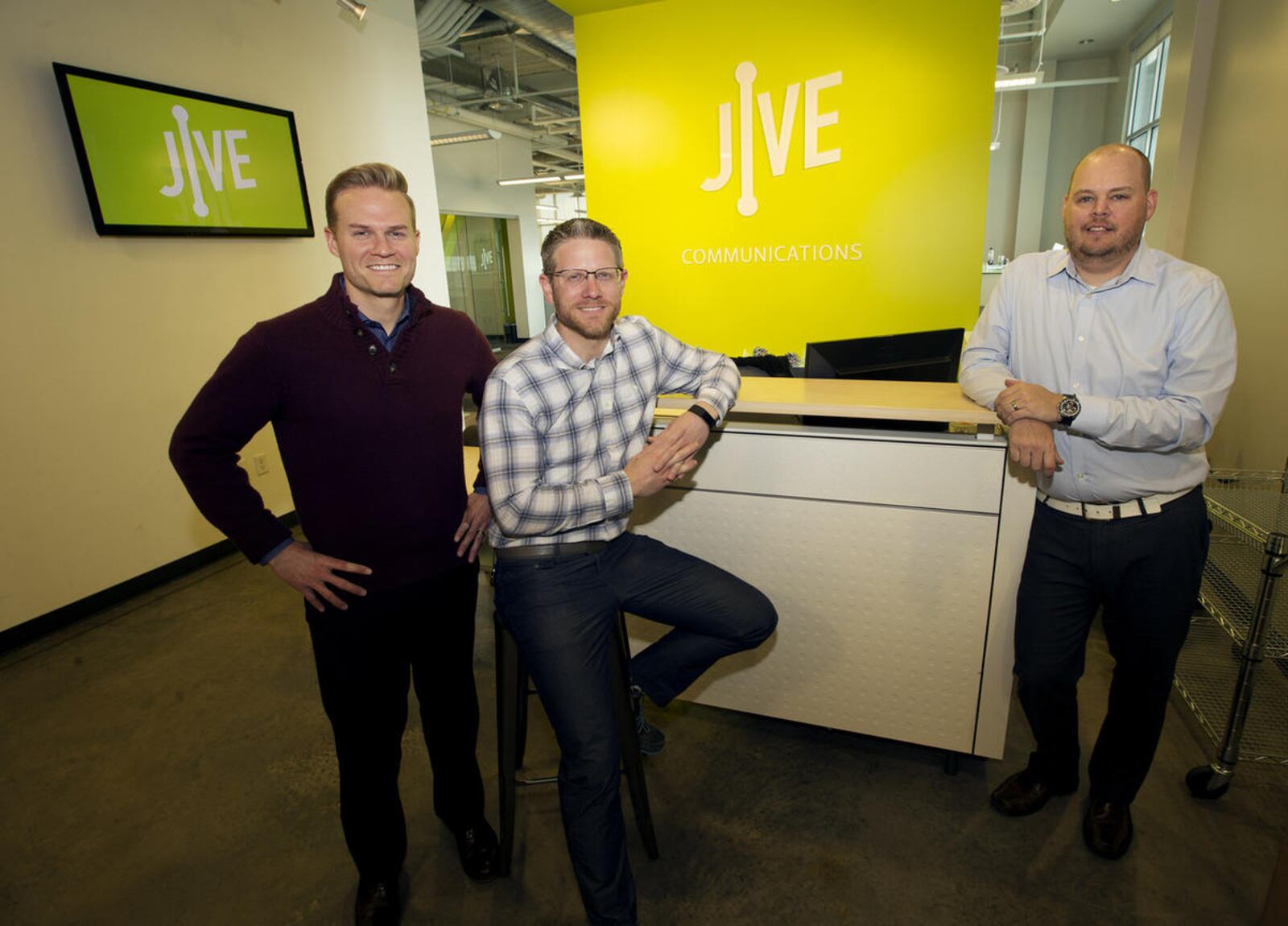
Jive was founded in 2006 by Pope, Mike Sharp, Matthew Peterson, Brent Thomson, Andrew Skeen and Stephen Todd. Their software moved business telephony into the cloud. Clients who saw the system wanted something similar. An internal fix was becoming a product with a market beyond the founders’ own desks.
That beginning gave the team a useful test. They could judge the product against work they actually needed to do. A feature had a purpose before it had a sales pitch. Other owners supplied a second test by asking for it. The company’s opportunity grew out of that exchange between a working solution and another customer’s recognizable problem.
The founders also supplied something harder to put on a product sheet: time without salaries. Pope’s other businesses helped support his family. Other founders relied on business income and spouses’ earnings. Early revenue could go back into Jive. The households around the company were part of the arrangement that made its patience possible.
A route to customers
A good phone system still needed someone to buy it. Early customer acquisition included Google advertising, referrals, review sites and people with an interest in the technology. Pope said reaching the first million-dollar revenue mark or run rate took roughly three and a half years. The work involved finding demand as well as improving software.
In 2009, Jive formally started a reseller channel. IT consultants, managed service providers and telephone specialists already advised the businesses it wanted to reach. Those partners understood local networks and customer needs. Jive could become part of the recommendation they made.
The economics suited a company watching its cash. Commissions linked spending to sales. Existing advisers brought relationships a young company would otherwise have to build one at a time. Pope knew the reseller model from his earlier businesses. Experience in one trade had become useful in another, without requiring the products to resemble each other.
By 2013, Jive had reached a $25 million annual revenue run rate before outside financing. It then brought in North Bridge Growth Equity. Pope described the investment as a minority stake. The sequence matters: customers and an operating business came first; outside capital arrived to help an established operation grow.
- 2006Six founders launch Jive.
- 2009The reseller program begins.
- 2013$25m annual run rate, then growth equity.
Capital also changed the scale of the technical obligation. Larger customers needed confidence that their calls would get through. Pope described directing company investment toward the platform and recruiting deeper industry experience. Reliability becomes very concrete when someone else’s sales conversation depends on your service.
The meeting behind the phone call
Pope’s public advice about leadership can be surprisingly domestic. He wanted executives to form a committed family around the business. People might understand their own departments thoroughly and still disagree about the company’s direction. Expertise did not automatically produce agreement.
His instruction was compact: “Fight for alignment.” That meant making time for consequential discussions before problems accumulated. Each executive had responsibilities within a function and responsibilities to the whole enterprise. A room of competent specialists still needed a shared view of what deserved attention next.
“Fight for alignment.”
John Pope, on executive leadership
He also described setting one primary goal for each day. There is something appealingly small about that habit beside a company expanding across countries. A large ambition still has to survive the calendar. Choosing the day’s most important task gives it a place among messages, meetings and everyone else’s urgent requests.
Colleagues’ descriptions add warmth to the operating principles. A 2014 company tribute, celebrating his EY Entrepreneur of the Year finalist recognition, credited his concern for customers and employees. It also found room for Matthew Peterson’s assessment: “John is a unique blend of leadership, vision, and hair.” The office had evidently retained a sense of proportion.
In 2017, Pope appeared in Utah Business’s Forty Under 40. Later that year, Jive announced his sixth-place ranking on a large-company CEO list derived from Comparably employee ratings. For a leader who talked about bringing executives together, the judgment of the wider staff provided another way to assess the workplace he was helping build.
A bigger company, a familiar county
Growth produced a geographical problem alongside the organizational ones. By 2017, Jive’s Utah staff occupied five offices. Plans for a new 52,000-square-foot headquarters in Pleasant Grove promised to put colleagues back together. Pope publicly committed to keeping the company in Utah County, praising the people and culture around it.
The physical distance between teams was an everyday consequence of success. More customers meant more colleagues; more colleagues needed space. A founder could spend years making a service independent of office hardware and still discover that the people building it would benefit from sharing an address.
On April 3, 2018, LogMeIn completed the acquisition of Jive for approximately $342 million in cash, subject to adjustment. The transaction also provided for up to $15 million in contingent employee retention payments. Pope’s customer letter that day carried the title senior vice president. He emphasized continuity for customers and the possibilities of combining communications with collaboration products.
Approximate cash purchase price for Jive, subject to adjustment. Separate contingent employee retention payments were additional.
There was a practical logic to the combination. Jive supplied cloud calling; LogMeIn brought products including GoToMeeting and GoToWebinar. The ambition was to make different parts of business communication work together. For Pope, the business built around an inconvenient phone system had entered a much larger organization.
An introduction on a television set
The next turn began with an introduction that a networking manual would struggle to prescribe. Invited through casting director Pyn Francisco to be a background actor in the first episode of Yellowstone, Pope met McPherson. Their discussions touched on a science-fiction film and eventually on Pope’s longstanding wish to create a theme park.
McPherson brought artistic and filmmaking experience. Brad Skaar joined the venture, alongside artists and technicians. Dreamwalk opened at University Place in Orem in December 2024. Visitors could explore invented environments, use passes to activate interactive features and reveal hidden clues with decoder lights. A business-communications career had acquired an unexpectedly theatrical second setting.
The work still required choices about operations and money. In opening coverage, Pope described putting incoming revenue back into developing the venue. He wanted the experience to keep changing, giving visitors reasons to return. The impulse to reinvest had survived a considerable change in scenery.
Dreamwalk also makes the relationship between creator and customer unusually visible. Guests move through the work, discover details and decide how much to explore. Some of what the team built will reward a second look. The experience depends on people doing more than receiving a finished presentation; they have to participate in it.
That gives Pope’s later ambition a different texture. At Jive, a successful product helped a customer get on with business. At Dreamwalk, the invitation is to spend time inside something the team has imagined. Both require the proposed experience to hold up when someone finally arrives.
Dreamwalk now lists Pope as its CEO. His route there has included sales calls, software, executive meetings and a television-set introduction. The next customer might want a dependable connection or a doorway into an invented world. Pope has chosen to keep building places where the idea can meet the person who will use it.