At twenty-three, John Jahnke was a sales engineer in Buffalo with a customer problem in front of him and a much larger idea lodged in his head. Joe Tucci, then the chief executive of EMC, had come through and described a career that moved from sales engineering into product leadership, then revenue leadership, then the chief executive's office. Jahnke listened and quietly recognized the route. He did not have the title, the company or even the finished degree. He had, however, found the destination.
The charming thing about early ambition is its terrible sense of distance. From the cafeteria, every summit looks near. Jahnke's route would take roughly two decades, through enterprise storage, databases, cloud platforms, alliances, services and customer success. It would also take him briefly out of college, back into school, and eventually into Tackle, a company he did not begin by running. He first wrote a check and offered advice.
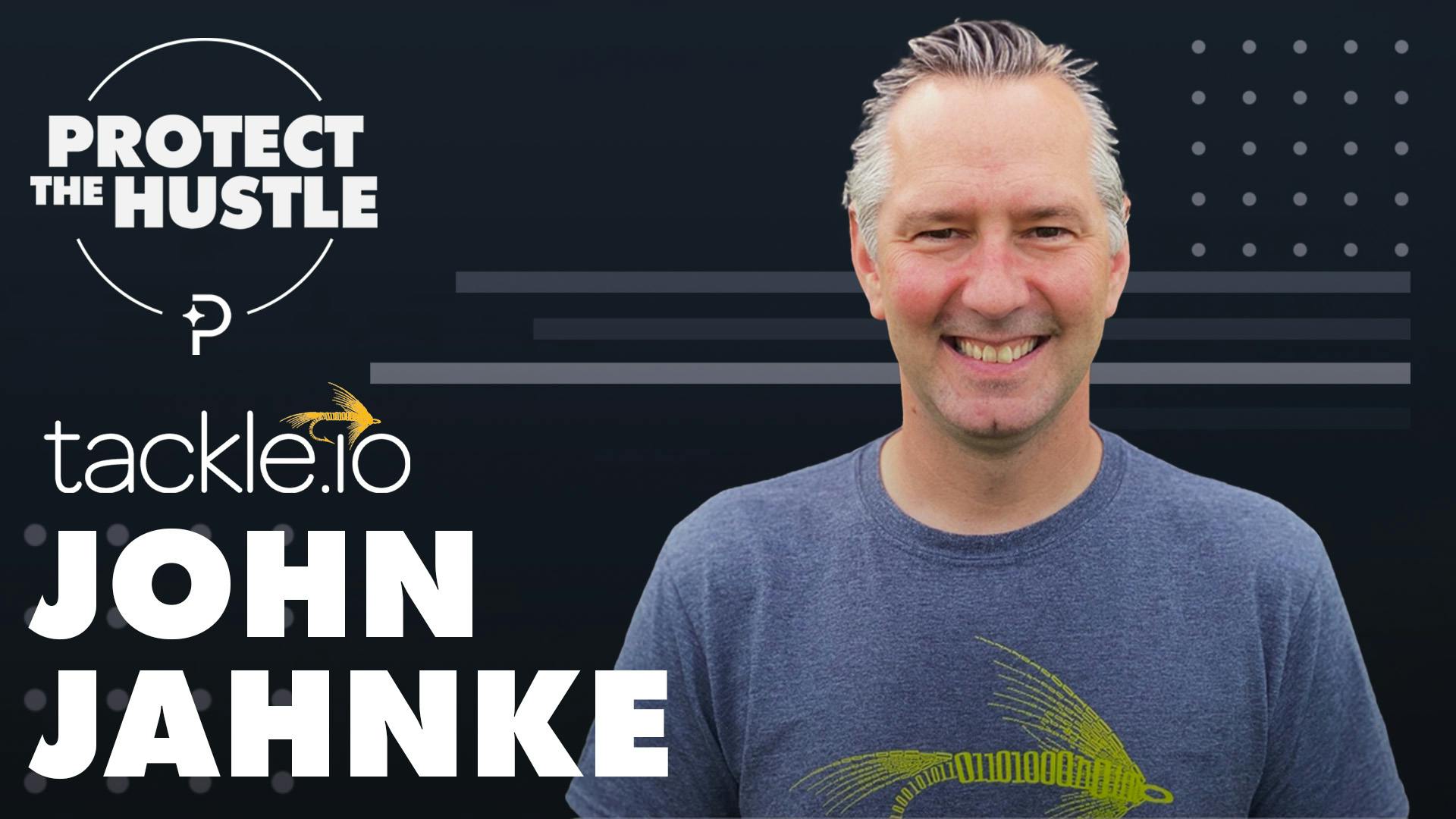
That slow accumulation is the better key to his story. Jahnke is now the chief executive of Tackle.io, the software company built to help other software companies sell through AWS, Microsoft and Google Cloud marketplaces. Yet he still explains his working identity with the modest vocabulary of his first vendor job: a sales engineer helps people solve problems.
The computer kid volunteers for the unglamorous job
Jahnke was born and raised in Buffalo. His mother was curious enough to bring a computer into the house when home computers were still mysterious furniture. Her son was curious enough to keep prodding it. By elementary school, he was teaching computer class because he knew more about the machine than the adults around him.
His entrance into professional technology was less polished. He left college for a time. At twenty, a friend of his brother-in-law needed junior help. Jahnke has described the opening with cheerful accuracy: the man needed a lackey, and he volunteered to be one. The company happened to be working with unusually progressive open systems. The lackey got an education.
He later finished his business studies and completed an MBA at the University at Buffalo. But the decisive schooling happened near customers. At EMC, he began as a systems or sales engineer, the interpreter who has to understand what the technology can do, what the salesperson has promised and what the customer actually needs. The role taught him to live between specialties without pretending to own all of them.
EMC acquired Greenplum, and Jahnke joined the database company to help it scale. He ran field functions including pre-sales and professional services. Leadership posts at Pivotal and Cognizant followed, exposing him to successive waves of emerging enterprise technology. The products changed. The useful question did not: how does a difficult tool become a practical outcome for the person buying it?
The investor crosses to the other side of the table
Tackle began in 2016 with Dillon Woods and Brian Denker, people Jahnke knew through the Greenplum orbit. Woods had been part of an AWS Marketplace beta program and saw something larger in what looked like an awkward procurement channel. Cloud providers had contracts, committed customer budgets and vast field organizations. Software vendors had products their customers wanted. Between the two sat a swamp of custom integration and operational work.
The founding proposition was almost funny in its plainness: companies should not need to build software in order to sell software. Tackle started with the pain of getting a product listed on AWS Marketplace. Jahnke bought into the seed round and advised on product strategy, product-market fit and sales. The company found customers. The advisers and founders agreed that its next stage needed a leader. In 2018, Jahnke took the job he had imagined at twenty-three.
Jahnke did not arrive as a replacement for the technical founders. Woods remained focused on technology, Denker on operations, and Jahnke brought a career spent in the field. The division of labor was the point.
There is a useful absence of thunder in this origin. No garage revelation, no napkin declared priceless after the fact. Tackle had a narrow product, early customers and a complicated market that might mature. Jahnke had spent years learning the buyers in that market. Each side possessed a piece the other needed.
Scale arrives in awkward sizes
Jahnke's account of being a first-time CEO is refreshingly short on omniscience. The chief executive, as he describes it, helps excellent leaders do their best work, helps them work together, and keeps the company and customer priorities visible. This is closer to air-traffic control than command. Everyone else is piloting a machine the controller cannot fly as well.
He is equally candid about what growth does to an organization. Tackle moved through teams of roughly ten, thirty, sixty, 150 and, for a period, around 250 people. At about fifty, an informal leadership structure begins to protest. To double again, a company needs layers. Around 150, enthusiasm can no longer substitute for systems, documentation and enablement. Growth, which looks so handsome in a chart, arrives at work disguised as missing process.
The organization kept changing shape
Employee stages Jahnke described in 2023, shown for relative scale
One choice came unusually early: Tackle invested in customer success before it invested in sales. Woods and Denker were still selling. A customer-success team could make sure early users were happy, learning and expanding before a larger sales organization poured more people into the top of the funnel. It was a sales decision made by looking after people who had already signed.
The company's fundraising accelerated with the market. It raised a $35 million Series B led by Andreessen Horowitz in 2021, followed that December by a $100 million Series C. Total disclosed funding reached roughly $148 million. Capital, though, was never the whole pitch. An early investor recalled being struck by how little cash Tackle had burned while growing. Jahnke has since spoken publicly about capital efficiency, an unfashionable phrase during a fashionable funding cycle and a rather more attractive one afterward.
One thing, one hundred times
Jahnke's favorite advice for young software companies is not to confuse possible customers with an actual market. A startup may be able to sell to four industries in four different ways. That does not mean it should. His numerical version is sharper: four deals worth $250,000 each can make a million dollars in recurring revenue, but they are still four different things. Repeatability is doing one thing a hundred times.
Tackle followed that sequence. It solved listing first, then learned that finance and sales teams struggled to operate marketplace transactions. It added offers and reporting. Customers asked for other clouds, so Azure and Google Cloud support arrived. Co-selling, buyer intelligence and Salesforce workflows widened the platform again. The grand category now called cloud go-to-market emerged from a succession of prosaic annoyances.
By November 2025, Tackle said its software had powered more than $20 billion in cloud marketplace transactions, including more than 52,000 accepted offers. It also announced a strategic collaboration agreement with AWS. The small middleware idea had become part of the machinery connecting software makers, cloud field teams, distributors and buyers.
Jahnke's aspiration is broader than moving paperwork. He argues that business software buying is becoming digital commerce, shaped by people accustomed to quick, self-directed consumer experiences. Enterprise deals will remain complex; complexity merely needs to retreat behind a better interface. The work is to make the clouds' enormous contracts, budgets and partner networks usable without turning every sale into an engineering project.
Buffalo remains the fixed point
Tackle is remote-first and its market is global. Jahnke's own center of gravity has barely moved. He lives in the Buffalo area with his family, has called himself a family-first person and an underdog in the technology world, and speaks fondly of the Buffalo Bills, the hills around Ellicottville and boating on Lake Erie.
This is more than local color. Remote work let Tackle recruit beyond a headquarters, while allowing its chief executive to build an enterprise software career without performing the traditional migration to a coastal technology capital. The cloud erases distance as a technical constraint. Jahnke has used it without erasing place as a personal one.
He also invests, with disclosed bets including TextQL and Verivend, extending the adviser role that first brought him into Tackle. The pattern is consistent. Emerging technology interests him, but the fascination runs toward commercialization: who needs it, how they will buy it, and which system must exist before it can scale.
The young man in the EMC cafeteria did eventually become a CEO. Yet the more revealing continuity is not the ambition he fulfilled. It is the job he never quite left. Jahnke remains a sales engineer in the broadest sense, translating between invention and purchase, specialists and customers, big visions and the first small useful thing. The chair changed. The problem-solving posture survived.