An empty truck is still a truck doing work. It burns fuel, occupies a driver, clocks miles and earns nothing. Joe Salemme spent years close enough to that contradiction to find it irritating. From 2003 to 2015, he owned Connecticut Waste Transfer, a regional waste-hauling and recycling business. Routes were not an abstract diagram there. They were the day: pickup, delivery, return, repeat. Better use of the return leg could turn dead travel into productive capacity.
Years later, Salemme recognized the same little economic insult in a more polished vehicle. Professional chauffeur companies routinely delivered a passenger and sent a luxury car back empty. The leather was immaculate. The utilization was not. What if a booking system could find a traveler for that return trip?
That question became OneWayLimo in 2015. By 2017, the Shelton company had nearly 150 affiliates across the East Coast and was preparing a mobile app. Salemme described it as an alternative to the familiar rideshare companies: licensed and insured operators, specialty vehicles, and prices lowered by using capacity that was already on the road.
The remark is a tidy key to a career that otherwise looks unusually varied. Waste hauling, apartment construction and black-car software occupy different trade-show floors. Up close, each asks an operator to coordinate expensive assets through time and space. A truck without a load, a parcel without a workable plan and a chauffeured sedan without a passenger are three versions of stranded capacity.
The useful trip home
LUXY, founded in Shelton in 2019, expanded Salemme's original idea. The company launched nationwide airport transportation in February 2020, an awkward date for a business built around people going places. Travel stopped. LUXY kept working, then broadened its pitch as passengers returned: planned airport transfers, corporate programs, event coordination and multi-city ride management, all arranged through one platform.
The distinction Salemme makes is plain. LUXY does not own the black-car companies in its network. It provides the technology and booking layer connecting travelers with local professional operators. Those operators gain distribution, payments and a chance to fill unused legs. The passenger gets one interface, one support system and one bill even when an itinerary crosses several cities and several providers.
The itinerary above the operators
Four legs can involve different local operators. The traveler sees one managed journey, centralized support and one payment.
Coordination is the product hiding beneath the car. In a 2026 description, Salemme offered a simple example: a traveler could leave for Hartford's airport, land in Los Angeles, and complete four distinct rides executed by different operators on one platform. The itinerary is complicated. The receipt does not need to be.
LUXY says it accepts only about one in five companies that apply to its network. That selectivity matters because the software cannot straighten a wrinkled collar, answer a nervous early-morning traveler or put a clean car at the right curb. Local service remains stubbornly physical. The platform can make the handoffs visible, verify them and intervene when plans shift.
A company built into the comeback
By 2021, business travel was stirring again. Salemme argued that demand for planned professional service had changed with it. His formulation was blunt: “We are not a limo company, we're a technology company.” LUXY's affiliates already knew how to operate cars. They did not necessarily have the time, capital or software teams to reproduce a national rideshare-style booking experience.
The company kept adding the less cinematic pieces that travel managers notice. In 2023 it widened same-day booking windows, introduced near-on-demand service in New York and Los Angeles, and added one-time passcodes to verify rides. Salemme's stated goal for 2024 was to deepen LUXY's corporate-travel work, improve its app and customer interface, and give local professionals easier access to quality bookings.
Then came institutional distribution. In late 2025, AAA South Jersey announced an investment and partnership that put LUXY's managed ground transportation beside flights, cruises, hotels and vacation packages offered through its travel network. For LUXY, the relationship offered both capital and a path into an established travel audience. For AAA, it filled a conspicuous gap between the front door and the departure gate.
“This partnership is about more than investment,” Salemme said. The phrase carried his broader argument: the platform becomes useful when it joins systems that already hold the itinerary. Ground transportation is often booked last and blamed first. A missed car can make the careful work of reserving the flight and hotel irrelevant.
In March 2026, LUXY reported a $2.5 million seed round to expand marketing and grow its technology, marketing and customer-service teams. The company described 10 people at its Shelton headquarters and roughly 30 working in technical and product operations at an offshore development center in India. Salemme said bringing those roles to the United States was the long-term plan, with the pace depending on growth.
Connecticut Waste Transfer makes route efficiency a daily operating concern.
OneWayLimo starts matching travelers with available professional cars.
LUXY is founded in Shelton and prepares a nationwide platform.
AAA South Jersey invests and adds LUXY to its travel offering.
LUXY reports a $2.5 million seed raise and plans team growth.
The other map on his desk
Transportation is only half of Salemme's public work. He is also a Connecticut real-estate developer, frequently through J&L Enterprises, the firm he co-owns with his wife, Louise. His development record includes Hawk's Ridge, a 109-unit residential complex in Shelton, and projects that have asked local boards to imagine a different use for familiar land.
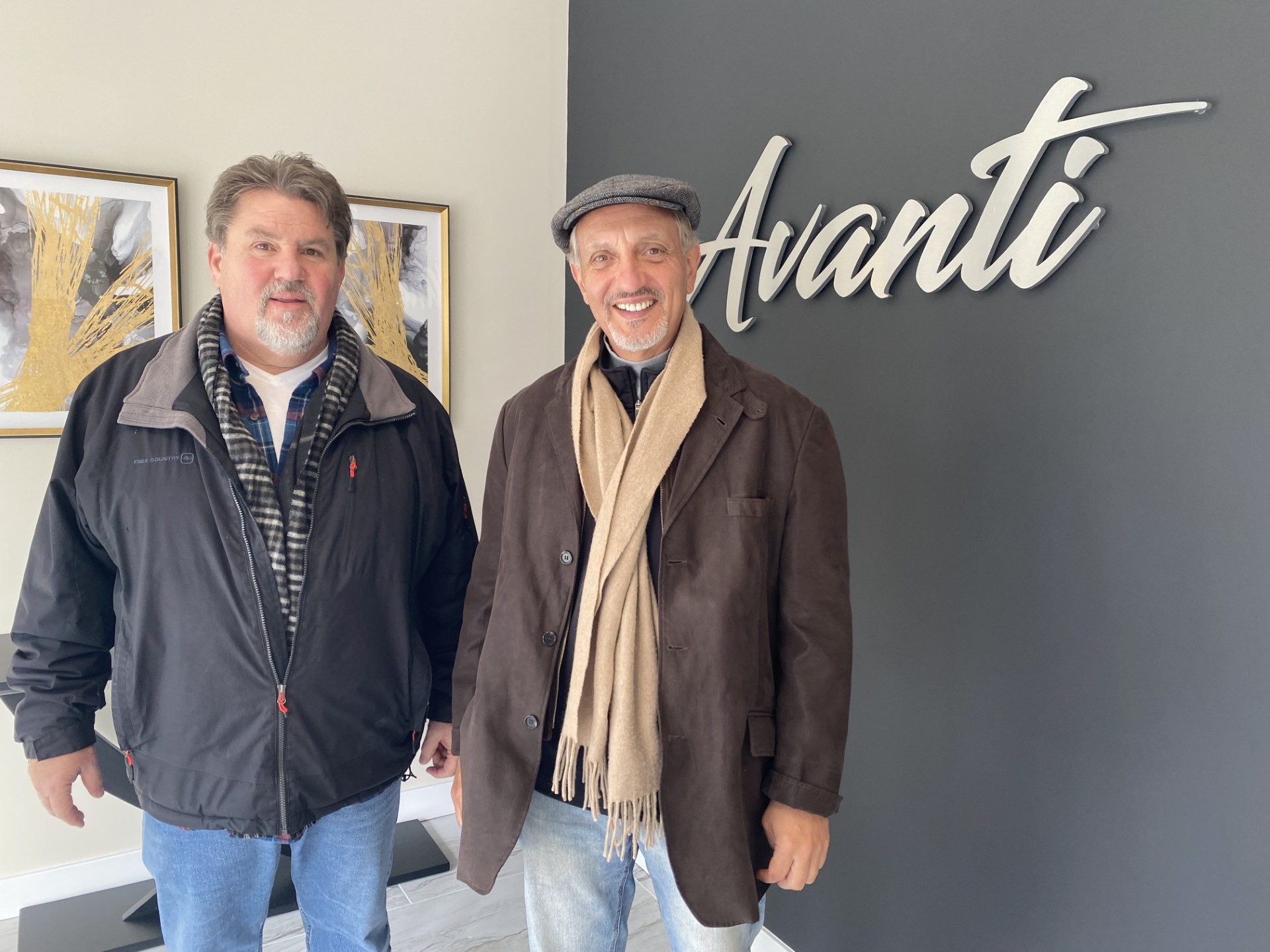
Avanti Apartments, developed with Salemme's childhood friend John Paoletti, opened in December 2025 on the former site of Langanke's Florist and Greenhouses. Eleven of its 55 units were designated as workforce housing. Within days, the partners reported more than 40 reservations. Their sales pitch was wonderfully unromantic: location. The property sits on Bridgeport Avenue, beside a former hotel converted into apartments.
His longer Derby project has required more patience. J&L bought the former Lifetouch school-photography property at 90 Main Street in 2017 for $250,000. Salemme floated several uses, including an advanced-manufacturing education center, retail and housing. The site eventually became Trolley Pointe, a six-story, 105-unit apartment building beside the Derby-Shelton train station.
The finished building also produced a public dispute. In July 2026, Salemme said Derby had backed away from a seven-year tax-abatement plan approved by aldermen in 2023, an agreement he said was essential to financing the roughly $16 million project. City officials said they could not locate an executed agreement and were reviewing the matter. Salemme was direct about both the money and the attachment: his parents were born in Derby, and he had grown tired of looking at the long-empty downtown site.
There is no tidy founder mythology here. There are zoning minutes, affiliate contracts, software releases, financing documents and cars that must arrive before dawn. Salemme's work has accumulated through those details. One public recommendation on his LinkedIn profile calls him detail-oriented. It sounds less like a compliment than a job requirement.
Even the chronology resists a clean handoff from one chapter to the next. Real estate continued while the transportation platform grew. The old OneWayLimo idea survived inside LUXY's matching logic. A downtown parcel bought in 2017 took years to become apartments, while a travel company launched in 2020 had to wait for travelers to return. Salemme's portfolio is less a ladder than a workbench: several projects remain in view, each moving at the speed allowed by permits, partners, customers and capital.
The small arithmetic of waste
LUXY links its utilization model to sustainability: a seat sold on an otherwise empty leg can reduce redundant vehicle movement and help a local operator earn more from an asset already in service. The environmental result depends on whether matching actually prevents extra miles, a measurement the company has not publicly reduced to a single audited figure. The operating logic is still easy to understand. Empty miles cost money and produce emissions. Fewer are preferable.
Salemme's ambitions remain practical in public. Expand LUXY's role in corporate travel. Improve the interface. Give professional operators more useful bookings. Bring more technical roles to the United States over time. The verbs are build, improve, expand and bring. None requires a velvet rope.
His career offers a portable idea for operators in less photogenic corners of the economy. Search for the trip already happening, the tool already paid for, the parcel everyone passes, the capacity hiding inside a bad schedule. The glamorous word is innovation. The useful question is smaller: what is coming back empty?