The fish were a bad idea. Joe Kindness is quite happy to say so. Before there was a reporting platform used by thousands of marketing agencies, he and Blake Acheson considered a way of representing website visitors as fish. It is an appealingly literal approach to traffic: every new visitor, another creature in the tank. Fortunately for the future of the business, they moved on.
Kindness brought up this discarded concept when marking fourteen years since the launch of what became AgencyAnalytics. He also remembered coding at a kitchen table with Acheson, with little idea of the size of the undertaking ahead. His recollection leaves the uncertainty intact. The founders had enthusiasm and technical ability. Their eventual customers would help supply the direction.
There is something reassuring about an entrepreneur remembering the idea that deserved to be abandoned. Successful businesses tend to acquire tidy origin stories. Kindness’s includes an aquarium that never earned its keep.
The customers widened the brief
The product that reached the market on July 14, 2010, was called My SEO Tool. Its name was admirably direct. It helped with search-engine optimization, including the practical business of improving website rankings. After time in beta, it earned $500 in its first month following the official launch. That was a start a developer could measure without needing a complicated dashboard.
The company’s early chronology records a Google Analytics integration in 2011 and a growing recognition, in 2012, that agencies were the audience to serve. Agencies needed access to the numbers, certainly. They also needed to pass those numbers to their own clients. The work of presenting results was becoming part of the product’s purpose.
Conversations with agencies brought the larger problem into focus: producing client reports efficiently as an agency grew. Kindness and Acheson had started with an SEO tool. Their customers were describing a recurring piece of work that stretched across marketing channels. Following that request gave the business somewhere useful to go.
A business paid for by its customers
Kindness’s account of funding is similarly unceremonious. Venture capital was not something the developers thought to pursue when they began. They would build a product people wanted to buy and see whether it worked. Bootstrapping became an identity later; first it was simply the arrangement.
In their first year, Kindness, Acheson and Jesse Smith took no salary, relying on savings and investments. They handled the work themselves and concentrated on organic ways of attracting customers. Years of profits eventually gave the company a reserve to support expansion around 2020. Kindness has described that reserve as the means to hire without bringing in outside funding.
Staying independent still required repeated decisions. Kindness has written about approaches from venture firms and the temptation of other opportunities, including acquisitions. He wanted spending concentrated on the people building the core business. The company describes itself as entirely employee-owned. The practical consequence is a fairly demanding audience: customers have to keep finding the product worth paying for.
The argument between friends
The people making those decisions had known each other before there was a company. Kindness describes school friendships that became working relationships, with conversations moving easily between hanging out and discussing code or customer service. Familiarity made it possible to push an idea without treating every objection as a personal insult.
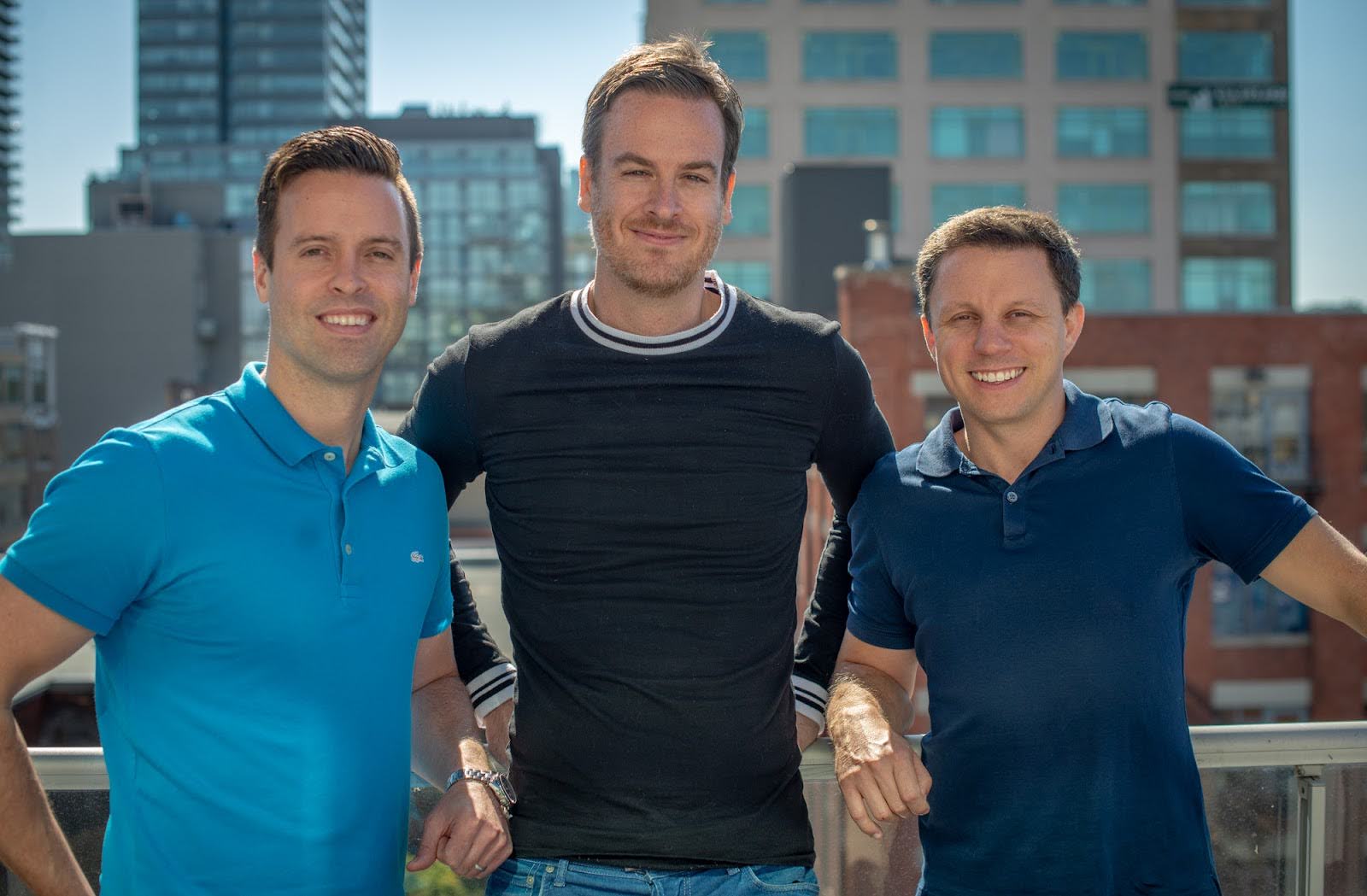
Their instincts differed. In his own telling, Kindness was the more conservative voice; Acheson leaned toward more aggressive growth. Smith often helped them find agreement. That is a more useful picture of partnership than three interchangeable founders nodding politely. Someone has to raise the objection before the business discovers it at greater expense.
“We’re not arguing; we’re debating.”
Joe Kindness, on discussions with Blake Acheson
Occasionally, the intensity worried people watching. Kindness’s explanation was that an issue worth debating deserved their attention. His account gives disagreement a place in the company’s development, alongside trust and compromise. A long friendship does not decide a product strategy for you. It can give you enough confidence in the other person to examine the strategy properly.
Giving away the familiar jobs
For a developer who has helped make the software, customer support offers an immediate sort of usefulness. A question arrives. You understand the product. You can do something about it. In the early AgencyAnalytics team, Kindness, Acheson and Smith answered phones, replied to chat messages and worked through problems themselves.
Kindness held on to that work as the business grew. Knowing both the product and its customers seemed a good reason to remain involved. Eventually, the trade-off became clear: time spent handling support was time unavailable for product development. Handing it over created room to build.
He has identified leaving customer support as a defining point in his development as a founder. Another followed when he stopped coding to concentrate on CEO duties. Both changes meant allowing other people to take responsibility for work he understood well and cared about.
His description of the result is practical. The founders could still talk to customers and understand their problems without occupying the front line. A company that depends on its founder’s personal involvement in every task has an awkward ceiling. Kindness had to help remove it.
A bigger boat needs a different captain
Kindness has been blunt about the fantasy that a company can behave like a small startup forever. His preferred analogy moves from a speedboat to a cruise ship. More people, more customers and more dependencies change the way a decision travels through an organization.
He argues for planning further ahead while preserving room to experiment. At a larger scale, experiments need evidence behind them; a hunch or one customer’s request cannot carry the whole decision. That is a noticeable evolution for someone whose early business conversations could take place around a kitchen table.
Yet the table retains its place in his imagination. After hosting a company meeting with more than 140 people, he recalled the excitement and uncertainty of building with Acheson. The memory was tied to values he wanted to preserve, including simplicity, curiosity and adaptability. He could recognize the appeal of those early days without claiming the larger organization should run exactly as it had then.
Hiring had already forced him to rethink an assumption. In a 2023 podcast conversation with Jason Swenk, Kindness recalled believing that good software would help attract the people the company needed. Finding those people proved harder than expected. Bringing in recruiting and people support eventually relieved him of handling so much of the interviewing himself.
The decision echoed his experience with customer support. Work that looks manageable when the team is small can become a substantial job of its own. Recognizing that change requires a founder to look beyond the next task on the list. There is a team to build as well as a product to maintain, and the person who started the company cannot remain the only person equipped to bring others into it.
Remote, with room to meet
Working arrangements have also required revision. Kindness has expressed pride in building a distributed company, along with enthusiasm for the energy of its occasional gatherings. A Toronto office gave people who wanted to work together somewhere to go. He described an optional hybrid approach as something the growing business could explore.
For him, setting goals and helping people align around them are separate tasks. A spreadsheet can record an objective. It does less to create the relationships that help colleagues interpret it together. His reflections on remote work leave room for a company to change its habits as the team changes.
At an assembly in late 2024, nearly 100 colleagues joined in the office while others took part virtually. Planning sessions and project reviews brought teams together for a short period; most would soon return to working from home. Kindness valued the gathering for the relationships and shared understanding it could carry back into ordinary working days.
His interest in how people join the business extends to students. Welcoming three co-op recruits in 2025, he argued for more placements and described the benefit to both students and employers. A founder who once did almost everything himself was making a public case for giving newcomers a chance to learn through real work.
The next question from the client
By the time he joined George Arabian on the Brews & Buzzwords podcast in 2025, Kindness had years of decisions to discuss: keeping the product useful, hiring people who could work well together, and expanding without making the software unnecessarily complicated. His fifteenth-anniversary reflection that year put colleagues and customers at the center of what he had learned.
The questions those customers bring keep changing. In July 2026, AgencyAnalytics announced AI search tracking and tools connecting client data with AI assistants. The business that began around search rankings was responding to another change in how companies get found and how agencies explain their work.
Revenue growth from 2022 to 2025
Canada’s Top Growing Companies · No. 224 overallThat September, AgencyAnalytics announced its inclusion in Canada’s Top Growing Companies, reporting revenue growth of 120 percent from 2022 to 2025. More than 7,000 agencies used the platform, with nearly 150,000 businesses receiving marketing results through them. Kindness’s accompanying remarks concentrated on getting the numbers accurate and specific to each client.
It is a fitting concern for someone whose own job has changed so much. The original developer learned to leave support, then coding, to other people. The small group of friends learned to coordinate a larger team. The product grew because its founders were willing to let customers widen the brief. Somewhere along the way, the fish stayed behind. The questions kept arriving.