Somewhere in corporate America, a perfectly decent dinner is being held hostage by slide 37. The entrée is cooling. The logo in the corner has appeared often enough to qualify for residency. Around the table, senior executives perform the polite nod of people calculating whether dessert justifies staying. Joe Fontana would like to release everyone.
His alternative sounds almost reckless in a business culture that invoices by the framework: invite a small number of carefully chosen people, give them a problem worth discussing, and let them speak. No product tour. No case-study ambush. No representative waiting beside the projector like a customs officer. The host earns attention by making the room useful.
Fontana has spent more than two decades building and leading sales organizations. Today he is Chief Marketing & Growth Officer at BuyerForesight and Chief Revenue Officer at Amzai, where his work sits at the junction of prospect intelligence, executive events, and pipeline. He has lived through selling before widespread automation, after it, and now amid AI. The tools grew astonishingly capable. The buyer, inconveniently, remained a person.
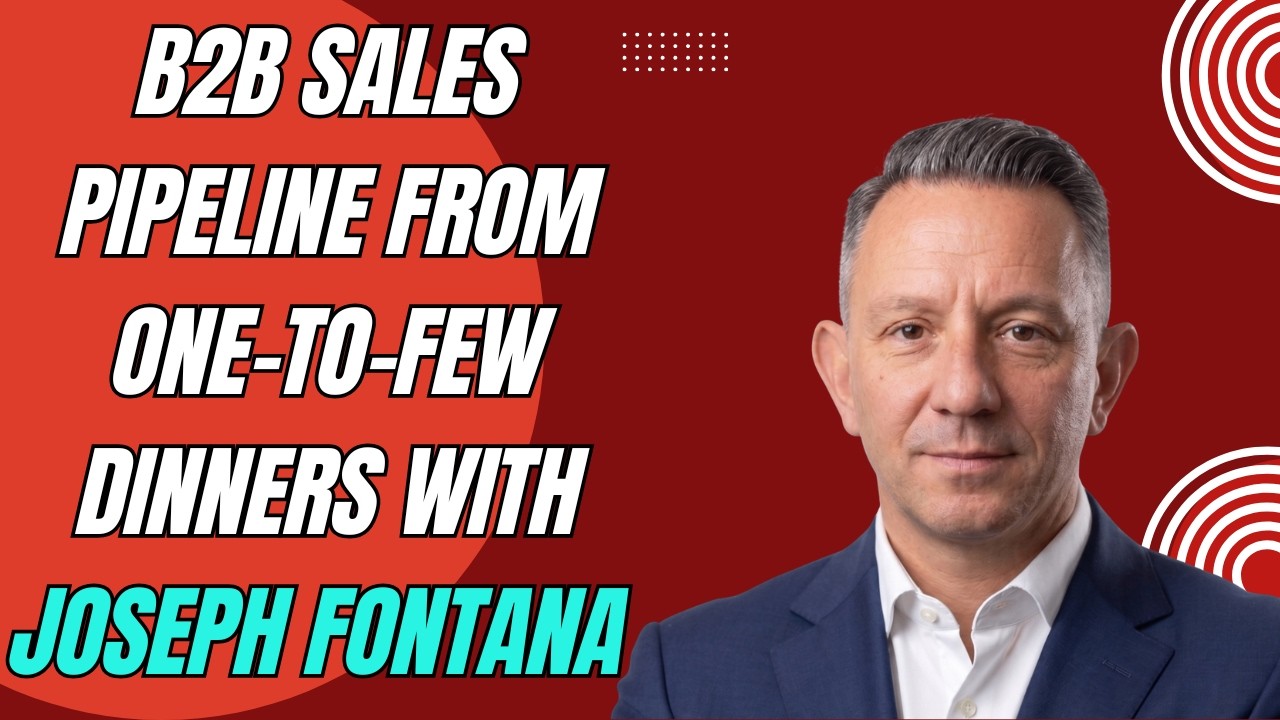
The room gets smaller as the software gets louder
Fontana's timing is mischievously good. Sales teams can now generate research, messages, summaries, scores, and sequences at a pace that would have looked supernatural early in his career. The result is not always a grateful buyer. It is often a very full inbox. Fontana's public writing pokes at this contradiction with the cheer of a roast comic. Every synthetic attempt at intimacy, in his telling, raises the value of the genuine article.
His argument is not a campaign against technology. BuyerForesight itself works from data and prospect intelligence. It is an argument about where technology should stop. Use it to understand an account, locate the right senior people, and prepare intelligently. Once those people arrive, stop treating them as records in transit. Curiosity needs room to breathe, and nobody has ever confided a difficult business problem to a nurture sequence.
“Sales has always been and always shall be a series of conversations.”Joe Fontana, Pipelineology
That sentence is his operating system. A sale moves from awareness to consideration through conversations, each one earning the possibility of the next. The meeting is not a little stage before the sequence resumes. It is the work itself. This also explains why Fontana dislikes the common post-event handoff, in which the person who built rapport disappears and a stranger arrives with a calendar link. The org chart may approve. The relationship does not.
The small guest list is not decorative exclusivity. It creates responsibility. Ten people cannot vanish into an audience. Every seat changes the discussion, so selection matters more than registration volume. For a BuyerForesight session on sales and field-marketing alignment, the invitation was aimed at leaders accountable for pipeline. Other gatherings have been built for law firms, associations, and B2B technology teams. The category changes. The social contract does not: come prepared to contribute.
Chocolate is the icebreaker; preparation is the machinery
Once a month, Fontana adds a tasting box. Chocolate is shipped to participants before a virtual roundtable, and an expert guides the tasting while marketers compare notes on event performance. It is an endearingly civilized wrapper for conversations about awkward subjects: sales follow-up that never happened, event leads marooned in Salesforce, budgets stretched past reason, and the enduring fantasy that 400 badge scans must mean something.
The charm works because it is not pretending to be the result. Chocolate gives strangers a shared ritual and takes some ceremony out of the screen. Then the questions do the heavier lifting. Fontana's model starts weeks earlier with account selection and a precise reason for a particular person to join. Six or seven useful prompts can outperform 47 slides because they give the room somewhere to go without telling it what to think.
The small-room operating loop
There is discipline hiding beneath the conviviality. On the Bold Calling podcast in 2024, Fontana connected his structured habits to his military background and described rising before 4:30 in the morning. His advice to teams is correspondingly plain. Keep the ego out of the sales organization. Explain work simply enough that colleagues can use it. Align sales and marketing before an event, not during the post-mortem. Decide who owns the next action before the room fills.
“Talk to me like I'm five until I tell you to stop.”Joe Fontana, on sales and marketing alignment
The line is funny because every company has watched clarity lose a fight with vocabulary. Fontana's public persona works the same way. He uses blunt language, old-fashioned fundamentals, and a steady ration of dad jokes. He signs some of them, “These are the jokes, folks.” A recent gag about fearing snakes, fish, and worms ended with “lack-toes intolerant.” Revenue strategy has rarely been so close to vaudeville.
Fred's bedrock in George's sales stack
In March 2026, Fontana gave his philosophy a title: Fred Flintstone Selling in a George Jetson World. The premise is visible in the contrast. George has the machines. Fred has to prepare, persist, and take responsibility without them. Modern sellers need both. AI can find targets, draft outreach, summarize calls, and organize the day. It cannot make a careless seller credible, and it cannot accept ownership when the follow-up dies.
This is where Fontana's apparent nostalgia becomes more exacting than sentimental. He is not asking sellers to surrender useful tools and chisel notes onto a stone tablet. He is asking what those tools are for. Efficiency that creates more irrelevant contact is merely industrialized impatience. Efficiency that clears time for better research and better conversations can be an advantage. The distinction lives in judgment, which remains stubbornly manual.
Attention is not trust.
Automation can request attention at enormous scale. Fontana's work begins with earning trust at human scale, then protecting it with relevant follow-up.
His career gives that argument some grain. Before BuyerForesight, Fontana held sales leadership roles at Lendio and GDS Group. He later appeared publicly as BuyerForesight's Director for North America, hosted field-marketing discussions, and advised Dextego, a sales-coaching company. By 2026 his remit had widened into growth leadership at BuyerForesight and revenue leadership at Amzai. The thread is not a particular tool or industry. It is the management of conversations at scale without making them feel manufactured.
Measure the morning after
Event marketing loves visible evidence. A crowded room photographs well. Registration totals sit obediently in a report. Fontana keeps pulling the measurement toward a less glamorous question: what moved? Did the discussion reveal a genuine problem? Did someone ask to continue? Did the host make the next conversation easy? A dinner can be delightful and commercially useless. It can also be commercially useful without producing a dramatic photograph.
That makes follow-up the moral test of the format. If a buyer spends two hours with an executive or subject expert, the next note should come from the person who shared the table. The message should continue something real from the discussion. A random SDR appearing three days later does not scale trust; it announces that the trust was entered incorrectly in the system.
Fontana's latest work extends this idea across event portfolios. Amzai describes itself as a connected event partner, bringing audience, sponsors, planning, delivery, and post-event value into one operation. Its public figures - more than 1,500 events in 73 countries for over 600 companies - place his small-room argument inside a much larger delivery machine. Intimacy, in other words, is not the absence of operations. It is what operations are meant to protect.
In August 2026, Fontana discussed the model on two podcasts. That same season, he announced a nomination for the inaugural ET50 event-technology recognition program and continued arranging conversations about AI, outbound sales, and event-led growth. The subjects sound thoroughly current. His answer remains almost antique: prepare carefully, ask something worth answering, listen, and do what you said you would do next.
“There's nothing easy about a simple process.”Joe Fontana, Marketer of the Day
Simple is hard because it leaves nowhere for indifference to hide. If the room is wrong, targeting failed. If the discussion is dull, the premise was weak. If nothing happens afterward, ownership failed. There is no enormous funnel to blur the evidence. Eight smart people around a table can be an unforgiving dashboard.
It can also be a humane one. People disagree, laugh, compare bruises, and occasionally discover that someone else is wrestling with the same problem. Fontana has built his current chapter around making that moment more likely. The grand technology trend is artificial intelligence. His bet is on natural curiosity - preferably served with chocolate, and mercifully free of slide 38.