Joe Chura had a peculiar study schedule. A car would arrive on the Ford assembly line, he would do his work, and the next brief opening belonged to a college textbook. He was twenty when he started at the plant. Between the cars, he read. A paragraph was progress. An uninterrupted hour would have been a luxury.
The detail has followed him through a career in automotive retail, software and beer. It deserves to. An acquisition price can tell you what somebody eventually built. The textbook tells you a little about how he began, with a job to keep doing and an education to fit around it. The factory supplied its own rather strict reminder to stop reading.
Chura grew up near Ford’s Chicago assembly plant. Learning that he would become a father made finding work urgent. Friends and family helped him get the job. He wanted a different future, but the route toward it ran through the responsibilities already in front of him. College would have to happen alongside the line.
Fifteen seconds, repeated
Ford’s tuition program helped pay for his education at Saint Xavier University. He graduated magna cum laude in 2004. His early working life also took him through Ford marketing and sales, calling on dealerships as the internet began to change how people shopped for cars.
That required a curious sort of translation. A prospective customer could be sitting somewhere else, typing questions into a computer, and still be a person worth answering. In his account of those years, Chura remembers having to persuade dealers that the internet had a future. The modern shopper, with several tabs open and little patience, might enjoy that conversation.
He left Ford in 2008 and went into dealership management. The move gave him an operator’s view of the business he had been advising. A car dealership has inventory, staff, customers and a daily appetite for sales. Digital marketing had to earn its place among those concerns.
A taste for computers was already there. As a child, he had programmed a Commodore 64. Later he spent spare time learning search optimization and coding. Dealership experience gave that interest somewhere useful to go. He could see a service to offer other dealers, and in 2011 he co-founded Launch Digital Marketing.
The website was the bottleneck
Launch began in basement space. Its early team later worked at the Naperville Public Library before getting an office. The arrangement has a useful lack of glamour: the business needed somewhere to operate before it could afford the surroundings usually associated with operating a business.
The work exposed a problem. A marketing agency could attract people to a dealer’s website, but the site itself could frustrate what happened next. Search visibility, the browsing experience and the ability to understand a visitor’s actions all mattered. Sending more people into an awkward experience had obvious limits.
The team began building websites. Dealer Inspire followed, with a platform and analytics designed for automotive retailers. Launch handled marketing services; its sister company developed the technology dealers used to meet customers online. The distinction mattered because the two jobs could now inform each other.
Dealer Inspire’s products included Conversations, a messaging platform, and Online Shopper, a digital retailing tool. Both addressed ordinary moments in a complicated purchase: asking a question, comparing terms, getting help, moving closer to buying a car. The software lived where a customer’s uncertainty met a dealership’s need to respond.
A case study with Cox Chevrolet put the issue plainly. “We needed to improve our ability to help mobile visitors get the information they were looking for online,” Chura said. A phone screen is a small place to lose a sale. Building a better path through it was the work.
Two companies, one transaction
Growth came quickly enough to attract attention outside dealership circles. Dealer Inspire placed No. 39 on the 2017 Inc. 5000. By early 2018, Launch and Dealer Inspire together had 400 employees and 1,700 customers. Their combined revenue for 2017 was $41 million.
Two businesses together · Acquisition terms and operating figures announced February 2018
Cars.com announced its agreement to buy both companies on February 14, 2018. The terms called for $165 million in cash at closing, with additional performance incentives. The transaction closed a week later. For the buyer, the combination added website technology, messaging, digital retailing and marketing services to its automotive marketplace.
The purchase also offered a way for products developed by the smaller businesses to reach more dealers. It was a distribution opportunity as well as an ownership change. Chura and the management team stayed to lead the businesses after the deal.
A competitor marked the occasion with unusual warmth. DealerOn co-founder Ali Amirrezvani congratulated Chura and his colleagues, then signed off with “GAME ON!” Automotive technology apparently allows room for both a handshake and a sharpened elbow.
In January 2022, Chura became Cars.com’s chief innovation officer. The company’s account of his appointment described Dealer Inspire as approaching 800 employees and serving more than 5,400 clients. The organization had become something much larger than the company he had first helped assemble.
Looking back in a later interview, he spoke with particular pride about Dealer Inspire continuing to grow after his time as CEO. That is a revealing measure for a founder to choose. The enterprise was supposed to keep working when somebody else took the chair.
An office with an audience
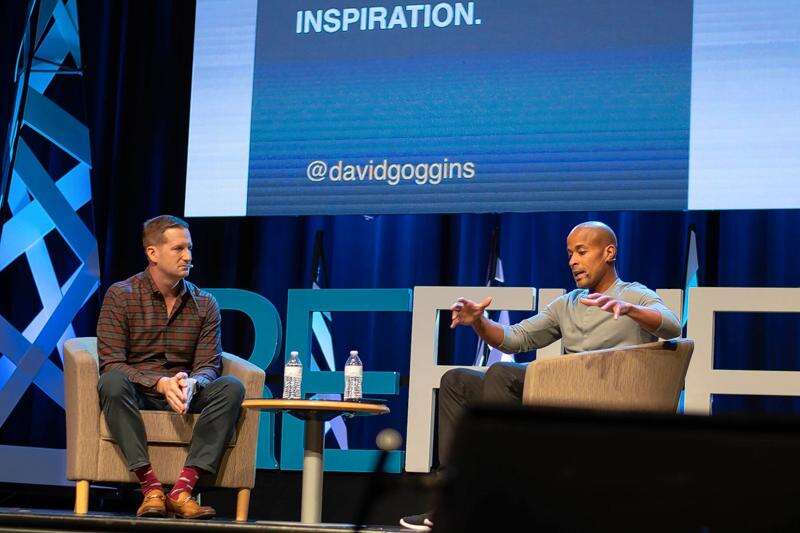
Chura’s interest in what keeps people moving extended beyond software. REFUEL began as an event for his team and opened to dealer partners, friends, families and neighbors. He reasoned that a larger venue would let more people hear the speakers his employees were already gathering to see.
The first REFUEL took place in 2017. Its later lineups included David Goggins, Chris Gardner, Jeremy Cowart and Maysoon Zayid. Ticket proceeds supported Loaves & Fishes. In a post-event account, Chura celebrated a donation equivalent to more than 5,000 meals.
His conversational streak also found a home in podcasting. The show formerly called Not Almost There is now GO with Joe. Its guests have included Jocko Willink, Jesse Itzler, Jim Kwik and Rich Roll. More recent episodes turn to marketing, measurement and AI, subjects with plenty of practical uses in a founder’s working day.
There is a playful side to his account of company life. He explained the skateboards in the office by pointing out that he actually rode one. Brian Dukes, a business partner visiting a company meeting, remembered being unexpectedly brought up to address the employees. Chura recalled giving him about half an hour’s notice. A modest allowance, perhaps, for becoming part of the entertainment.
“A chance to put down the armor and be open about the human side of leadership.”
Joe Chura, on a leadership retreat
A garage with different machinery
Go Brewing brought him back to physical production. The idea included a place where people could enjoy the atmosphere of a brewery, music and company while choosing non-alcoholic beer. Heather Chura was part of that early story. So were people with brewing expertise, a necessary addition to a founder whose experience ran toward software and marketing.
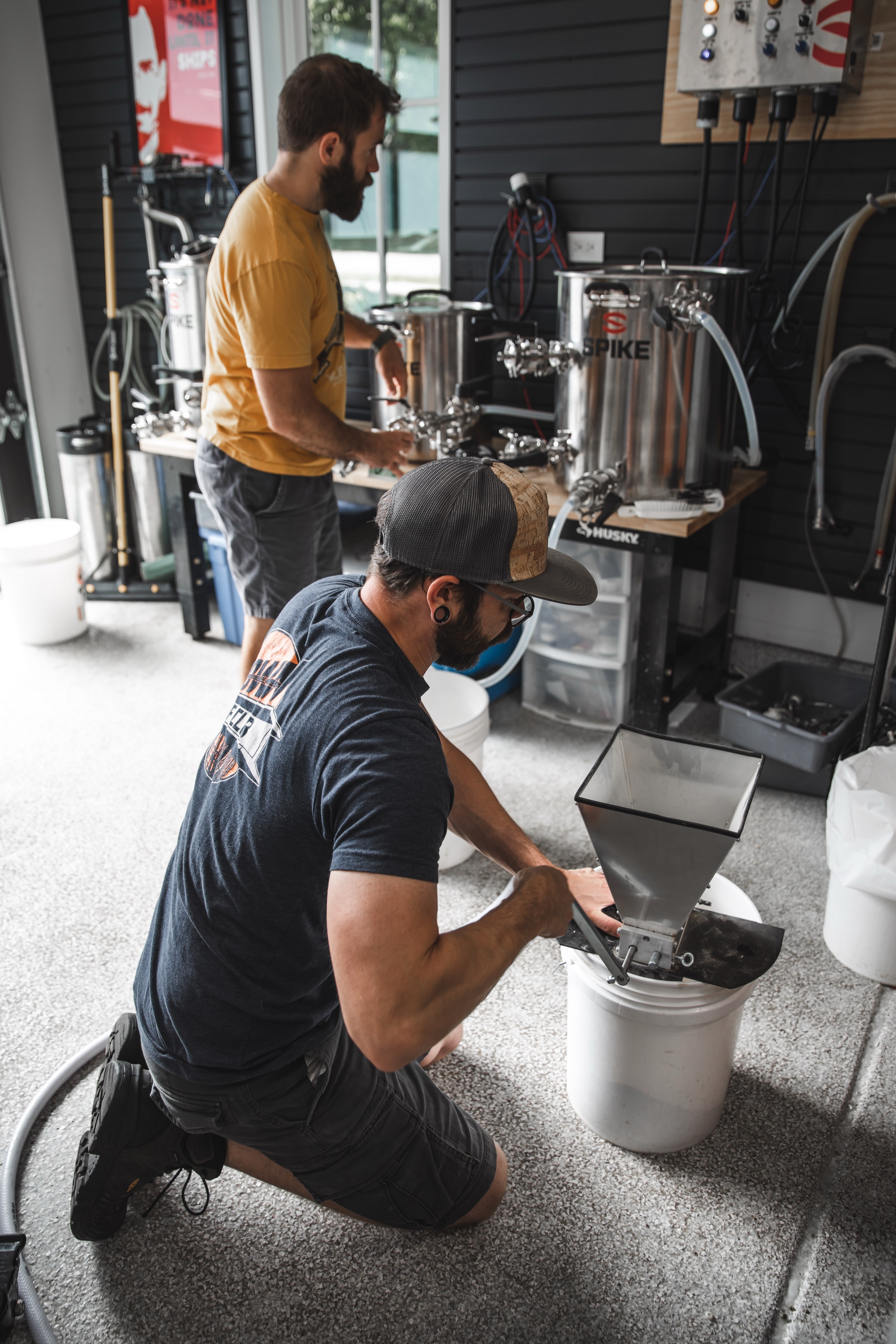
In 2022, his garage became a working pilot brewery. The early operation focused on recipes and the ability to control production. Go Brewing identifies 2023 as its commercial launch year. Selling online gave Chura a familiar place to begin while the team learned the demands of a different product.
The move also changed what expansion meant. A software product can be distributed without putting another can on a truck. Brewing requires places to make, pack and move the thing being sold. Chura could bring his marketing experience with him; production imposed its own terms.
A brewery makes the question of control expensive. Recipes require equipment, packaging and capacity. In July 2024, Chura announced Craftsmith, a joint venture with neighboring Noon Whistle Brewing, intended to expand production capacity by almost tenfold. The same announcement brought news of an investment from Listen Ventures.
That was a departure for an entrepreneur accustomed to bootstrapping. He described looking for a partner who believed in the business and could add something useful. His previous companies had given him resources and experience. They had also given him enough experience to recognize that this business might call for help.
In January 2026, Go Brewing announced financing from Rich Roll Enterprises and further backing from Listen. Roll had spoken at Chura’s earlier GO event. The relationship had made its way from a stage into an investment. Go reported distribution across 32 states and more than 8,000 retail locations at the time.
A beer for the neighbor
The next chapter arrived with a small marketing joke. On October 19, 2026, Go Brewing launched Cold Standard and began recruiting “Non-O-Influencers.” The desired applicants liked beer and hardly ever posted online. They would receive beer to share with a friend or neighbor, in person.
For someone who built businesses around digital marketing, the choice has a pleasing symmetry. A screen can introduce a product. A neighbor can hand it over. Chura’s latest launch makes room for the second transaction, the ordinary social exchange that may never appear in a public feed.
He remains interested in the machinery behind those moments, whether it is dealership software, a brewery’s production system or the channels that carry a new product into someone’s life. Each business adds another set of things to learn. The Ford line offered its lessons in short installments. He has kept enrolling.
Keep the conversation going
More from Chura, plus the interviews and business announcements behind this story.
- Joe Chura’s website
- X
- GO with Joe on YouTube
- Go Brewing
- Cal Fussman: 15 Seconds to Millions
- The Wise Exit: the two-company sale
- Cars.com’s acquisition announcement
- The 2024 brewery expansion
- The January 2026 investment announcement
- The Cold Standard launch
- Chura on the human side of leadership
- Watch: Chura with Rich Roll
- Watch: Chura with Jocko Willink