Damian Sia once put fake meter gauges on the dashboard of his Honda Civic. He also fitted a spoiler, changed the bumper and, on another car, went for pink. This was a person perfectly capable of enjoying the theatrical possibilities of motoring. Selling a car, however, supplied a less entertaining sort of drama: unreasonable offers, uncertainty over paperwork, and the suspicion that everyone else understood the transaction better than he did.
That frustration became part of the reason for Motorist, the Singapore business he founded in 2015. But the interesting turn in his story has come eleven years later. Having spent years making vehicle ownership easier for other people, Sia has handed the chief executive’s job to Angela Poh. He is now executive chairman. The founder who began by doing practically everything has reached a point at which doing everything would defeat the purpose.
When he described telling the teams in Da Nang about the change, he remembered reactions ranging from recognition to drinks being spat out. His own conclusion was rather calmer: “From here, she drives.” For someone whose working life has revolved around cars, it is a useful way to describe an unusually personal business decision.
A quotation for almost anything
Motorist makes more sense when you look at the businesses that preceded it. Sia founded SeekSquare in 2010, Quotations in 2011 and DirectCars in 2012. He was already working on the practical question of how a customer could ask for something and receive competing offers. The subject might change; the difficulty of comparing prices remained.
Quotations allowed people to request prices for all sorts of purchases. A box of name cards was one example he used to explain it. Over time, he noticed that enquiries about cars consistently resulted in completed transactions. That observation gave him a reason to concentrate. The car business offered a specific place to apply an idea he had already been testing.
He later sold his stake in DirectCars and used the proceeds to start Motorist. There is a pleasing lack of ceremony in this sequence. A broad proposition became a narrower one because customers were actually doing something with it. The useful clue was sitting among the enquiries.
His parents were entrepreneurs, and as a teenager he wanted a career that improved people’s lives. At Republic Polytechnic, that ambition acquired practical support: incubation, mentors and introductions to investors. The connections mattered because building a company required things a programmer could not simply write into existence. Advice, money and someone else’s experience all had their uses.
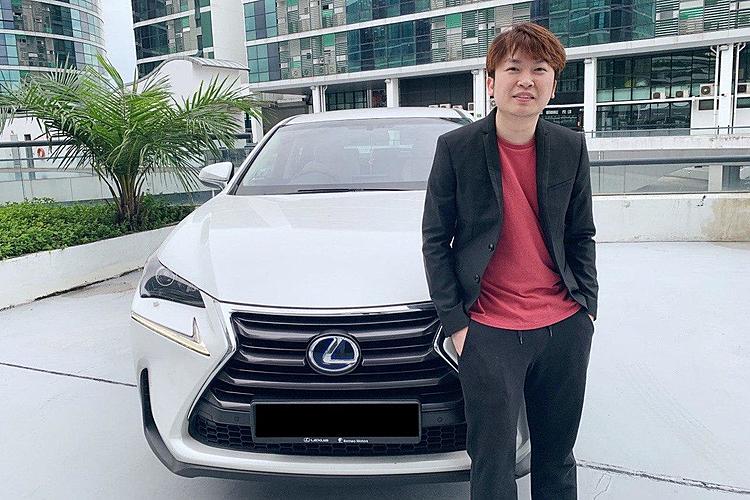
The website was the easy introduction
Sia was a programmer by training. In Motorist’s earliest days, he built the website, called customers and handled the finances. The company began with one person moving among jobs that larger businesses divide between departments. A title was of limited practical help when the next task was simply whatever needed doing.
The technical work was only part of the job. Customers were hesitant about selling an expensive possession through an online platform. Dealers, accustomed to their existing way of working, also needed convincing. Sia went to their doors himself to recruit the first group of automotive partners. The software could organise a transaction; someone still had to persuade people to try it.
That experience gives the founding grievance a second dimension. He wanted sellers to have a more legible process, but the people already buying and selling cars had to see a reason to participate too. Motorist needed both sides to trust the arrangement. A website without willing dealers would have been a particularly tidy dead end.
By 2017, Sia was describing a service that could solicit bids and help a driver sell without making a tour of showrooms. Motorist reported more than S$55 million in vehicle sales over its first 22 months. That number measured cars changing hands through the platform. The human proposition was smaller and easier to appreciate: fewer calls, fewer journeys, less uncertainty about what came next.
The business between car sales
A person can like cars very much and still prefer to forget the date of an inspection. Motorist’s next move was to make room for that person. The app, officially launched in March 2019, extended the business beyond the occasional sale into the recurring chores of owning a vehicle.
Sia has described the logic in terms of four activities: buying, selling, maintaining and driving. Reminders give an owner a reason to return between transactions. Road tax and COE renewal are hardly the stuff of bedroom posters, but they are obligations with consequences. A service that remembers them can earn a place on a phone through usefulness rather than excitement.
In November 2019, Motorist introduced Drivers Connect, allowing users to communicate through their car plate numbers. The idea addressed an everyday problem: drivers sometimes need to contact another owner without having a telephone number. It gave the app a social function rooted in an actual motoring situation, rather than an abstract wish for more engagement.
The company also developed Co-Driver with Singapore’s Traffic Police, providing audio alerts about enforcement zones and other driving information. These additions widened Sia’s original concern with the transaction into a concern with what happens after the keys change hands. The sale was an entry point into a much longer relationship.
By March 2026, Motorist was discussing tools for monitoring traffic at Woodlands and Tuas and features connected with ERP 2.0. Such details explain the shape of the business better than a grand label can. A driver may be shopping for a car one month and checking a crossing the next. The useful service has to accommodate both moods.
Growing on money already earned
Sia chose to bootstrap much of Motorist’s early growth. The proceeds from his previous company supplied the initial capital; operating profits helped finance expansion. He has said the experience made him more resourceful, decisive and careful about spending. It also gave a practical edge to his advice about choosing a problem, a product and a core team.
“No one runs a business alone”
Damian Sia, 2021
Outside investors eventually joined the story. In September 2021, an AngelCentral syndicate led by JobsCentral co-founder Lim Der Shing invested in a S$1.2 million seed round. Previous investors Royston Tay, co-founder of Zopim, and JobsCentral co-founder Huang Shao-Ning also participated. Lim had followed Sia and the team for more than two years before putting in further money.
That relationship suggests a different rhythm from the overnight funding announcement. An investor had time to watch the business work. At the round’s announcement, Motorist said its app had passed 120,000 users. The capital was intended to support growth in Singapore and Malaysia and expansion into Thailand. A company built through successive practical decisions was acquiring the means to make more of them.
In January 2024, Tokyo Century Leasing (Singapore) invested in Motorist. The connection extended beyond cash: the Japanese group wanted to strengthen online sales channels and develop collaboration in Southeast Asia. For Sia’s business, the partner brought an established automotive financing operation into the picture. Another piece of vehicle ownership could sit closer to the transaction.
A convertible makes room for a child seat
Sia’s own motoring history contains its share of revisions. By his 2020 interview he had owned eight cars, beginning with a Honda Civic ESi while at Republic Polytechnic. His favourite had been an Audi TT Roadster. After becoming a father, he moved towards the space and easier access of an SUV. A child seat has a way of revising a design brief.
The ambition to own a Lamborghini Gallardo Spyder survived in his answers, including a separate 2021 interview. Yet his off-duty interests reach beyond cars. He plays piano, enjoys trying different beers and watches Korean dramas. In 2023 he named the series StartUp as a favourite. Even his television viewing, it appears, sometimes returns him to the question of building a company.
His professional language is less flamboyant than his old pink Toyota. He has urged aspiring founders to stay humble and learn from advice and criticism. Republic Polytechnic now lists him among its industry mentors. The institution that helped him make connections has become a place where he can offer his own experience. That return journey is one of the more concrete ways to measure a career.
The next driver
Poh’s succession had a visible preparation period. She became deputy CEO in March 2024, giving Sia more room to concentrate on regional expansion. By then, the division of responsibilities was already changing. The chief executive handover in August 2026 continued a process that had been underway for more than two years.
Annual vehicle transaction value, S$ million
GMV is the value of transactions facilitated, rather than company revenue. Figures reported by Motorist in September 2026.
The company operates in Singapore, Malaysia, Thailand, Vietnam and the Philippines. At the succession announcement, it reported that more than half the vehicles transacted through its platform came from outside Singapore. Sia’s new brief centres on board leadership, long-term strategy and capital priorities. Poh holds executive responsibility for the businesses, operations and markets.
There is a straightforward test embedded in that arrangement. The business that started with one person must keep making decisions without routing every one of them back to him. Sia has already written about wanting the next generation of leaders to rise. Giving another executive the job makes that wish an organisational fact.
For years, he worked on the difficulties of passing a car from one owner to the next. Now there is a different set of keys to hand over. The company continues, the founder remains involved, and the person responsible for the daily drive changes. For a former one-person operation, that is a considerable distance travelled.