Before there was a parcel company, there was an award. OPPO called it the Jet Lee award, a prize for top salespeople in its worldwide agencies. Most executives make do with a business card. Lee had become a performance standard. It is a small detail beside the billions of packages his later business would handle, but it offers a useful place to begin: with a salesman whose name had already travelled further than his next company.
Lee, whose name appears in listed-company documents as Jet Jie Li, would found J&T Express in Indonesia in 2015. He arrived at logistics through electronics distribution. The connection is wonderfully practical. A phone can have an ingenious camera and an elegant screen; somebody still has to get it into a shop, persuade a dealer to carry it and make sure the customer can buy it. Distribution supplies the verbs that a product presentation tends to leave out.
His career is a story about those verbs. It moves through provincial China, into Indonesia, across Southeast Asia and back into China’s crowded delivery market. Along the way, the object being handed over changes. The importance of the handover remains.
The award before the parcels
Lee earned a marketing degree at the University of Science and Technology Beijing in 1998. From January 1999 he managed a department at Jiangsu Baisheng Electronic, selling audiovisual products. In February 2008 he became general manager of Nanjing Baisheng Oppo Communication Equipment, responsible for OPPO distribution in Jiangsu and Anhui. These were lengthy stretches of work, measured in years rather than funding rounds.
A provincial distribution operation teaches an unromantic version of scale. Products need routes. Routes need partners. Partners need reasons to keep answering the telephone. The award bearing his name suggests how highly OPPO valued his contribution. It also provides a useful corrective to the idea that a founder’s working life begins on the day a company is registered.
By the time Lee moved into an overseas business, he had spent more than a decade dealing with the space between manufacturer and buyer. A new country would change the language, the competitors and the habits of customers. It would also give that experience somewhere new to work.
- 1998Marketing graduate
- 2013OPPO Indonesia
- 2015J&T begins
- 2020China delivery launch
- 2023Hong Kong listing
Jakarta, with a phone to sell
In April 2013, Lee appeared at OPPO’s Indonesian debut. The Find 5 was entering a market occupied by familiar phone brands. OPPO had specifications to discuss and a name to establish. Lee acknowledged the recognition problem publicly. The company also planned 16 service centers in major Indonesian cities that year. Even at a launch devoted to a handset, the network around the product mattered.
He served as founder and CEO of PT. Indonesia OPPO Electronics, the brand’s first overseas exclusive sales agent, from February 2013 to June 2015. The title is a reminder that international expansion involves building a business on the ground. Consumers need somewhere to buy the phone and somewhere to take it when something goes wrong. A foreign brand has to become an everyday local option.
By May 2015, another business was occupying his attention. At an OPPO press conference in Jakarta, he introduced Ivan Lau as his successor as Indonesian CEO. Lee explained that logistics required more of his focus. The announcement happened alongside the launch of the R7 and R7 Plus. New phones, new management, and a delivery venture waiting in the wings: an unusually crowded product launch.
His new operation would initially concentrate on Indonesia, with the possibility of expansion elsewhere in Asia. That is an instructive scale for the ambition. It began with a country he had worked in, customers whose distribution needs he understood and relationships already tested by the phone business.
A different cargo, familiar connections
The J&T brand was founded in June 2015; the Indonesian business’s public launch followed in August. Tony Chen, OPPO’s founder, appears alongside Lee in accounts of J&T’s creation. Their association gave the new courier a history before it had much of a history of its own. Early phone deliveries and connections with distributors helped turn that relationship into an operating business.
Here the change of industry becomes easier to follow. A dealer network contains people accustomed to taking responsibility for a territory. Those people understand local demand, commercial incentives and the difference between a promise from headquarters and a workable plan. Courier operations introduce their own difficulties, but Lee could draw on relationships formed while solving another distribution problem.
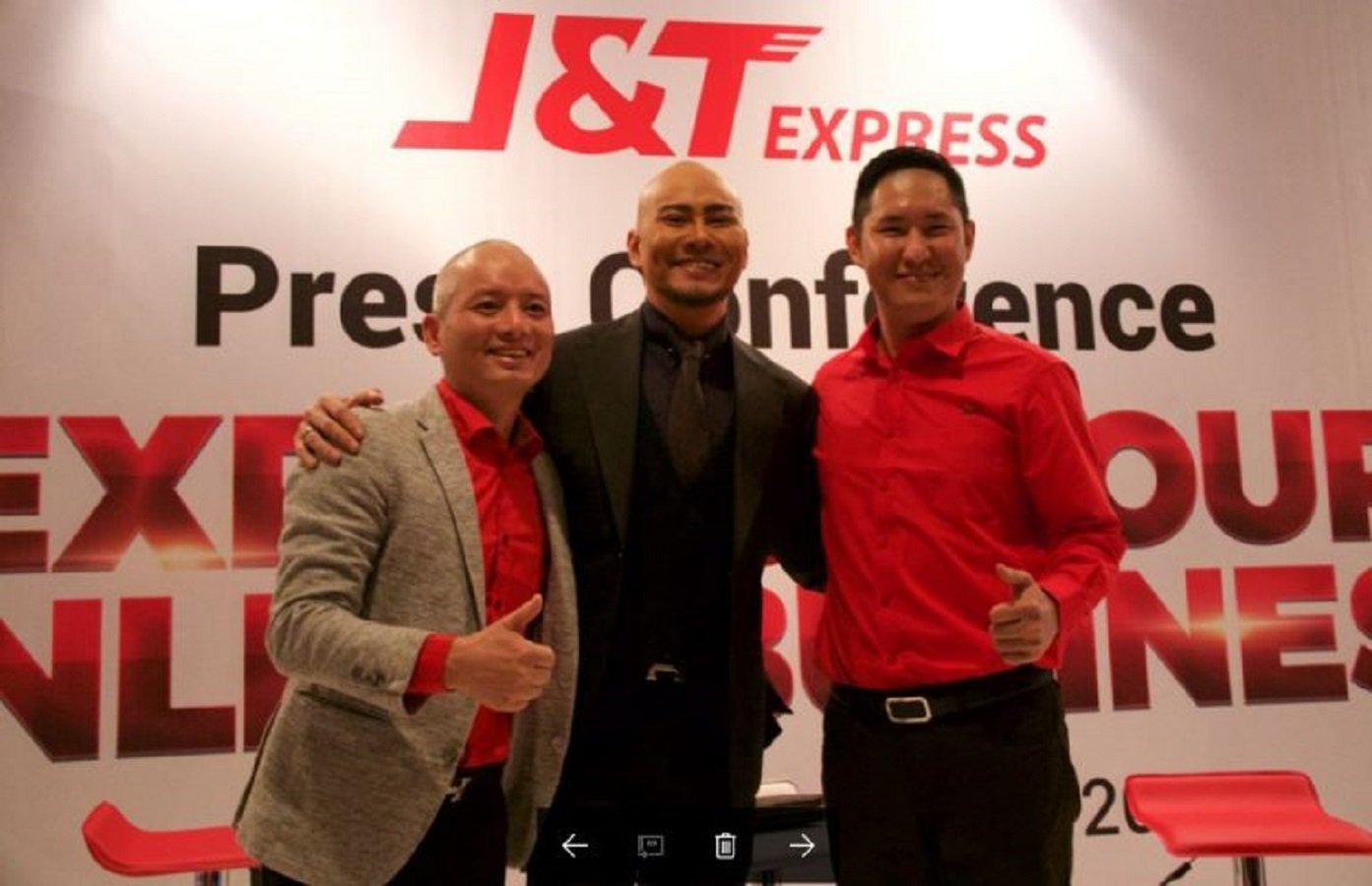
At a 2017 press conference, the opportunity was described through the contrast between China’s large daily parcel market and Indonesia’s much smaller one. Online shopping needed delivery capacity. The commercial proposition was plain enough: more people buying on screens would mean more goods moving through streets.
The continuity went beyond Lee and Chen. Steven Suzhou Fan, who became J&T’s executive president, had worked in OPPO distribution in Jiangsu and then managed its West Java business. He joined J&T in June 2015 as a regional sponsor in Bandung. His route overlapped with Lee’s through China, Indonesia and the change of industry. For this team, the move into parcels involved colleagues who had already worked together in the phone business. That shared experience helps explain how an unfamiliar venture could begin with familiar people taking responsibility for particular places.
There was a management transition, too. Robin Lo took over as CEO of PT. Global Jet Express in October 2017, succeeding Lee. Keeping that distinction straight helps make sense of the story. The Indonesian business had its own management; Lee’s later chairman and chief executive titles belong to the global listed group. Expansion creates organizations as well as routes.
The return journey to China
J&T entered China in 2020. For a Chinese entrepreneur who had built the brand in Indonesia, it was an unusual return journey. He was bringing a courier operation into an already busy market. The country offered a vast stream of parcels and established competitors who had spent years learning how to move them.
Lee had been in Shanghai building agent relationships and major-client connections before the launch. The sequence is revealing. The visible arrival of a delivery brand follows less visible work: finding the people, securing the connections and assembling a service that can function when orders begin. A logo can be shipped overnight. A network takes longer.
His argument for moving beyond Southeast Asia was competitive. Remaining within the region would leave J&T exposed to others coming in. Expansion was therefore tied to defending the business as well as enlarging it. That reasoning explains the appetite for a difficult market without making the difficulty disappear.
The earlier OPPO connections mattered again. Distributors familiar with the phone business were among J&T’s backers and partners. Trust accumulated in one line of work could help mobilize resources in another. It could not sort a package by itself, but it helped bring together the people and capital required to build the operation.
“Going public merely grants us an entry ticket”
Jet Jie Li, spring 2026
An entry ticket in Hong Kong
On October 27, 2023, J&T Global Express began trading in Hong Kong. The offering raised roughly US$500 million. Eight years after the Indonesian start, the business had reached a public-market milestone. A career that began in audiovisual sales now included leading a listed international parcel group.
A listing supplies a date around which a business story can neatly arrange itself. Delivery resists neat endings. The next morning brings another collection round, another sorting shift and another customer checking a tracking number. Lee’s later description of going public as an entry ticket fits the nature of the work unusually well.
His continuing Indonesian connections also extend beyond formal company milestones. OPPO Indonesia documented him attending a football event in London in 2024 and partnering with badminton player Taufik Hidayat in a friendly match publicized in 2025. They are glimpses of a working life with room for a court and a sporting gathering. A badminton shuttle, at least, requires no tracking number.
What 104 million parcels ask of a founder
By 2025, J&T’s annual parcel volume had passed 30 billion. Its express network covered 13 countries. Those figures describe a group operation: local managers, partners, sorting teams and couriers doing the repeated work behind the founder’s strategic decisions. A personal profile should leave enough room for the people who make its central character’s plans possible.
Global parcels, third quarter
+24.8% year on year. Zero-based comparison; company operating figures, unaudited.
The October 15, 2026 update put average daily volume at 104.2 million parcels for the third quarter. The network had approximately 20,300 outlets and 292 sorting centers at September’s end. These are dated operating figures, rather than a permanent description of the business. They indicate the scale at which its service now has to hold together.
Lee’s spring 2026 shareholder letter contains a revealing admission: postponing infrastructure investment in pursuit of short-term profit had harmed service. His prescription emphasizes sustained investment and teams that take root locally. The ambition carries the weight of something learned through operating, including the cost of getting a decision wrong.
He reduces customer priorities to “speed, safety, and service.” It is a short list for a business with a very long itinerary. It also brings his story back to its beginning. The salesman has become a logistics chairman, responsible for a far larger network. At the receiving end, somebody still expects the thing they bought to turn up. All those years of expansion meet their test at the door.
Follow the route
Company information, public statements and further reading.