Ho Jia Jian knew a peculiar sort of disappointment: a film could reach a festival and still struggle to find its audience. He and Derek Tan had made Cashless, watched it travel through festivals, and begun thinking about its online life. The obvious destinations were YouTube and Vimeo. The less obvious question was how anyone would find it there. Finishing a film had left them with another unfinished job.
That problem became Viddsee. Launched as a short-film platform in 2013, it gave the two filmmaker-engineers a place to gather Asian stories and help people discover them. Ho’s career has since moved through distribution, original production, branded films and microdramas. But the beginning remains appealingly specific: he had helped make something and wanted it to continue being watched. A festival invitation was a fine thing. An afterlife seemed worth arranging, too.
A film needs somewhere to go
The frustration extended beyond their own work. At regional festivals, Ho and Tan encountered short films they valued, then found those films difficult to locate online. A viewer who missed the event could miss the work altogether. The festival calendar was doing rather a lot of the audience’s deciding for it.
Ho’s explanation was pointed. YouTube resembled a vast general store, carrying everything from baby videos to advertisements. Unless someone knew the film or director to search for, a short could disappear into the assortment. The internet had made publication easier; the viewer still needed a way through the shelves.
They tested their idea with a Facebook page, posting short films and watching the response. It was a modest way to investigate a substantial question. Would people seek out these stories when someone made the introduction? Before there was an extensive platform to manage, there was the recurring editorial act of choosing something worth someone’s time.
“We believe that short films are the new movies for the internet.”
Ho Jia Jian, in Viddsee’s early years
Before the platform, a film club
Ho’s interests had been taking shape well before Viddsee. At eleven, he was making graphics and logos in Photoshop. Photography and video followed. Before university, he helped on production shoots in his hometown of Kuala Lumpur. The appetite for creating images arrived early; engineering gave him another way to understand how things worked.
He studied at the National University of Singapore, graduating in 2010. He and Tan were both engineering students, but they met through nuSTUDIOS, the university film group. Their shared projects included screenings, workshops and films. It was a useful place to find out how another person handled work, with an actual audience waiting at the end.
The founders later described filmmaking as a close relative of starting a business: begin with an idea, build it, put it before people, consider the reception, and carry what you learn into the next attempt. Their student work had also taught them how many people a film depends on. The director’s name might receive the attention; the credits offered a more accurate account of the labour.
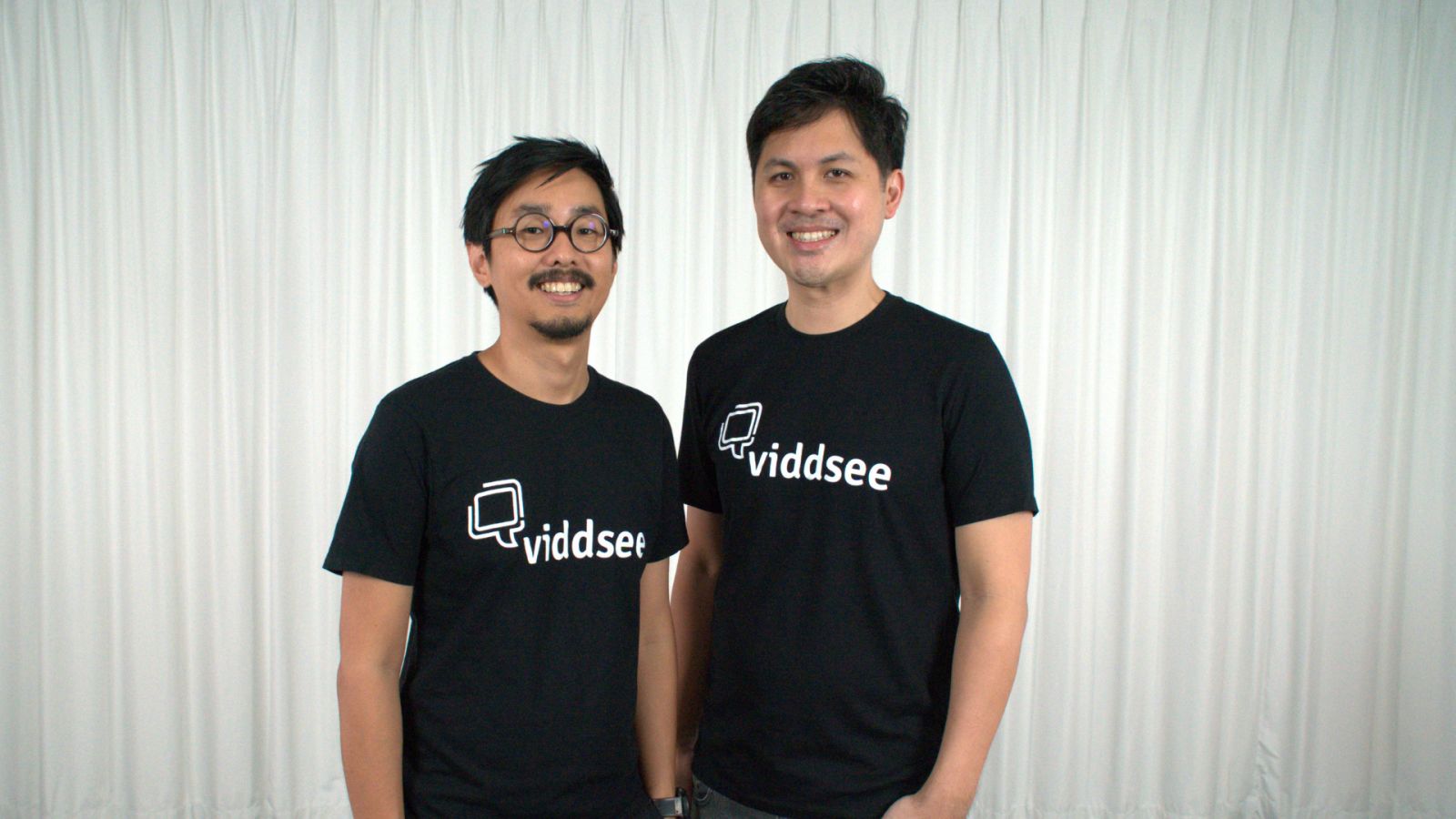
The experience between graduation and launch
Professional television work gave the idea some practical footing. Ho worked at StarHub, gaining experience around internet television and digital advertising. The founders had seen how viewing could change as screens and connections changed. They were approaching distribution with experience of building the machinery behind it.
They also had help. NUS Enterprise provided incubation space and mentorship, and the startup received support through a SPRING ACE grant. Ho had participated in the NOC-iLEAD entrepreneurship programme. These details make the origin more instructive: conviction was accompanied by technical experience, institutional support and a small experiment that could be repeated.
The dates contain two stages of the beginning. Early company activity goes back to 2012; the platform’s launch is generally dated 2013. That interval makes room for the work that startup anniversaries tend to compress: trying an idea, seeing whether people respond, and deciding to make the next version.
An audience small enough to carry
Viddsee’s wager fitted the phone. Short films offered a complete viewing experience within a smaller stretch of time, including the daily commute. The task was to make a deliberate story feel accessible on the screen people already carried.
By August 2015, Viddsee reported more than two million monthly unique users. Its Android app included personalised weekly recommendations, synchronisation across devices and offline playback. Those features had practical consequences. A film could be saved for later; a journey could become viewing time without requiring an uninterrupted connection.
The mobile experience was part of reaching a regional audience. Distribution decisions acquire meaning at that level of detail: where somebody watches, how they find the next film, and whether the connection allows them to finish. A founder interested in stories still has to care about the download.
What watching made possible
Ho’s business developed around the relationship with viewers. By 2018, Viddsee had spent years building an audience before moving into branded production. At that time, its own viewing site was ad-free. The company was exploring how a brand could pay for storytelling that people would choose to watch.
“We need to show people the value of content,” Ho said. Audience knowledge gave that proposition some substance. The company could connect filmmakers with commercial opportunities while considering which stories engaged viewers. The work involved creative judgment and the less romantic business of making the next production possible.
Viddsee Studios was established in 2017. During 2018, the company released 35 originals, including both independent creative projects and work with brands. A subsequent Telkomsel partnership combined a four-episode original series with a selection of existing shorts. Production and distribution were becoming parts of the same conversation.
For filmmakers in the network, paid commissions offered access to projects they might otherwise have struggled to reach. For Ho, the company’s usefulness could extend beyond finding another viewer for a finished film. It could help create the conditions for another film to be made.
A partnership with the Singapore Film Commission in November 2016 had already given this distribution work a public role. The new Singapore Film Channel brought local shorts into a dedicated online collection, with audience insights and marketing intended to help them reach more viewers. For a filmmaker, the presence of a film in a catalogue is only the first part of being seen. Someone still has to make the introduction.
The border a viewer crosses
Ho has spoken about viewers arriving for stories from their own country and gradually watching films from neighbouring places. That movement matters to his idea of Viddsee. Southeast Asia’s proximity does not automatically produce familiarity with one another’s films.
Among his favourite directors is Yasmin Ahmad. His interest in local storytelling makes sense alongside that preference: the particular rhythms of a place can give a film its emotional reach. In his account, authenticity and personal experience help explain why some stories connect.
“Anybody, anywhere, can access these stories,” he said. The ambition was broad, but the route began with the details of somebody’s own world. The viewer did not have to attend a festival, know a programmer, or recognise a director’s name before a film could make an introduction.
Microdramas, then a vampire at Cannes
The tenth-anniversary year brought experiments with ownership and intellectual property. In 2023, Ho and Tan introduced Candee as Viddsee’s parent company, with Candee Labs exploring web3 storytelling. Later that year, Tan stepped back from daily operations while retaining a non-executive director role. Ho continued as CEO, alongside commercial and studio leaders.
In June 2024, a partnership with RisingJoy opened another route: Chinese microdramas for Viddsee’s audience. The announcement built on a vertical-series initiative already underway. For a company founded around short films, the emerging serial format introduced another set of choices about pacing, production and viewing habits.
Then came a longer form. At MIPCOM Cannes in October 2025, Viddsee announced Siti Vampire, a feature adaptation of a short series, with Indonesia’s Mahaka Pictures. Ho was named among its co-producers, alongside Kenny Png and Celerina Judisari. Titien Wattimena wrote the screenplay and Rahabi Mandra directed.
By October 2026, the adaptation, titled Siti Si Vampir, had reached a Jakarta press screening. Its comedy and fantasy were grounded in the city’s social divisions. The project gave Ho’s original distribution concern a new setting: a story that began on small screens could be reworked for cinema, with collaborators bringing another local perspective to it.
Recognition arrived at different stages of that development. Ho was included in the 2018 Gen.T Leaders of Tomorrow list in Singapore. In late 2025, Viddsee’s Viola Isn’t Like Us, directed by June Cheong, won Best Short Form Video (Social) at the Asian Television Awards. The distinction belongs to the film and its team. It also offers a concrete example of the kind of creative work the company had grown to support.
A new hope, and classic vanilla
There is room for ordinary preferences in this story. Ho has named Star Wars: Episode IV - A New Hope as his favourite film choice, and classic vanilla as his go-to ice cream. He enjoys cooking and tennis. A person can spend his working life examining new formats and still know exactly what he wants from the freezer.
In recalling the response to Gift, Ho has remembered a grandmother in Europe writing to say it had moved her. Alongside the large viewing figures, that is a useful image to keep: a particular person, far from where a film was made, taking the trouble to reply. The work had travelled. Somebody had watched closely enough to write back.
Keep watching, keep reading
- Viddsee - watch films
- Ho Jia Jian on LinkedIn
- Watch: the founders’ 2014 interview on YouTube
- Read: the university film-club years
- Read: the early distribution problem
- Read: building a production business
- Read: the tenth-anniversary conversation
- Read: the 2024 personal interview
- Read: Siti Vampire’s feature announcement
- Read: the Jakarta press screening