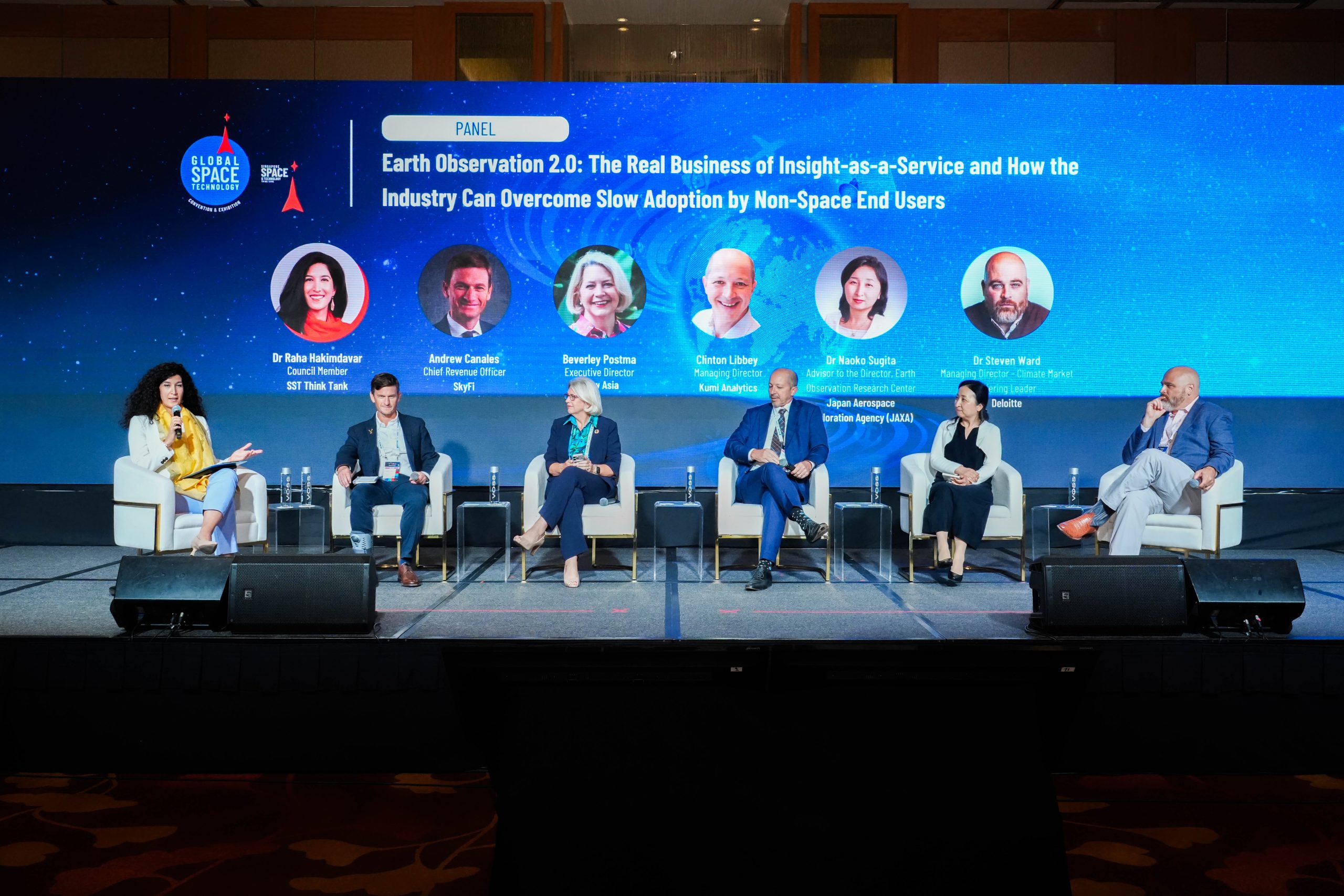
On a stage at Singapore’s Global Space Technology Convention & Exhibition in 2026, a panel faced a peculiarly earthly problem. Its subject was satellite intelligence. Its question was how to overcome slow adoption by customers outside the space industry. The technology could see things from orbit. The people who might pay for it still needed persuading.
- SSTTT connects space suppliers with business problems on Earth.
- Its tools include research, executive education, market access and GSTCE.
- A Singapore Space Lab makes those possibilities easier to explore.
- The test is useful adoption: a better decision, a workable product, a customer.
The missing customer
That gap is where Singapore Space & Technology Think Tank, or SSTTT, places itself. It is a non-governmental organisation and space industry trade association whose work includes research, advisory programmes and introductions. Its chosen audience extends from space startups to executives in agriculture, finance, logistics and sustainability. The common problem is translation: understanding how an unfamiliar capability changes a familiar business.
Consider the distinction between an image and a decision. Deloitte’s Southeast Asia space report, developed with SSTTT, describes applications ranging from agricultural productivity to property-site selection. A customer needs an answer to a question about land, risk or operations. The satellite supplies part of the evidence. Someone must connect that evidence to the customer’s job.
A new name, a sharper question
The organisation’s roots stretch back to 2007, through the Singapore Space and Technology Association and later Singapore Space & Technology Ltd. Jonathan Hung was the predecessor association’s founder and president; Lynette Tan was a co-founder of SSTL. Its annual convention began in 2008. Those activities created repeated opportunities for engineers, companies, institutions and investors to meet.
In May 2025, SSTL publicly relaunched as SST Think Tank. The change put commercialisation across non-space sectors at the centre of its identity. Read as a business decision, this was an expansion of the conversation: assembling the space industry remained useful, but so did inviting the people who might become its customers.
Today, executive chairman Jeremy Chan and general manager Nicolette Yeo lead the core operation. The council includes satellite entrepreneur Candace Johnson, former NASA associate chief scientist Kartik Sheth, SPACETIDE co-founder Hidetaka Aoki, geospatial specialist Raha Hakimdavar and retired US major-general Clint Crosier. The combination offers scientific knowledge, commercial experience and connections across markets. For an intermediary, knowing whom to introduce is part of the craft.
Selling the introduction
The programmes reveal how that craft works. Sector workshops and reports help organisations investigate possibilities. Corporate innovation labs and strategy sprints explore specific use cases. Executive education developed with Deloitte brings space innovation into leadership discussions. Global Innovation Projects aim to connect industries around jointly developed solutions, including technical validation.
For a startup, the bottleneck may be entry into another country. SST Growth Lab describes support with market-entry planning, business development, fundraising connections and trade facilitation. AASTA, the Asia Pacific Alliance of Space Trade Associations, adds access to local associations, regulatory guidance and business matching. A capable supplier can still need help finding the right door.
ESA Space Solutions and Project Cyclotron brought founders and investors together in a hybrid forum.
An earlier programme supplies a concrete example. SSTL and Cap Vista launched Project Cyclotron in 2020 to support space and deep-tech ventures. In February 2022, a joint forum with ESA brought 13 ventures before 30 European and Asian investors. That is an observable result: founders obtained an audience. It should be judged as an introduction, with investment and commercial progress requiring further work.
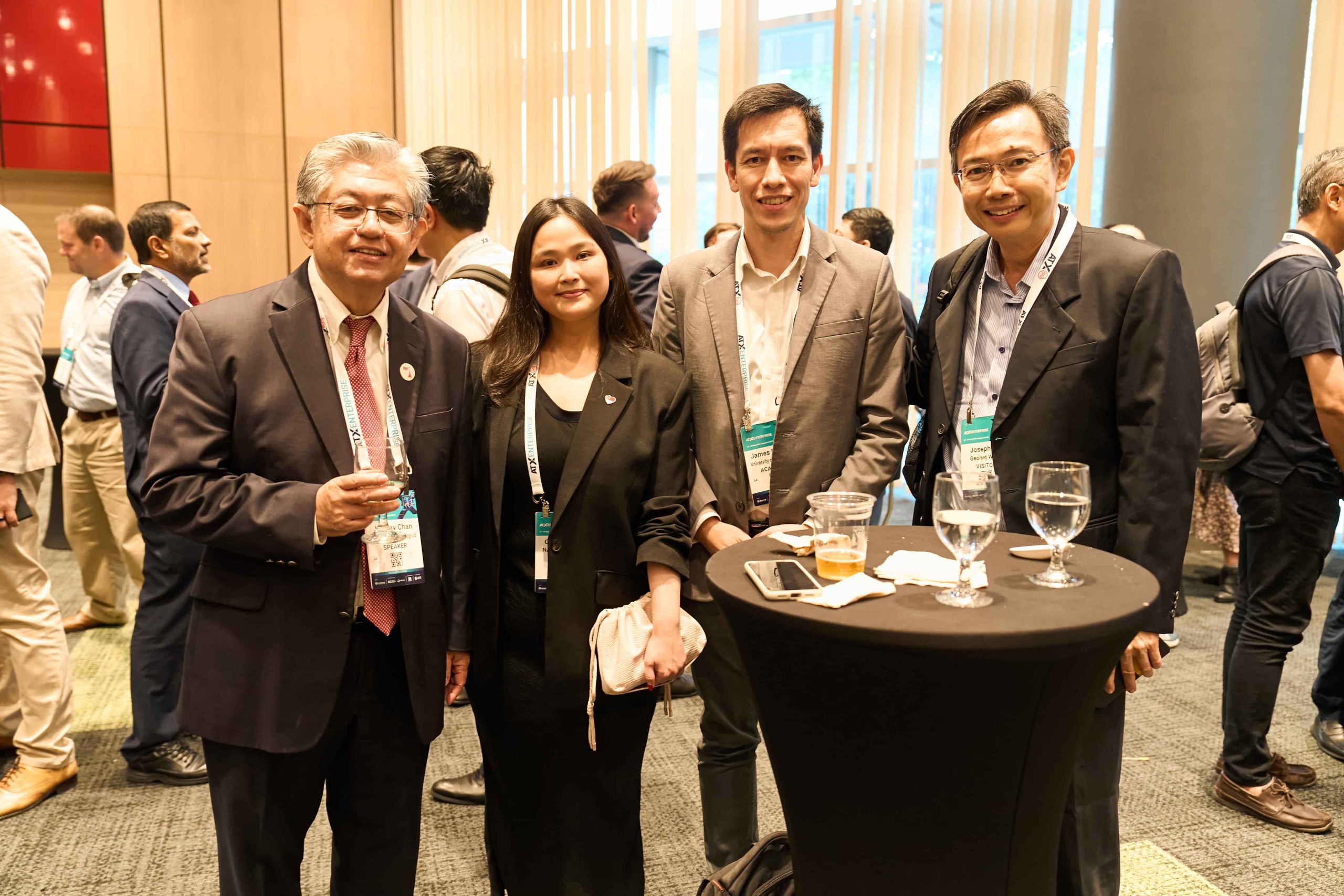
There is an earthly price tag, too. GSTCE’s published regular commercial and government ticket for 2026 was S$1,699; academia’s was S$1,299, with a S$999 promotional offer. The event combines an exhibition, discussions and networking. Alongside consulting and education, paid attendance and sponsorship show how commercial services sit within SSTTT’s wider association work.
The view from a small farm
In May 2026, SSTTT and Grow Asia signed a letter of intent to explore an ASEAN Space-Tech Agri-Innovation Challenge. The proposed collaboration would connect satellite data and geospatial analysis with smallholder agriculture. Potential applications include crop monitoring, weather intelligence, yield estimates and traceability. Its status matters: this is an intended collaboration, subject to further agreement.
Grow Asia brings delivery networks and agricultural relationships. SSTTT brings its space-innovation network. The pairing addresses a practical difficulty: a technology team’s impressive demonstration may arrive without a trusted route to the people expected to use it. Grow Asia’s statement stresses affordability, usability and delivery pathways. A useful observation must survive the journey from a screen to a working farm.
“startups that can build, corporates that can adopt, investors that can scale, and partners that can open doors across markets”
Nicolette Yeo · Singapore Space Lab launch
Singapore Space Lab offers another route into the conversation. Launched by SSTTT and IMDA PIXEL, with Deloitte support, the physical lab introduces satellite data, connectivity and geospatial intelligence. Guided visits welcome businesses, investors, agencies and startups, including visitors without prior space knowledge. It gives prospective users a place to explore applications before deciding what deserves further investigation.
Start with the decision
Deloitte projects US$100 billion in economic value from satellite-data applications across Southeast Asia between 2023 and 2030. It is a regional forecast, with adoption doing the hard work. The figure makes SSTTT’s focus understandable: the opportunity lies partly in helping existing industries use capabilities that already reach beyond aerospace.
- 01 Define the decision
- 02 Assess the evidence
- 03 Validate with users
- 04 Fit the workflow
For a reader, the transferable method is to begin with a decision. What must improve? Who uses the answer? Which supplier can provide relevant evidence? Test the application with its intended user, then examine integration and cost. This is a reading of SSTTT’s approach, rather than a promise that any particular project will succeed.
SSTTT occupies the territory between specialist suppliers, industry associations, accelerators and business advisers. Its distinctive combination is space expertise joined to regional commercial access and corporate education. The proposition becomes convincing when a relationship produces something a buyer can use. A farm, a port or a boardroom is a demanding destination. It is also where the bill gets paid.