space-technology
(16)
Kelli Furrer Is Selling the Story That Makes Space Make Sense
After fifteen years at Dell and a founder turn in public-sector AI, Kelli Furrer took on a stranger brief: make the crowded space above us understandable, useful, and worth acting on.

The Fund Betting That the Hard Problems Are Made of Atoms, Not Apps
A $66 million debut fund is putting first checks into space refueling, biometric firearms and board games - on the theory that the world's hardest problems are made of atoms, not apps.

The Venture Fund Where the Partners Used to Run the Missions
New North Ventures backs founders building for both the Pentagon and the marketplace - a dual-use bet led by former intelligence operators and the entrepreneur who built Dyn.
The Orlando Fund Betting That the Next Big Startup Won't Come From Silicon Valley
A venture firm in Orlando is wagering that the founders worth backing are the ones nobody in Silicon Valley has a flight booked to meet - and it wants to be the first money in.

The VC That Shows Up With Wrenches
Most venture firms write a check and offer advice. FP Solutions writes the check, then sends mechanical engineers, supply-chain specialists, and factory-builders to help startups actually make things - rockets, batteries, building materials, and semiconductor wafers grown in orbit.

RBC Signals
RBC Signals is a Seattle-area space communications company that runs a global Ground Station as a Service (GSaaS) network, moving data between satellites and Earth for commercial, government, and research operators. Built on a sharing-economy model, it stitches together company-owned antennas and unused capacity from partner-owned ground stations into a single on-demand network of more than 80 antennas across 60-plus locations. Alongside downlink and telemetry, tracking and command (TT&C) services, the company has expanded into dynamic and fractional spectrum leasing through its STORM platform, giving satellite operators flexible, pay-for-what-you-use access to the ground and spectrum they need.

Vimano
Vimano is a Bengaluru-based deep-tech startup building PFAS-free, ion-selective nanotech membranes for the electrochemical devices that power the energy transition - redox flow batteries, AEM electrolyzers, and hydrogen fuel cells. Its proprietary membrane platform tackles the ion-crossover problem that limits efficiency in long-duration energy storage and green hydrogen, and it also adapts the same polymer-film science to thermal management films for satellites. The company's stated goal is to sit inside 1 out of every 2 large-scale energy storage devices, electrolyzers and fuel cells on the planet.
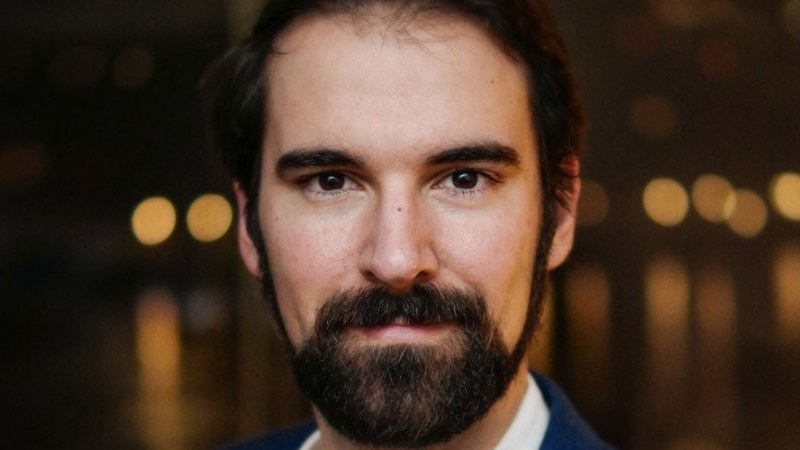
Johannes Galatsanos
Johannes Galatsanos is Co-Founder and CEO of Diffraqtion, a Boston-based quantum imaging startup that has built a quantum camera capable of recovering 95% of photon information lost by conventional sensors - translating to 20x higher resolution and 1,000x faster image processing than any existing optical system. A multilingual MIT and Oxford graduate with Greek-German roots, Galatsanos pivoted from leading AI and data transformation at Novartis to commercializing a decade of DARPA- and NASA-backed quantum photonics research. Diffraqtion won first prize at SLUSH 2025, secured a $4.2M pre-seed round in January 2026, and is targeting satellite launches for space domain awareness and Earth observation by 2028-2029.

AJ Abdallat
AJ Abdallat is the founder, chairman and CEO of BeyondAI (formerly Beyond Limits), a Glendale, California enterprise AI company that commercializes cognitive artificial intelligence born inside NASA's Jet Propulsion Laboratory and Caltech. A serial entrepreneur who spent more than a decade incubating Caltech/JPL spinouts, Abdallat built Beyond Limits around the idea that AI which guided the Mars Rovers and Voyager probes through deep space can run mission-critical industrial operations on Earth - in energy, utilities, manufacturing and healthcare - while explaining the reasoning behind every decision.

Xona Space Systems
Xona Space Systems is a Burlingame, California company building Pulsar, a commercial low-Earth-orbit constellation that delivers positioning, navigation, and timing (PNT) with centimeter-level accuracy, signals far stronger than legacy GPS, and built-in authentication to resist jamming and spoofing. Founded in 2019 by Stanford and SpaceX alumni, Xona aims to deploy roughly 258 satellites that work with existing devices through software updates, offering a resilient alternative and augmentation to government-run satellite navigation systems.

Philip Johnston
Philip Johnston is the co-founder and CEO of Starcloud, the company putting AI data centers into orbit. In November 2025 his team flew an Nvidia H100 GPU to space aboard Starcloud-1, then trained the first large language model off-planet. Five months later the company raised a $170M Series A and became the fastest unicorn in Y Combinator history. A British applied mathematician and ex-McKinsey space-agency consultant, Johnston argues the cheapest place to build a gigawatt-scale data center is no longer Earth - it is low Earth orbit, where sunlight is free and the cold of space does the cooling.

Jim Adler
Jim Adler is the Founder and General Partner of Toyota Ventures, the corporate venture arm of Toyota with $800M+ in assets under management and 90+ portfolio companies. A rocket-engineer-turned-serial-entrepreneur, Adler built the fund from a $100M seed in 2017 into a powerhouse backing frontier technologies in AI, autonomy, robotics, climate tech, and mobility. Known for his 'geek, suit, wonk' identity, he bridges deep technical expertise with sharp investment philosophy, insisting financial returns must precede strategic ones.

Morgan Schwanke
Morgan Schwanke is the Founder and General Partner of Mana Ventures, a San Francisco-based venture capital firm specializing in frontier technology. A self-described 'recovering founder,' Morgan went from building OnMyBlock - a college housing marketplace - to investing in 300+ companies across AI, robotics, space, and biotech. Mana Ventures has deployed over $50 million in capital, backed unicorns like Figure AI, and built an elite partner network (The Collective) featuring founders of Dropbox, WordPress, Kayak, Shazam, and Oculus.
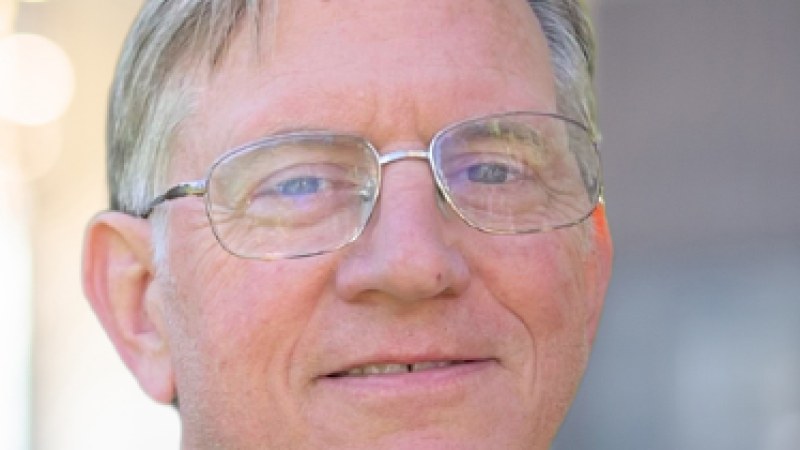
Tim Jenks
Tim Jenks is the Interim CEO of PowerLight Technologies, a Kent, Washington-based company pioneering laser-based wireless power beaming for drones, defense systems, and space infrastructure. A U.S. Naval Academy graduate with a nuclear engineering master's from MIT and an MBA from Stanford, Jenks spent over two decades building NeoPhotonics from a venture-backed startup into a NYSE-listed company before selling it to Lumentum Holdings for approximately $918 million in 2022. Now he's steering PowerLight through a pivotal moment: in April 2026, the company achieved the world's first wireless power beaming to a fielded military drone in flight, delivering kilowatt-class laser energy to a Kraus Hamdani Aerospace K1000ULE at 5,000 feet altitude - a breakthrough that could redefine how unmanned aircraft operate in contested environments.

Chris Biddy
Chris Biddy is the Co-Founder and CEO of Astro Digital, a California-founded aerospace company that has delivered 35+ satellites and operates 10+ missions in orbit. A mechanical engineer by training (M.S., Cal Poly San Luis Obispo), Biddy steered Astro Digital from an Earth observation startup into a full Mission-as-a-Service platform - cutting the cost, schedule risk, and complexity barrier for organizations wanting to put hardware in space. He previously led engineering at Canopus Systems, and has been active in the commercial smallsat movement since its early commercial days.

Margo Naray
Margo de Naray is the Chief Executive Officer of Solestial, Inc., a Tempe, Arizona-based space solar power startup pioneering radiation-hardened, ultrathin silicon solar cells that self-cure radiation damage at low operating temperatures. Appointed CEO in May 2025 following the company's $17M Series A funding round, she brings 20 years of cross-industry leadership spanning aerospace (Astra Space), agribusiness (Cargill), and semiconductor manufacturing (Intel). Solestial's technology promises to slash the cost of spacecraft solar arrays by roughly 90% compared to incumbent III-V multijunction technology, using automated manufacturing and widely available silicon to make reliable space-grade solar power accessible at scale.