Jim Donnelly had a rule for himself: give a venture about five years, then find something else to build. It was a useful arrangement for someone whose working life had already included golf balls, corporate brands, travel journals and former bank buildings. Then Restore came along. He stayed eight years. Even a personal rule can meet a persuasive exception.
When he announced in February 2023 that he was leaving the day-to-day CEO role, Restore was approaching 200 studios. Donnelly thanked the team, described the friendships, and said he would remain involved as a board member, shareholder and franchisee. There were also ideas he wanted to try that belonged elsewhere. His explanation held affection and impatience in the same paragraph.
“I believe that after 5 years, a new voice is best for an organization and an individual,” he wrote. It is an unusual way to describe ambition. The destination keeps moving, and the founder eventually has to move with it. Today, as co-founder and CEO of Humanaut Health, he has another beginning underway.
A pond is a peculiar classroom
One of his earliest businesses, Repeat Performers, recovered lost golf balls from water hazards. In Donnelly’s telling, a job at Jekyll Island presented an awkward staffing problem: new divers, an order to fill, and alligators on the opposite bank. He went into the water wearing khakis and a golf shirt. Eventually, the divers followed.
The memorable part is the clothing. The useful part is his later assessment. He said the team had been inadequately prepared, the location was a poor choice for their experience, and he had arrived unready to demonstrate the work himself. The episode supplied considerably more feedback than the average classroom exercise.
His father, an Army officer who later pursued assorted businesses, gave him an appetite for trying things. Donnelly remembered fishing boats, accounting and even bringing Russian ballet to American audiences. The ventures did not all prosper. The enthusiasm survived. That distinction mattered to a son who would eventually make several changes of direction himself.
The long way out of corporate life
Donnelly earned a BBA at the University of Texas at Austin and an MBA at the University of Georgia’s Terry College of Business. His subsequent career included service as an Army officer and marketing work at Kraft Foods, AT&T/BellSouth, Coca-Cola and Citibank. These were substantial institutions in which to learn the commercial basics before taking responsibility for a business of his own.
At Kraft, his work included Jell-O Pudding and Cool Whip. At Coca-Cola, he worked on developing brands internationally. Citibank took him to New York and into marketing around online banking. There is something pleasingly practical about the range: a customer can encounter a brand in a supermarket, on a screen, or in a branch, and still need a reason to choose it.
At Citibank, he met Tony Cheng. Donnelly recalled that they started discussing business ideas on their first day. Corporate employment had supplied experience, and now it supplied a collaborator. The two would become co-founders of IgoUgo, taking their interest in travel into a business built around other people’s experiences.
“I’m an entrepreneur at heart.”
Jim Donnelly
A community before the itinerary
IgoUgo belonged to an earlier internet, when a travel journal could be the reason to visit a website. People contributed accounts and photographs from their trips. The attraction was recognizable: someone had already gone where you hoped to go, and might have something useful to tell you. The traveler became part of the product.
A 2001 partnership put IgoUgo in front of EarthLink subscribers. The community also worked with Rough Guides and tourism organizations. Its emphasis on travelers’ personalities gave the content a human organizing principle. A destination could be the same while the people describing it wanted entirely different things from the visit.
Sabre acquired IgoUgo in 2005. The acquisition announcement described a community of 350,000 members sharing journals and photographs. It also introduced a travel-specific keyword search engine. Search for “java” and the idea was to find Indonesia without having to elbow past coffee and programming. The internet was already rather crowded at the departures gate.
The company earned a Webby Award, and the sale gave Donnelly the freedom to pursue further ventures. Still, the early years had demanded patience. He has recalled trying to build a travel business around the time of September 11, when raising money became difficult. Bootstrapping was a necessity. Survival preceded the satisfying acquisition paragraph.
IgoUgo’s later history adds a useful wrinkle. It eventually closed, having struggled to compete with TripAdvisor. A founder’s successful exit and a brand’s permanent success are different events on different clocks. Donnelly had already moved into another chapter. The company he helped create would have a life after him, including an ending he did not write.
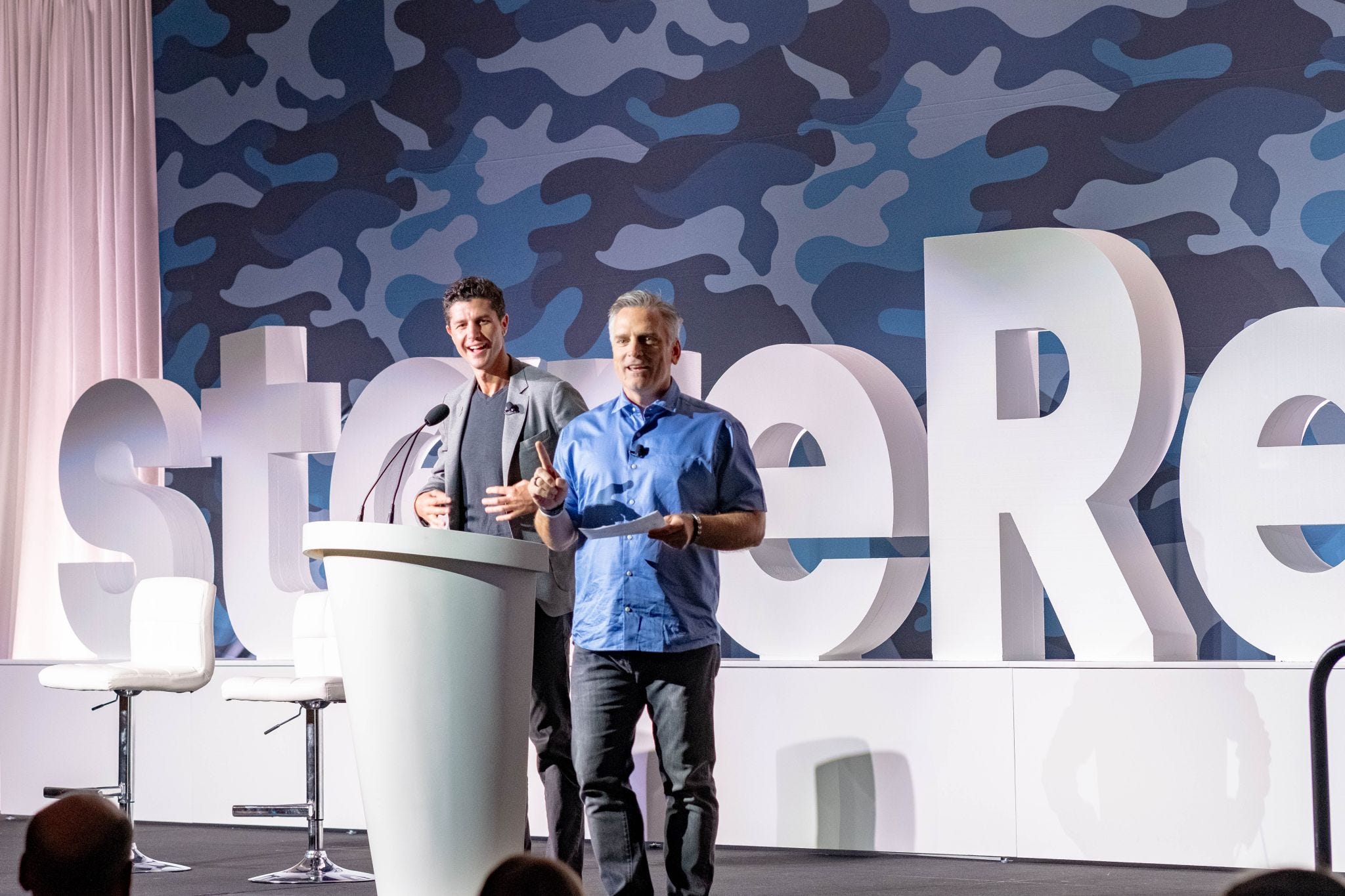
The room mattered
After IgoUgo, Donnelly founded Pursuit Group, an incubator for experiential retail businesses and boutique property projects. The phrase covers a considerable change in working materials. Travel content lives on a screen. A shop or a home has doors, surfaces, neighbors and a customer who can turn around and leave.
His Charlotte ventures included Emerson Joseph, a men’s grooming lounge with a basement speakeasy, and the Charlotte Athletic Club. There were also former bank buildings converted into luxury residences. Donnelly has named Michael Jordan and Cam Newton among the homeowners connected with those projects. A building designed to hold money had acquired a rather different domestic purpose.
Across these projects, atmosphere became part of the commercial proposition. The room, the welcome and the small details gave people reasons to spend time somewhere. This is a useful connection between his property work and the retail business that followed. He had spent years thinking about what a customer encounters after opening the door.
One studio becomes a system
Donnelly and Steve Welch opened the first Restore studio in Austin in 2015. The early operation had modest surroundings, including a back office from which the business grew. A founder could still be close to individual customers and individual decisions. Expansion would demand that those decisions become repeatable.
Franchising began in 2017, with initial franchise locations in Texas, Virginia and Connecticut. Restore entered 2020 with 34 locations, secured an investment from Level 5 Capital Partners, and added senior operating, marketing and technology leaders. The work was becoming a network of owners and teams, each expected to deliver a recognizable experience.
Studio / location count. *Entering 2020. †December 2021. Historical snapshots.
In December 2021, Restore announced a $140 million investment led by General Atlantic. Its footprint then included 115 predominantly franchised locations across 34 states. The system employed more than 2,400 people. Those are company figures from that moment, a way to see how far the operation had traveled from a single Austin address.
There is a practical difference between opening another location and helping someone else open one. A franchise owner brings personal stakes to the arrangement. The brand has to supply enough consistency to justify the relationship while leaving a local operator responsible for the daily work. Growth turns a founder’s preferences into other people’s obligations.
Investment led by General Atlantic.
A company financing milestone.
The customer who changes your mind
One revealing discovery concerned who actually came through Restore’s doors. Donnelly initially expected athletes to be the primary audience. He later said they accounted for only 15 percent of customers. The business had found an audience broader than the founder’s original mental picture.
That is a useful complication for an entrepreneur with strong personal preferences. Your own enthusiasm can get a company started. Customers then acquire the right to revise the plan simply by arriving, choosing and returning. A founding insight is allowed to develop once other people get hold of it.
Donnelly has also stressed self-awareness within the team: recognizing weaknesses, acknowledging blind spots and dealing with them without excessive ego. That sounds easier in a conversation than it is in a growing organization. Every additional location puts more distance between the person who had the idea and the people who must make it work on a Tuesday afternoon.
Another first day
His 2023 CEO transition gave those questions a personal form. A company can need continuity while its founder wants a fresh problem. Donnelly publicly made room for both. The ventures he had already built remained part of his career, while the next company would require its own team and identity.
Humanaut is now that company. Public executive records and his own professional profile identify him as its co-founder and CEO. In 2025, he appeared in that capacity at Inc. Founders House Austin. The name on the business changed; the familiar work of forming a team and building a customer relationship returned.
His more recent conversations have included setbacks, gratitude and the willingness to attempt something uncomfortable. Those themes suit a career whose early chapters offered no shortage of reasons to stop. They also give some substance to the enthusiasm he admired in his father. Continuing to try takes on a different meaning after several businesses, several settings and several lessons you would prefer to have learned more cheaply.
The five-year rule remains the revealing detail. Donnelly gave himself permission to leave room for another idea, then stayed longer when a company and its people held his interest. His career has moved from recovering what golfers lost to gathering what travelers knew, then to creating places customers would enter. He keeps returning to the beginning, carrying a little more experience through the door each time.