The first customer needed a Learjet and a way to pay for what might go wrong with it. Lou Seno, then working in aircraft finance, was placing a Learjet 24 with an air taxi operator short of funds. The credit manager wanted maintenance reserves. Seno suggested a new company offering coverage paid by the hour: Jet Support Services, Inc. The operator signed up. For years, a copy of that first cheque hung in JSSI’s boardroom.
- Hourly payments fund specified maintenance coverage.
- Independent support works across aircraft manufacturers.
- Software, parts and financing address the surrounding work.
It is a revealing origin for a business associated with private jets. The problem was cash discipline. An aircraft could earn money while flying and demand money while sitting still. JSSI’s proposition was to bring those two clocks closer together.
01 The first customer needed reserves
Founded in 1989, JSSI offered an independent alternative to manufacturer maintenance programs. Early business clustered around one General Electric engine family. Seno worried about the concentration and urged expansion into other engines. The lesson arrived early: a maintenance portfolio needed variety.
Today the company sells to corporate flight departments, charter operators, aircraft management businesses and individual owners. Its public customer examples range from VistaJet to helicopter operators. Across maintenance programs and software, JSSI reports support for more than 6,500 aircraft. That distinction matters: software users and aircraft enrolled in hourly coverage are different populations.
02 Sell the hour. Manage the event.
The core product remains hourly cost maintenance. An operator pays a contracted hourly amount for defined coverage. Engine, airframe and auxiliary power unit programs can be bought separately; Tip-to-Tail combines them. An APU is the smaller onboard power unit, another machine with its own maintenance demands.
There is a practical appeal here for anyone who has prepared a budget. Scheduled work can be planned. Unscheduled trouble is less courteous. Coverage helps stabilize spending, while technical advisers help manage maintenance events. The service includes people who understand the work, the facilities and the choices available when an aircraft needs attention.
A process illustration, not a price or savings forecast.
JSSI’s independence is the commercial distinction. It can serve a mixed fleet without representing one aircraft manufacturer. Manufacturer programs remain alternatives. In a September 2026 discussion, JSSI’s executives emphasized that independent coverage can still send work to the same maintenance facilities. The difference lies in the contract and who helps the owner evaluate the event.
03 The spreadsheet meets the hangar
Consider Champion Air, an operator founded by Dale Earnhardt Sr. Its maintenance department had been using a competing system alongside homemade spreadsheets. According to JSSI’s case study, it carried more than $200,000 in spare parts but lacked a clear, integrated view of maintenance spending and inventory.

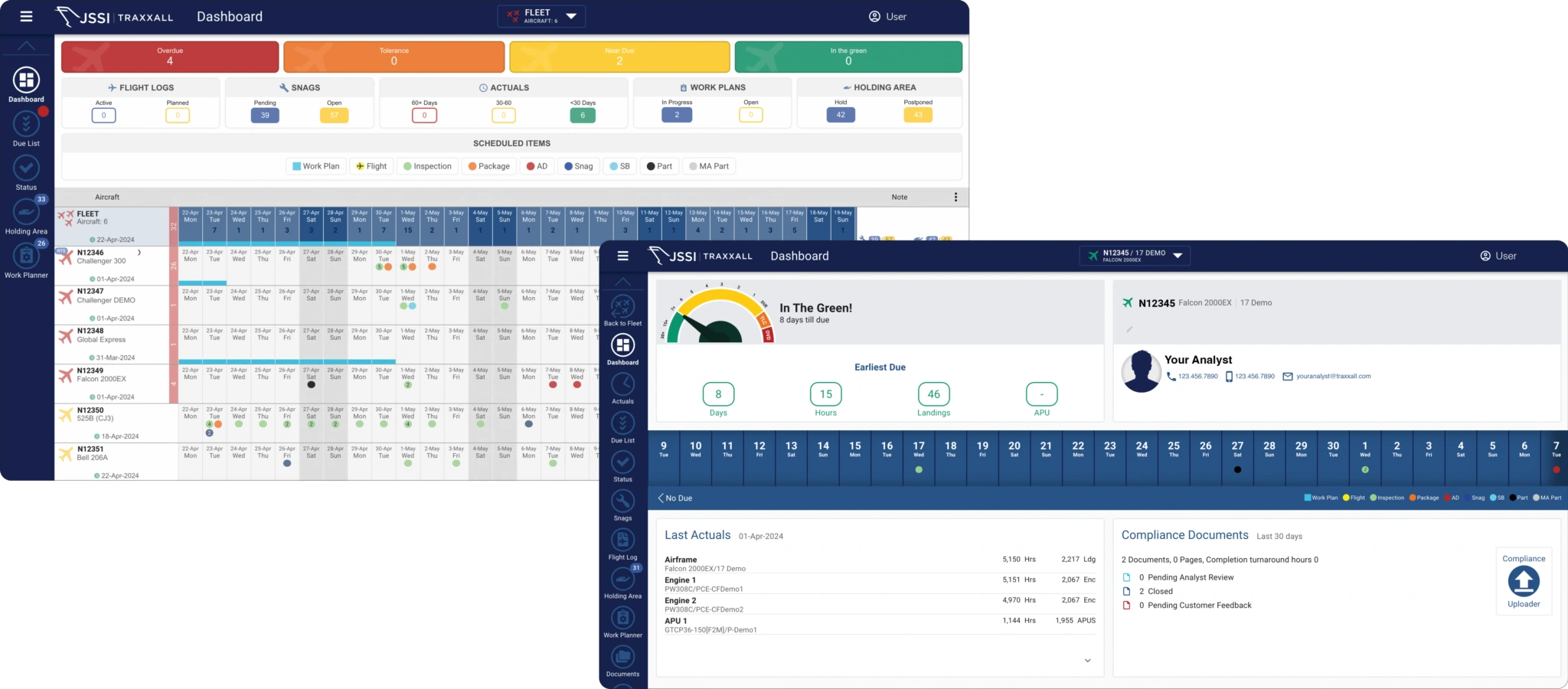
Champion Air implemented Traxxall in August 2017. Inventory, purchase orders, flight logs and work orders became connected responsibilities. Director of maintenance Scott Peterson said the system helped the team understand what we spend, where and how
. Finance and accounting were among the first departments to appreciate the improvement. Useful software sometimes wins its audience a few desks away.
JSSI acquired Traxxall in December 2021, following SierraTrax. Traxxall handles maintenance forecasting, records and inventory, with analysts maintaining aircraft requirements and reviewing data. Its onboarding process includes collection, enrollment, quality review, activation and training. A clean interface helps; accurate aircraft history makes it useful.
04 A maintenance promise needs capital
The portfolio expanded in both directions. JSSI acquired Conklin & de Decker in 2018, adding aircraft cost and performance data. Before buying, an owner can compare operating assumptions across more than 500 aircraft models. In 2023, the acquisition of Shearwater Global Capital established JSSI Aviation Capital, bringing asset-based aircraft financing into the business.
These divisions earn money differently: software and data subscriptions, parts sales, engine rentals, advisory work and financing sit alongside maintenance contracts. Together, they give JSSI more opportunities to serve an aircraft over its ownership life. The logic is continuity: the aircraft being evaluated today may need financing, maintenance and replacement parts later.
A predictable bill still needs a part, a technician and a place in the repair queue.
Capital is part of that arrangement. In December 2024, Blackstone announced more than $1 billion in new financing for JSSI’s recapitalization. It said its funds had provided more than $1.8 billion of debt financing and a common-equity investment across a series of transactions. That cumulative figure describes financing activity; it does not establish what JSSI is worth.
05 The part is available. Where is it?
On October 14, 2026, JSSI Parts & Engines announced live tracking for eligible high-value and aircraft-on-ground shipments through Sensos. Smart labels report location and condition between carrier scans. Tracking is included at no extra customer charge. A maintenance team can see a stalled shipment sooner, especially during international handoffs.
In the rental pool reported by Parts & Engines in October 2026.
The same announcement described more than $240 million in inventory and a rental pool exceeding 120 engines and APUs. These are physical commitments behind the financial proposition. Paying for maintenance and obtaining the equipment to complete it are separate problems. JSSI has built businesses around both.
06 Read the contract. Copy the discipline.
For a buyer, the useful starting point is an aircraft-specific comparison: expected utilization, upcoming maintenance, coverage scope and transfer terms. A modest hourly quote can be misleading if it covers different work. Software also requires sound records and people prepared to use it. Financing cannot make an unavailable component appear.
For everyone else, JSSI offers a business lesson worth borrowing. Make an unpredictable expense easier to plan, then follow the customer into the practical obstacles that remain. The invoice is one part of the job. The aircraft still has to leave the hangar.
Follow the aircraft
Explore the company, its tools and the people using them.