A bar can make a complicated cocktail in minutes. Restocking the ingredients can require a small diplomatic mission. The gin belongs to one distributor, the wine to another, the beer to a third. Each has a representative, a catalog and a conversation that may be hiding somewhere in a phone. Provi built its business around the administrative aftermath of thirst.
- Licensed buyers search multiple distributor catalogs and send order requests from one place.
- Core ordering is free; advertising and paid software supply commercial opportunities.
- The distributor still handles the bottles. Cooperation is central to the product.
That arrangement sounds modest until you consider what it gathers together: discovery, communication and recurring orders. For a bar manager, fewer messages can mean fewer chances to forget something. For a distributor’s representative, a legible request can leave more room for selling. The attraction is shared, though the benefits arrive on different sides of the counter.
01 A distillery education
Taylor Katzman’s education in alcohol included an unusually intimate vantage point. He moved to Chicago as his wife and father-in-law started Rhine Hall, a fruit brandy distillery. He subsequently worked at Drizly, helping the consumer delivery business expand in the Midwest. He had encountered both the people making the drink and the technology bringing it to customers.
In 2016, he founded Provi. The opportunity lay upstream, where businesses bought their stock. Its marketplace let buyers search distributor portfolios, assemble requests and communicate them to the appropriate reps. The representative remained part of the transaction. A buyer could improve the paperwork without having to discard the relationship that made the paperwork useful.
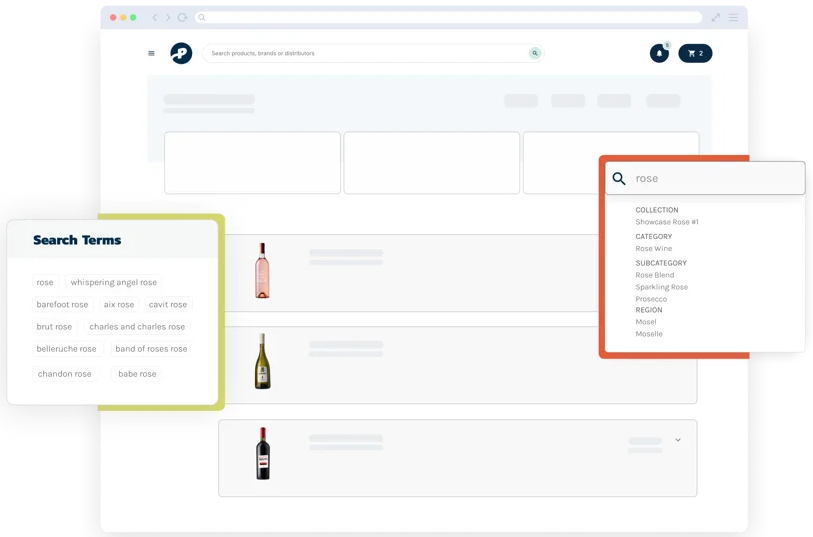
The U.S. beverage trade is organized around suppliers, distributors and retailers, with state-specific arrangements and exceptions. Provi works within those relationships. Its expertise is therefore partly technical and partly institutional: knowing which portfolio a buyer can see, who receives the request and how the local purchasing process works.
02 Free to order. Worth paying to be found.
Provi advertises basic buyer ordering as free. Its commercial proposition reaches the other participants, too. Suppliers can pay for sponsored products and display placements. Distributor tools support portfolio management and sales work. Enterprise Plus adds a paid subscription for chains. There is more than one way to earn money around a transaction without owning the merchandise.
Sponsored products use cost-per-click auctions. A brand bids for visibility while a trade buyer is looking for something relevant; the supplier pays when the advertisement is clicked. This is a different setting from advertising a cocktail to someone scrolling on a sofa. The audience is already making a purchasing decision for a business.

In September 2021, Provi announced a $75 million Series C at a $750 million valuation, alongside an earlier $25 million Series B. The valuation belongs to that financing moment. By November 2025, the company reported more than $5 billion in merchandise volume flowing through its platform. That measures accumulated trade activity, not Provi’s revenue.
Cumulative GMV reported by Provi in November 2025. The value of beverages ordered is distinct from the company’s earnings.
03 The cart meets the gatekeepers
The awkward thing about combining everyone’s catalogs is that “everyone” has opinions. Distributor-owned portals, including Proof and eRNDC, offer another route to an order. Provi’s difference is the ability to bring multiple portfolios into one workflow. The very breadth that makes it useful also makes it dependent on cooperation beyond its own software.
In March 2022, Provi sued Southern Glazer’s Wine & Spirits and Republic National Distributing Company. It alleged that restrictions introduced in 2021 blocked orders through its marketplace to favor their own systems. Those were allegations, not established findings. The dispute exposed an operational vulnerability: an attractive interface cannot make a recipient accept what it sends.
The public outcome changed in 2025. In July, RNDC and Provi announced a settlement and an agreement to develop an integration. In October, a joint statement with Southern Glazer’s confirmed that Provi was a permitted ordering channel for its portfolio. The observable change was access. The announcements provide no basis for guessing at private motives.
04 One menu, many markets
Provi had meanwhile widened its business. Its 2022 combination with SevenFifty brought together marketplace data, distributor tools and trade publishing. Multi-location buyers introduced another problem: headquarters could specify a beverage program, but local purchasing decisions still happened across different markets. Cinemark and Twin Peaks appeared as customers in Provi’s enterprise launch announcement.
“Provi has given us the visibility that we have been missing.”
Brad Janowiak · Cinemark
In Provi’s enterprise launch announcement
Enterprise Plus, launched in February 2026, addresses that gap with approval workflows, purchasing rules and consolidated reporting. Corporate teams can apply case-or-bottle requirements and product spending thresholds, while retaining local distributor relationships. A chain is buying oversight as well as convenience. These are controls for a company’s purchasing standards, not a substitute for alcohol licensing.
For chains: corporate purchasing controls surround the request.
State partnerships show a different kind of adaptation. Vermont’s 802Spirits Connect, announced in November 2025, connects on-premise licensees with agent stores for digital spirits ordering. An Ohio Liquor integration followed in December. Neither arrangement makes geography irrelevant. They make specific local systems easier to use. ProviPay likewise depends on eligible markets and distributor relationships.
05 The inbox stays open
One revealing number arrived with Burke Distributing’s July 2026 renewal: Provi reported that approximately 17% of Burke’s order requests came outside standard business hours. The figure concerns requests, not after-hours delivery. Its practical meaning is straightforward. Buyers can do their administrative work when they have time, without requiring a rep to be available at that instant.
The company’s own team mixes hospitality and technology experience; its published benefits include parental leave and flexible time off. Its publishing operation tells a parallel story of changing work. In September 2025, Provi announced that Beverage Media’s print titles would move online, with December marking the final print issue. SevenFifty Daily’s journalism would continue.
The lesson a reader can borrow is practical: find the recurring task that consumes everyone’s attention, then make it easier for each participant. It requires accurate information and willing recipients. Stock, prices and delivery still rest with distributors. Provi’s proposition is persuasive precisely at that boundary, where a better-organized request can make the next human decision easier.
Keep the conversation going
Explore Provi, its ordering tools, brand advertising, company news and SevenFifty Daily.
Follow on LinkedIn, X, Instagram and Facebook.
▶ Watch the product workflow▶ Watch Beyond the Glass roundtables