A recruitment notice is usually a small exercise in discretion. The employer wants experience, enthusiasm and, if possible, somebody who has somehow acquired both without getting any older. In late December 2021, Jerry Zhang’s company made its preference unusually explicit: this round was for programmers aged 35 and over.
Shinetech was hiring into the very age bracket often discussed in China’s technology industry as a career problem. The notice attracted attention because it treated the supposed difficulty as a qualification. For Zhang, the reasoning started with a different question: what becomes more valuable as a programmer gets older?
His answer has occupied much of his public life as a founder. Experience ought to count when engineers understand a customer’s business, make decisions and solve problems. Give them years of narrowly assigned coding tasks, and the advantage has much less space to develop. A birthday can hardly do all the work by itself.
The age group targeted by Shinetech’s late-2021 recruitment campaign.
The vacancy with a birthday attached
When asked about the campaign in January 2022, Zhang described real vacancies with technical requirements, including front-end, PHP and Java work. Applicants ranged from 35 to 50. Younger people also enquired. A recruitment rule had acquired the odd distinction of making some candidates wish they were older.
Zhang’s position was that an experienced developer could contribute technical judgment, confidence with customers and a more practiced approach to solving their problems. He described Shinetech as encouraging flatter working relationships and direct contact between programmers and users. The hiring campaign gave that organizational argument a conspicuous public form.
A separate conversation about the openings put the intended intake at 10 to 15 programmers, with remote work available for most positions. Zhang acknowledged wanting to draw attention to the issue as well as recruit. The useful test of the campaign was therefore what came after the advertisement: whether the work offered experienced people enough responsibility to use what they knew.
An editor, then a founder
Zhang graduated from Beijing Institute of Technology in 1995 with a bachelor’s degree in Science. His early career included a technical director position at East Changwei Company. He later served as a chief editor at Internet Weekly, handling internal management, before founding Shinetech in Beijing in 2001.
The magazine job is a pleasing interruption in a software executive’s résumé. Editing requires attention to what a piece of work is trying to achieve, as well as whether its individual parts are correct. That makes a useful parallel with Zhang’s later arguments about software, though his employment history alone cannot explain how he arrived at them.
He also took part in the discussion of China’s developing technology capabilities beyond his own company. He was a co-author of the 2012 paper IT Innovation in China: Industry and Business Capabilities, alongside researchers and professional-sector contributors. It drew on a 2011 conference panel about skills, management and the adoption of technology. The subject suited a founder interested in how organizations turn technical ability into useful work.
- 1995Graduates from Beijing Institute of Technology
- 2001Founds Shinetech in Beijing
- 2011Commits to building an Agile enterprise
- 2021Company launches its 35-plus hiring campaign
- 2026Examines trust, long partnerships and AI’s effect on engineering
What the failed project taught him
Zhang’s introduction to Agile came with an awkward ending. In his recollection, a British customer arrived around 2006 wanting an Agile contract. Shinetech supplied six or seven people; the customer had two or three and stationed somebody in the office. The project ran into trouble and failed.
He nevertheless regarded the encounter as consequential. It introduced an approach that he began advocating inside the business. The financial crisis of 2008 added pressure: fixed-price projects ended, new enquiries dried up and the company cut roughly a third of its workforce, he recalled.
Those recollections make the later management philosophy less tidy than a diagram of an ideal organization. There was a failed engagement, then a commercial shock. The company biography marks 2011 as the start of his commitment to leading Shinetech as an Agile enterprise. In this telling, the change grew through experience rather than arriving fully assembled with a consultant’s slide deck.
A company with room for judgment
By Shinetech’s twentieth anniversary in August 2021, Zhang was framing the company’s mission around improving engineers’ capabilities and making their value visible. His anniversary message argued for an environment in which trust, freedom and dignity could help employees contribute, customers benefit and shareholders gain in turn. The sequence was deliberate.
Peter Drucker runs through this part of Zhang’s thinking. At Southwest Jiaotong University in October 2024, he encouraged students to read Drucker and think of programmers as knowledge workers. He emphasized results, creativity and the ability to discover and solve problems. Software engineering, in his account, had something in common with artistic creation.
That was practical career advice with an unusually literary reading list. Students could prepare by learning to notice what needed doing, rather than measuring their prospects only by the volume of work they could complete. The event also included a group interview for three students, bringing the discussion back to the less philosophical business of getting hired.
For his 2025 China Scrum conference session, Zhang set out six practices: remote work, no overtime, individual accounts, increasing programmers’ hourly rates, concentrating on long-term clients and decentralized management without department managers. These were the practices presented in his session, rather than a guarantee about every working day. Together, they show how far he wanted the discussion of Agile to extend beyond development rituals.
The client who changed the plan
In August 2026, Zhang described a relationship that began in 2007 with Formpak. The client initially wanted to upgrade an inherited system. As work progressed, an ERP ambition gave way to a renewed focus on compliance software. A team of 16 became a team of four.
For a supplier, a smaller team is an interesting detail to include in a story about lasting business. Zhang’s point was that the parties could reconsider direction together. The engineers accumulated knowledge of the industry, changing regulations and earlier decisions. Over time, that understanding became part of what the customer was buying.
He described core team continuity across more than a decade, alongside technical changes including Linux, Docker, database and Java upgrades. The relationship’s value lay in people who could carry the business context through those changes. In his account, staying useful required adapting the work, even when the original plan had to be discarded.
His May 2025 writing on contracts approaches the same problem from another direction. A price agreed against a rigid brief can encourage everyone to defend the brief after they have learned something better. Zhang criticized that bargain while allowing that fixed-price work could function where trust already existed. His objection concerned the incentives around uncertainty, rather than a prohibition on a particular invoice format.
Trust has an uncomfortable chapter
The day before his Formpak essay, Zhang published a less comfortable account. A customer had complained and requested a refund. Looking back over the relationship, he saw trust eroding through smaller failures to be candid: unexplained delays, quality concerns left unspoken, uncertainty hidden behind reassurance.
He argued that customers buying an ongoing team were entrusting it with judgment as well as hours. Transparency meant explaining emerging problems, revised assumptions, spending and available choices early enough for the customer to act. A timesheet alone could not perform that service.
“Without honesty, we have no business.”
Jerry Zhang, August 2026
Translated from Chinese
He also drew a line against quietly moving members of a dedicated team onto other projects while the customer believed it was paying for their full time. These are standards he set out publicly, rather than evidence that every engagement met them. The complaint matters because it puts friction into his account of the business. Honesty is easier to applaud before somebody asks for their money back.
The question AI leaves behind
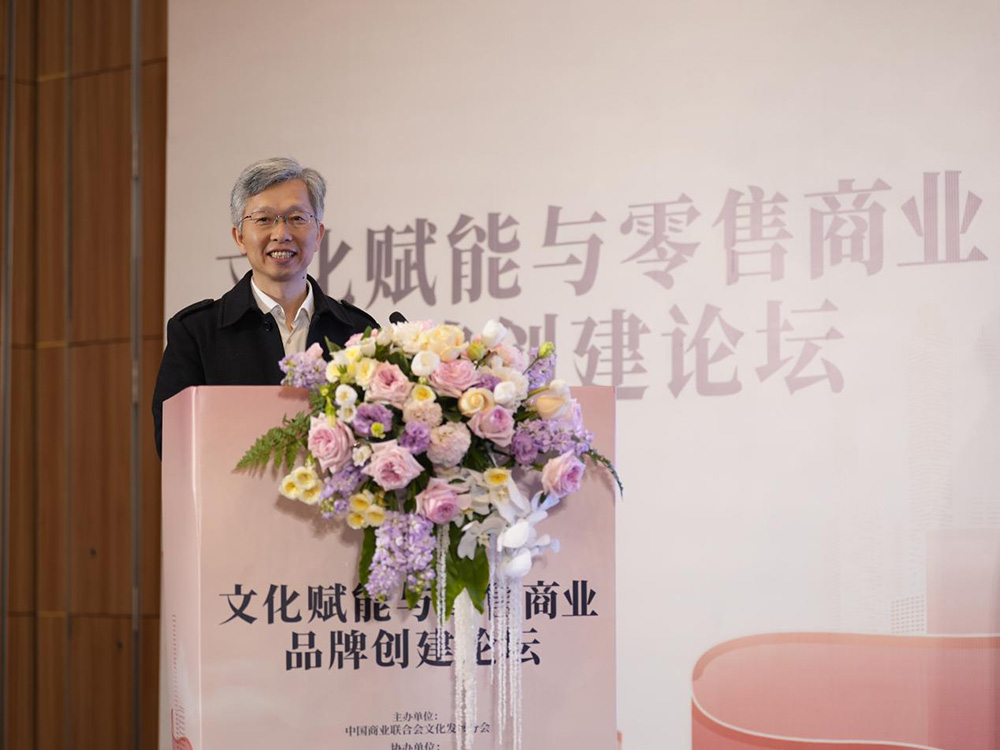
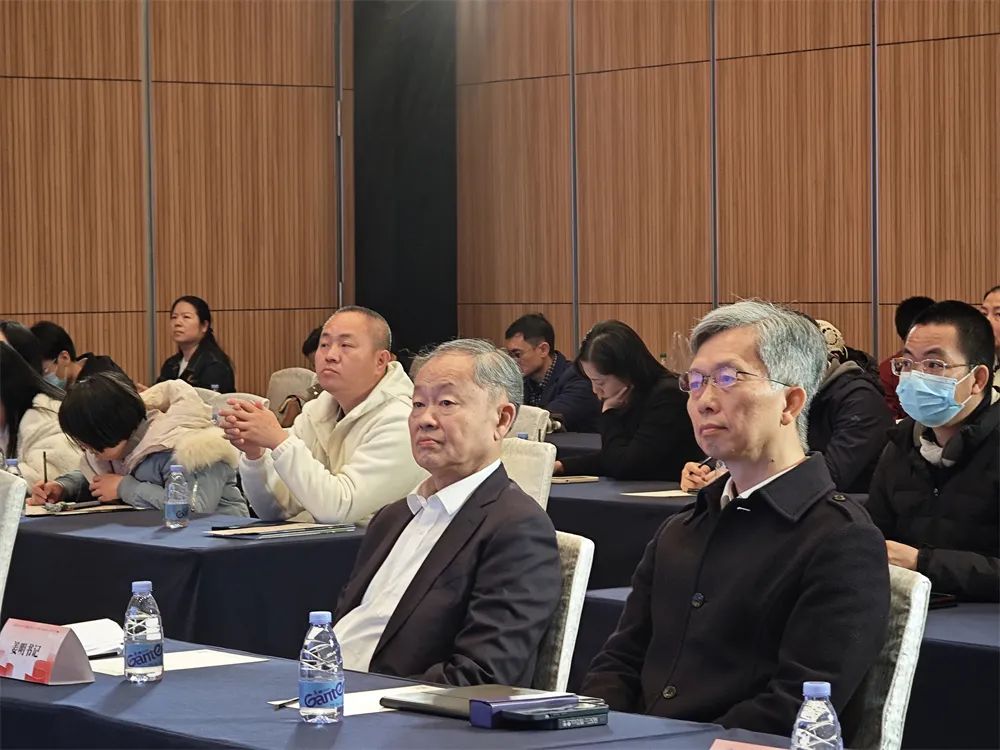
At the eighteenth China Retailers Convention in Guangzhou on February 26, 2025, Zhang spoke about AI and organizational change. He urged businesses to work through practical obstacles such as disconnected data and accumulated technical debt, and to use iterative ways of working. The audience changed; the interest in how companies organize technical work remained.
In his writing about ChatGPT, Zhang places particular weight on requirements and design. An engineer needs to understand the business well enough to frame a useful problem for a tool. He argues that this makes judgment and analysis central to the programmer’s work. It also gives experienced people a reason to keep developing beyond the next programming language.
On October 17, 2026, at the fourth Remote Developers Summit in Beijing, he again discussed AI’s effect on careers. He predicted the disappearance of roles confined to coding, while seeing opportunities for engineers to help businesses across industries. That is his forecast, with all the uncertainty a forecast carries.
The continuity in his position is more interesting than the prediction. From the age-targeted recruitment campaign to the latest summit, he keeps asking where an engineer’s accumulated judgment can be put to work. The answer requires customers willing to share context and companies willing to give people responsibility. Getting older happens automatically. Building work that makes experience useful takes a little more organization.
Keep reading
- Shinetech: company and leadership
- Zhang’s Founder’s Notes
- The 35-plus recruitment interview (Chinese)
- His university talk (Chinese)
- 2025 China Scrum conference program
- The retail convention photographs and talk
- Transparency and the customer complaint (Chinese)
- His Formpak essay (Chinese)
- October 2026 summit coverage and video (Chinese)
- Shinetech’s LinkedIn post about his China Daily interview
- The 2012 IT innovation paper