Four people are enough to start a software company. They are also few enough to settle a question without scheduling a meeting about scheduling a meeting. When Pavel Adylin looked back on Artezio’s beginnings, he remembered a small room that barely deserved to be called an office. It was August 2000. The business had four members. The distances that would later define it were still ahead.
Twenty-one years later, his anniversary message named teams in the United States, Canada, Poland and a succession of Eastern European cities. The room had become a network. Somewhere along that journey, the founder’s assignment had changed: building a company now meant helping people who did not share a room deliver work for people who did not share their country.
That change gives Adylin’s career its shape. He began in research software, moved into commercial management, founded Artezio, and took on industry representation. Today, Virtual Nomad identifies him as head of its EU office. The titles move around; the coordination problem keeps turning up for work.
An engineer learns the price of an idea
Adylin’s early professional life joined two kinds of expertise. His education included electronics and banking. His first work was as a software engineer in research. From 1993, he became involved in creating commercial companies, taking responsibility for IT projects, general management and business development.
It is a practical combination for someone who would sell software development. Engineering asks whether a system can be made to work. Commercial management adds awkward supplementary questions: who needs it, who will pay, and what happens when the specification meets the customer’s actual business? An elegant answer to the first question can still leave a company with three expensive mysteries.
In 2000, he founded Artezio and became its CEO. The company’s work centered on developing software for customers. That placed the business inside other organizations’ priorities, existing systems and deadlines. Its own success would depend on whether those customers could put the finished work to use.
2000
reported in 2014
Virtual Nomad today
The office becomes a network
Five years after Artezio’s founding, a larger organization entered the picture. In September 2005, the company announced that it was joining LANIT Group. The arrangement retained Artezio’s legal independence and management. The announcement also placed Adylin on LANIT’s board.
The structure matters. Joining a group need not require dismantling the operating company that made the transaction attractive. In Artezio’s case, the announcement described continuity alongside expansion. Adylin’s company was gaining a different corporate setting while keeping the people responsible for running it.
By 2009, regional coordination was an explicit technical priority. Artezio appointed Denis Romanovsky chief technical officer after his work managing operations in Belarus. He had joined in 2006 as a project manager and had led the Minsk development center.
The new assignment was to strengthen integration among regional offices. Romanovsky already knew many of the engineers and business analysts. That detail is more revealing than the title. An organizational chart can connect offices with a line. A technical leader still has to know the people on either end of it.
Adylin described expanding development centers and adapting them to customer needs as a strategic goal. Growth therefore brought two obligations together: find more capability, then organize it around the work. Adding another office could help with the first. It also made the second more demanding.
“Without you, Artezio wouldn’t be the company it is today.”
Pavel Adylin, on Artezio’s 21st anniversary
A passport is not a delivery model
Adylin’s responsibilities extended into the wider software industry. In 2012, he appeared as both Artezio CEO and RUSSOFT chairman. At the Russian CIO Summit in Moscow, he opened with a discussion of an industry development strategy prepared through AP KIT and McKinsey.
The subjects included access to global markets, the use of enterprise software and the role of IT in public administration. It was a broader conversation than winning the next development contract. He was addressing the conditions in which software companies and their customers operated.
Later that year, he represented RUSSOFT at a matchmaking event in The Hague. More than 100 specialists from over 40 companies attended, alongside universities and public institutions. His presentation covered the software export industry and possible cooperation with Dutch businesses.
The event put a familiar outsourcing question into a local setting. Where do companies find the people they need? Adylin argued for the capabilities of regional developers and the practical advantages of working with nearby markets. Whatever the country, an international sales conversation eventually comes down to whether people can understand one another’s requirements.
Artezio’s North American expansion gave that discussion a business structure. The company launched Artezio Technologies with business development and operational offices in New York/New Jersey and Florida. Nick Sag was named co-founder and president of the new entity. The announcement described access to more than 400 Artezio specialists, connecting a local commercial presence with an existing delivery organization.
For Adylin, the intended customers included telecommunications, mobile technology, manufacturing and automotive businesses. The division of responsibilities is instructive: customer relationships needed people close to the market, while engineering capability could extend across a wider map. An international company had to maintain both kinds of proximity.
At the 2014 IT-Summit in Minsk, his subject moved directly into the organization of that work. Artezio then reported seven development centers in Eastern Europe. He discussed international customers and cooperation among employees in different countries. Geography had become an operating question as well as a sales opportunity.
- 2000Artezio begins with four people.
- 2005Joins LANIT; management stays in place.
- 2014Seven development centers; distributed work on the agenda.
- 2021A 21st-anniversary message thanks teams across countries.
- TodayHead of EU office at Virtual Nomad.
Try the work. Then judge it.
A software services company can describe its expertise at considerable length. A customer is entitled to ask what that expertise produces. One Artezio engagement supplied a nicely unglamorous answer: construction equipment maintenance.
In 2016, the company described work for B2W Software on maintenance, information and scheduling applications. The functions included warranties, inventory, purchasing, dashboards and schedule views. There was also a mobile and tablet component designed to synchronize with the web applications.
This is where a broad claim about engineering becomes an ordinary working day. Equipment needs maintenance. Purchasing needs records. Someone away from a desktop needs access to information. Each feature has neighbors, and those neighbors must agree about what has happened.
Adylin welcomed the partnership and the possibility of further projects. The important unit here was the continuing customer relationship. A first delivery could open the door to more work because the customer had something concrete to evaluate.
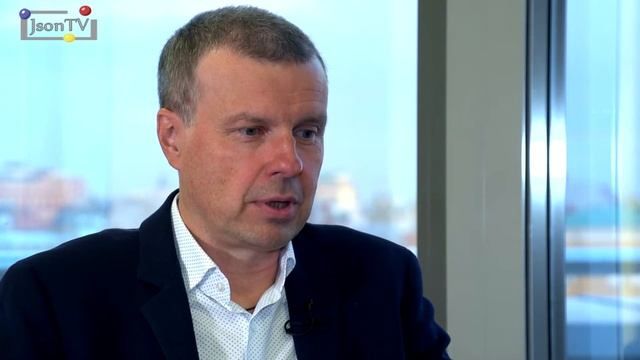
In that 2017 interview, he described a more explicit version of the same idea. Artezio could perform trial work. If the customer was dissatisfied with the quality, the customer could decline to pay. If satisfied, the customer paid and the relationship continued.
The arrangement gave the buyer a way to test a provider before making a larger commitment. It also put pressure on the provider to demonstrate its judgment early. Adylin’s emphasis was on experienced specialists and professionalism rather than assembling the largest possible workforce. The claim came with a proposed test.
Other routes into customer relationships were more institutional. Artezio announced a Salesforce partnership in 2017. In 2019, its New Jersey office joined the technology council of New Jersey and the Princeton Regional Chamber of Commerce. Delivery, platforms and local business networks all had a place in the company’s expansion.
There were external milestones, too. Artezio appeared at No. 2,254 on the 2018 Inc. 5000 and No. 4,721 in 2021. Those are dated company rankings, useful as markers along the route. They leave plenty of room for the more revealing questions about how teams worked and why customers returned.
The European chapter, with a guitar nearby
Adylin’s present professional geography centers on Wrocław, Poland, the city listed on his public LinkedIn profile. Virtual Nomad names him head of its EU office. Its team biography also describes extensive experience leading international IT organizations, an interest in machine learning, and a life outside the meeting calendar as a jazz guitarist.
It is tempting to make the guitar explain the executive: improvisation, listening, the perfect metaphor for teamwork. The guitar is allowed to remain a guitar. It makes the portrait more interesting without having to justify its existence through a management lesson.
His current professional interests do, however, keep returning to coordination across borders. A Virtual Nomad post signed by Adylin announced plans to join the online eIDAS Summit on April 29, 2026. The subjects were digital identity, interoperability and trust: how systems can be usable and dependable across different organizations and countries.
The connection with his earlier work is plain. A software team needs shared expectations. So does a customer relationship. So does a digital identity system that must function beyond the organization that issued it. The technical details differ considerably, but agreement remains part of the engineering.
Looking back in 2021, Adylin gave colleagues the credit for what Artezio had become. He named the teams and thanked customers for their confidence. His stated ambition was to keep producing useful software and value for those relationships. After the small room, the regional centers and the international meetings, that is a suitably practical place to leave him: still working with other people on what comes next.