A login screen is a peculiar place to spend a startup’s money. It must work. It must be secure. Almost nobody will choose your product because you invented a particularly original way to enter a password. Yet someone still has to build it, test it, connect it, and fix it. Multiply that obligation across an application, and the exciting new business starts looking suspiciously like a construction site full of familiar plumbing.
- Aeturnum builds software for startups and established software vendors.
- Its reusable-component approach aims to shorten the road from idea to working product.
- Its customer work spans payments, insurance, and restaurant technology.
This is where Aeturnum becomes interesting. Founded in 2001, the Boston software engineering company works with clients that need to launch, rebuild, or extend a product. Its proposition gives a founder a reason to reconsider the blank page. Before commissioning everything anew, ask which parts actually need to be new.
The expensive ordinary
Aeturnum’s modular software approach uses standardized, non-proprietary technologies. Its Athiva foundation supplies reusable elements, allowing teams to concentrate more effort on the application around them. The appeal is easy to understand: common requirements absorb time even when they add little distinction.
Consider the economics from a founder’s chair. A month spent on infrastructure is also a month before customers can respond to the product. Earlier delivery can create an earlier encounter with reality: will anyone use this thing? That is an argument for choosing the scope carefully, not a guarantee that speed produces demand.
“The first money raised by a startup is precious”
Jay Grayson, Surround Insurance co-founder, in an Aeturnum testimonial
Grayson credits Aeturnum’s accelerator packs and cross-border model for helping build Surround’s initial platform. InStream’s Ann Raider describes development time and cost falling by more than half with Athiva. These are customer accounts of particular engagements. Their useful lesson is the purchasing logic: buy an experienced starting point, then invest in the work that makes the business distinctive.
The company behind the checkout
Paydiant offers a concrete example of the work beneath a recognizable outcome. It developed mobile wallet technology that businesses could present under their own brands. Aeturnum helped engineer its platform. PayPal completed the acquisition of Paydiant in April 2015, expanding its mobile payments capabilities.
PayPal’s filing records approximately $230 million in consideration, net of cash acquired. That is the buyer’s transaction accounting. It does not describe Aeturnum’s fee, revenue, or ownership. The distinction matters because software services companies often tell their stories through the companies their customers eventually become.
The technical problem outlives the acquisition headline. A payment experience has to connect an application to systems that move money. PayPal later described how its Paydiant team helped make cardless ATM access available through FIS at more than 2,000 US locations. The quiet connections are the product doing its job.
Aeturnum’s more recent customer material follows the same thread. PayByCar describes needing firmware expertise alongside payment applications and security to reach pilot sites. Kitchen Sync describes bringing in skills for third-party integrations. The common requirement is breadth: one narrow specialty can leave a project waiting for the next team.
An ocean in the operating model
The geography helps explain the proposition. Aeturnum has a Boston base and engineering operations around Colombo, Sri Lanka. Its official contact page lists an office in Nugegoda. For a buyer, this creates a practical management question: how will requirements, decisions, and responsibility travel between people working in different places?
Leadership continuity provides some context. Menuke de Silva, now chief executive, joined in 2006 and progressed through engineering and delivery leadership. Founder Rajat Bhakhri remains on the advisory board. Chief software architect Lasitha Weerasinghe is described as a founding team member. These are people whose experience spans more than one technology fashion.
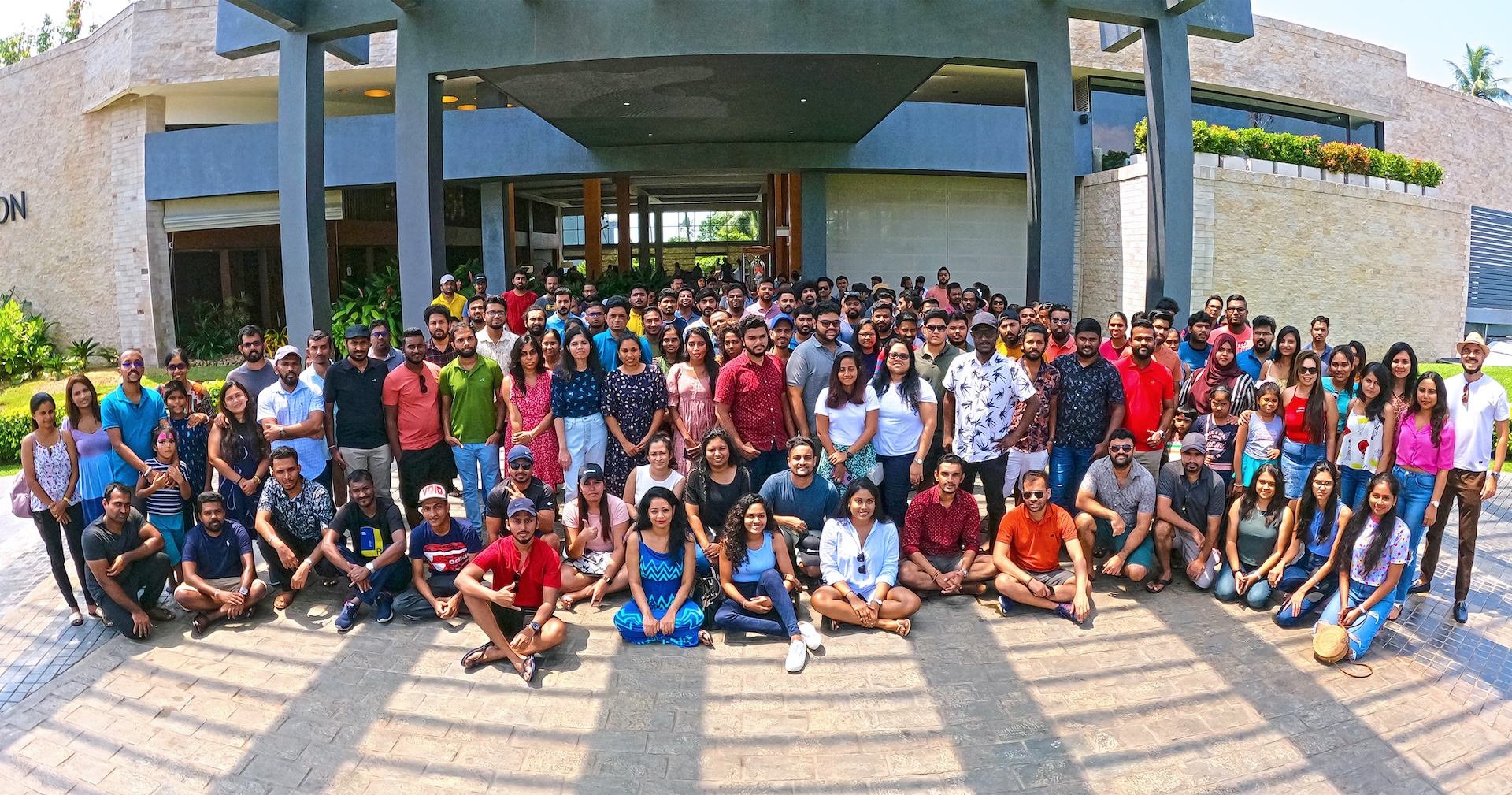
The company calls employees Aeturnists. Its careers page emphasizes flexible hours and opportunities to learn. Those are employer descriptions, but the language adds a human detail to a business usually explained through frameworks and delivery schedules. The operating model still depends on people preserving knowledge between projects.
AI meets an older idea
Today Aeturnum puts AI-assisted engineering near the front of its pitch. Its broader service menu covers cloud migration, application modernization, analytics, cybersecurity, and enterprise SaaS. It also advertises ISO/IEC 27001:2022 certification. Buyers handling sensitive information have a reason to examine the security process alongside the demo.
The underlying ambition is familiar: reduce repeated effort. Reusable components preserve previous engineering decisions. AI tools can help produce and revise work. Neither removes the need to decide what the product should do or whether the result is sound. For a customer, a faster process matters when it produces something maintainable.
Spend the runway on the question
Aeturnum sits between a founder assembling an internal engineering team and a larger organization seeking outside product expertise. Its commercial offer includes custom development and engineering augmentation. A buyer can use it to build an initial product, add missing technical skills, or modernize software already carrying a business.
The approach is most persuasive when shared components fit the product and the client can make timely decisions. An unusual technical requirement may need substantial original work. Before adopting a foundation, a team should settle ownership, licensing, security review, and maintenance responsibilities. Those questions determine whether an early shortcut remains useful later.
The idea a reader can copy costs no consulting fee: divide the backlog into what customers value, what connects the system, and what already has a workable solution. Then challenge the hours assigned to each. Aeturnum’s most useful provocation is that a product can be original without every piece of its software being invented again.
Meet the builders
WebsiteLinkedInXInstagramFacebookEngineering blogYouTube
WATCH THE CUSTOMER CONVERSATIONSMosaic’s journey ↗Kitchen Sync’s journey ↗PayByCar’s journey ↗