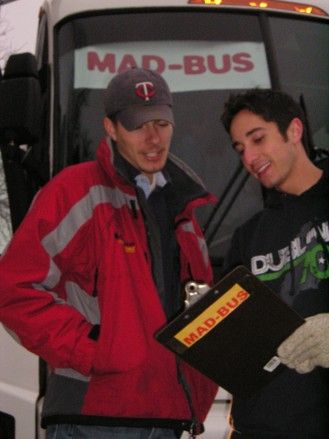
Jeremy Schwach’s first business had a VCR. This was a useful accessory until it jammed, at which point the founder’s job description expanded. A student wanted to get home to Minnesota from the University of Wisconsin-Madison. He built Mad-Bus, and discovered that entrepreneurship could involve both supplier negotiations and persuading a videotape to leave a machine.
Today he is the founder and CEO of Hummingbird Healthcare, based in Miami. The titles have become more formal. His interest in what happens when a plan meets the people carrying it out has survived. Across his career, the question keeps returning: how do you build a company where people can do useful work, tell you what is going wrong, and want to come back tomorrow?
The bus boy gets a business education
At Mad-Bus, he arranged dorm pickups and movie screenings, negotiated partnerships, and found himself nicknamed the “bus boy.” His account of university is cheerfully unvarnished: Bs and Cs, alongside an appetite for running the company. At its peak, the operation moved more than 700 students per school break using 11 buses and four campus pickup points.
His next classrooms were established organizations. At Epic, he ran large implementations and served on the implementation executive team. He later worked at Northwell. The scale changed; the practical demands of coordinating people remained. By 2013 he had joined Bluetree’s founders as CEO, taking responsibility for a business still small enough for everyone to know everyone.
One detail gives the college venture a wider meaning. The money it generated helped fund volunteer work in the townships of Cape Town. A transport business could pay for something beyond its own next departure. In the career that followed, Schwach would keep moving between operating companies, advising other founders, and supporting workforce development.
A buyer with a longer calendar
Bluetree had been founded in 2012. By the time Providence announced its acquisition in June 2019, the firm served more than 140 organizations nationwide. It would continue as a separate subsidiary. For Schwach, this was a chance to give an existing team a larger platform, with access to an organization that had the resources to support a longer ambition.
The courtship had begun that February. Schwach said Bluetree had not been seeking a buyer, but the conversations made the possibilities increasingly persuasive. The transaction closed on July 1. For a founder, a sale can become the final punctuation mark in a company’s story. Here it opened a different question: what could the team build with a partner beside it?
He was unusually interested in the buyer’s sense of time. In a 2020 interview, he weighed the pressures of staying independent, accepting private equity, or selling to a conventional strategic buyer. Providence offered him another arrangement. Its institutional history, mission, and willingness to preserve Bluetree’s identity mattered to his account of why the partnership made sense.
He described a meeting with Providence leaders Mike Butler and Rod Hochman before the deal was finalized. Their organization’s long history was part of the pitch. The conversation appealed to an operator thinking beyond the next transaction. A company can gain a new owner and also gain room to keep becoming itself; that was the promise Schwach believed he had accepted.

His assessment of the partnership nine months later was positive. What stands out is the language of mutual usefulness: the smaller company brought experience across clients, while the larger organization had lessons of its own to offer. Schwach’s version of the deal leaves space for learning in both directions. The acquired business did not arrive carrying all the answers.
The announcement also described a business that had grown beyond its Madison base, with offices in Denver and New York. Its separate subsidiary status gave a practical shape to the promise of continuity. Ownership changed, while the team retained an organizational home. It is easy to talk about preserving a company’s character during a sale; the structure of the arrangement gives that intention somewhere to live.
Good news travels. What about the rest?
Growth creates a peculiar luxury for a CEO: plenty of people willing to explain how well things are going. Schwach has written about the corresponding danger. Information must pass through layers of management, each inhabited by human beings with understandable preferences about how they appear. By the time the report reaches the top, awkward details may have become rather well dressed.
In 2021, he described making time for virtual coffee conversations with colleagues throughout Bluetree. He also discussed regular employee surveys and a team that responded to constructive feedback. The operating principle was straightforward: if people take the trouble to tell you something, they should be able to see that the company has heard it.
“My resting state is to always assume that I know nothing and start from there.”
Jeremy Schwach, on making decisions
That is a demanding starting position for someone paid to make decisions. It requires a leader to remain curious after acquiring authority, and to allow evidence to interrupt a pleasing theory. His emphasis falls on building channels through which uncomfortable information can arrive. An open door is a fine architectural feature. Someone still has to feel able to walk through it.
The employees’ verdict provided one public marker. In 2021, Schwach ranked seventh on Glassdoor’s Top CEOs list for U.S. small and medium businesses, with a 99 percent approval rating. He responded by thanking the colleagues around him. The recognition belonged to a particular moment, but it gave substance to a theme he had already been discussing: the experience of working together matters.
Seventy-five ideas, one Birdfeeder
Hummingbird launched in 2023. By January 2026, Schwach’s account of the company put its team at more than 300 people. Starting again gave him another opportunity to put his ideas about culture into practice. The new company also acquired an appropriately named device for hearing from its employees: the Birdfeeder, a digital suggestion box.
In April 2025, he reported that it had produced 75 specific ideas in the preceding two months, with many already in production. He paired that observation with an appreciation of Fastenal founder Bob Kierlin. Selling fasteners might seem an eccentric subject for a technology executive’s business essay. Schwach was interested in how useful ideas reach the people empowered to act on them.
Employee suggestions submitted to Hummingbird’s Birdfeeder, as reported by Schwach in April 2025.
His attention went to the knowledge held by people doing daily work. They encounter the repeated nuisance, the unnecessary step, the workaround everyone quietly uses. A suggestion box becomes valuable when those observations change something. Otherwise it risks joining the distinguished family of office furniture that receives everything and answers nothing.
The AirPod test for modern life
Schwach’s business writing often begins with a small personal inconvenience. After taking his grandmother to brunch, he discovered he had left his AirPods behind. A helpful hotel security employee found them. Arranging their return required an awkward telephone exchange; the headphones eventually came back broken. Apple then offered him a much smoother service interaction, including the option to communicate by text.
The episode reveals his eye for everyday friction. He notices the distance between a person trying to help and a system making that help cumbersome. There is also something disarming about an executive willing to make his own lost belongings the opening exhibit. A customer experience can be examined perfectly well without pretending the customer has behaved perfectly.
His curiosity wanders beyond business. After watching Devs, he spent months reading about quantum mechanics and watching lectures, only to conclude that understanding it would require considerably more time. He connected that experience to building companies: accumulated experience can enlarge your appreciation of what remains to be learned. The joke is directed at himself, which gives the observation room to breathe.
Other public biographies offer a similarly modest sporting assessment: a mediocre road biker. Alongside his operating work, he has supported Year Up and COOP Careers, organizations concerned with workforce opportunity. Those interests give the portrait some useful texture. The person thinking about employee development also has a life beyond the company and a sense of humor about his own performance.
Still willing to take the questions
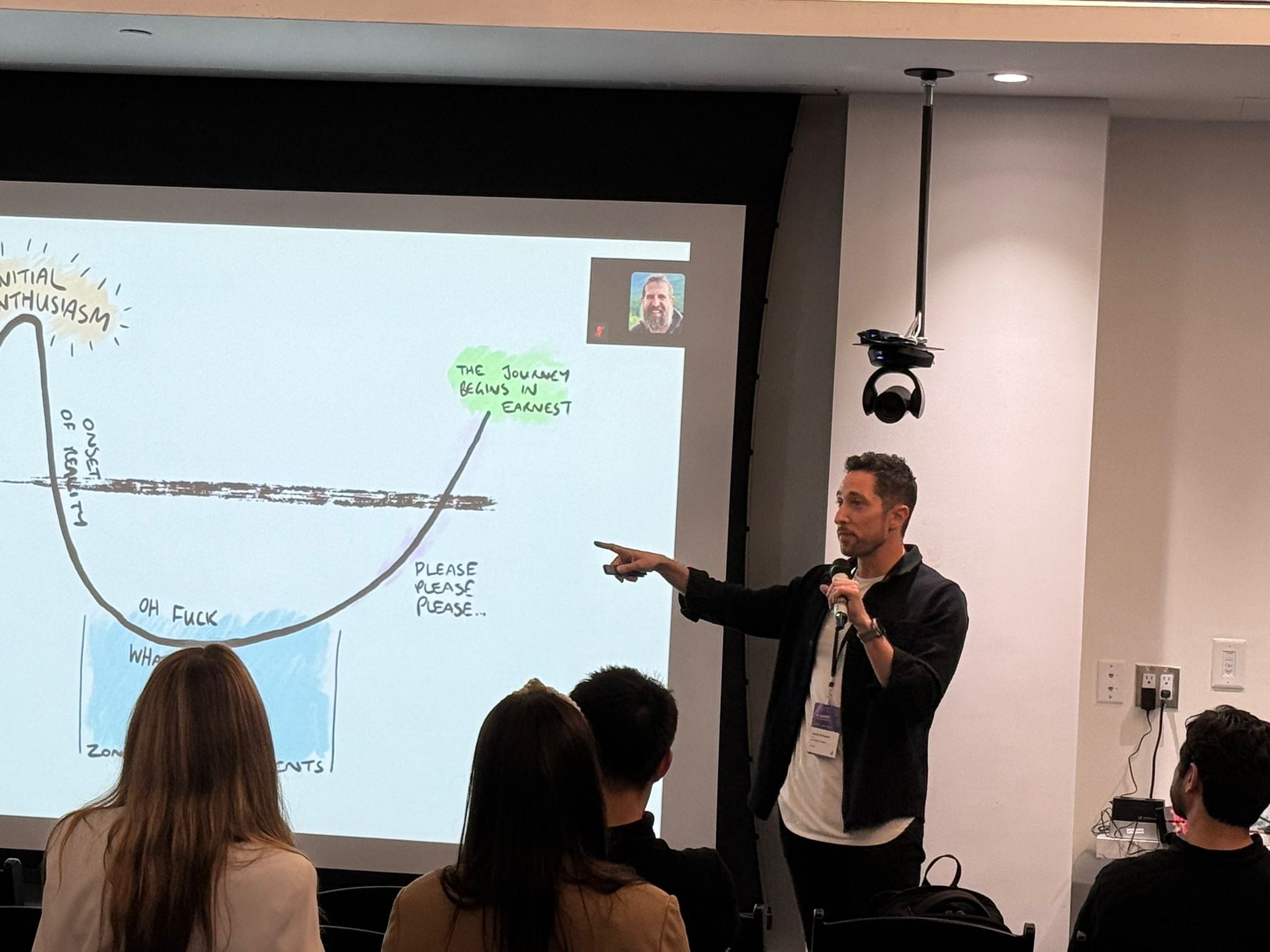
In July 2026, Schwach joined David Bitton and host Julia Lucidi for a Founder Tactics conversation recorded at the Fort Lauderdale Tech Meetup. Among the subjects were early hiring, honest feedback, and learning to work with AI. The discussion brought his recurring concerns into the present: how people learn, how leaders hear them, and how a growing organization keeps improving.
His broader working life now includes advising and investing as well as running Hummingbird. He lists board roles at Quay and ProsperityEHR, advisory work with Norwood, and investments including Andium, Order.co, and Tabz. The interests range beyond the sector in which he built his operating career. They suggest a continuing appetite for watching other people solve difficult business problems.
He has also served on the board of Health Data Movers. Its announcement of his appointment emphasized his experience growing teams and businesses. Such roles put an operator’s accumulated judgment to work elsewhere: which decisions need attention, which people need support, and where growth may expose a weakness that a smaller company could once work around.
The bus business supplied an early education in doing whatever needed doing. The later companies added the harder task of creating conditions in which other people could do it well. Schwach keeps returning to the people who know where a process sticks, whose idea deserves a hearing, whose work improves when someone listens. There are grander ways to describe leadership. This one has the advantage of giving the leader something to do on Monday.