A buy button makes an extravagant promise for something so small. Press here, it says, and an object you have never handled will arrive from someone you may never have met. Jeremy Hodara spent a decade dealing with everything that sentence leaves out. Roads. Addresses. Sellers. Money. The perfectly reasonable suspicion that a photograph of a product is easier to deliver than the product itself.
When Jumia began operating in Nigeria in 2012, Hodara and his colleagues were entering a retail market where a familiar internet business model required unfamiliar arrangements. In his early explanations of the company, he kept returning to practical obstacles: congested roads, homes without listed addresses and shoppers who wanted to see what they were buying before parting with cash. A website could display an offer. Someone still had to find the door.
That gap between the screen and the doorstep is a useful place to begin his story. Jumia became a marketplace, a logistics operation and a payments business. Its co-founder would help take it to the New York Stock Exchange, then leave while profitability remained unfinished business. Later, he would announce a family venture in gardening. The change of subject was considerable. His interest in businesses that handle everyday problems was easier to recognise.
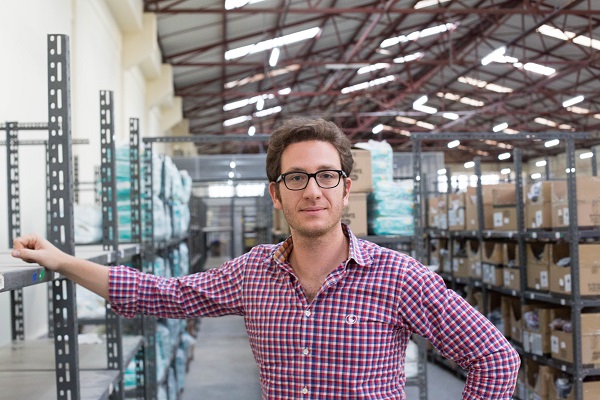
A career with room to move
Hodara grew up in Paris and attended HEC Paris, studying there from 2001 to 2005. His early career took him well beyond France: an internship with L’Oréal in Malaysia, followed by McKinsey work that included India and the United States. He liked retail because it involved tangible things: products, marketing and logistics. Even his choice of a consulting career had a geographical logic. He wanted work that would let him travel.
At McKinsey, which he joined in 2006 and left in 2012, he specialised in retail and e-commerce. It was also where he met Sacha Poignonnec, his future co-founder and fellow co-CEO. The attraction of starting a company was the chance to build something concrete. Advising a business offers a certain distance from its consequences. Running one brings the consequences considerably closer to your desk.
The founding story has more people in it than the familiar photograph of two co-CEOs suggests. Tunde Kehinde and Raphael Kofi Afaedor also belong to Jumia’s founding history. Rocket Internet supplied early backing. Hodara and Poignonnec became the pair associated with building the broader group, but the Nigerian operation had its own builders. Keeping those names in view makes the history more accurate and the subsequent scale less mysterious.
Hodara’s geography kept expanding with the business. By 2018, he was describing a working life split between Nigeria, Jumia’s other markets and Dubai, where he lived with his family. The travel had become an operating requirement. An interest that once helped determine his choice of employer now came with sellers to meet, customers to understand and teams to organise.
The customer would pay when the parcel arrived
His explanation of cash on delivery was refreshingly free of technical decoration. People could order first and pay when the goods arrived. For a hesitant first-time shopper, that changed the bargain. The company had to perform before the customer had to believe. Trust could accumulate through a completed order, then another, rather than through a reassuring paragraph on a website.
In 2015, he described Jumia’s own delivery fleet as a substantial upfront expense. He also distinguished markets where mobile money was developing from those where cash remained central. The phrase “African e-commerce” can make a complicated set of countries sound like a single checkout page. Hodara’s operational descriptions were full of differences: how people accessed the internet, how they paid and how a parcel reached them.
He discussed mobile design as another practical adaptation. In 2017, Jumia was using progressive web app features to make its shops faster and lighter on phones, including browsing capabilities when connectivity dropped. The engineering served a plain commercial purpose. A shop that struggles to load is a shop that is difficult to enter, however attractive its window.
The sellers mattered just as much as the buyers. Jumia worked with local merchants and other businesses, offering a route to customers beyond their existing reach. Hodara’s argument was that online retail could help fill gaps in physical distribution. That ambition made the company dependent on a whole collection of people whose work was less visible than the app: delivery partners, sales agents, warehouse teams and the merchants choosing what to put on sale.
- 01ChooseA marketplace connects sellers and customers.
- 02DeliverLogistics carries the promise to the doorstep.
- 03PayPayment completes the exchange.
Jumia’s three operating layers, shown as a simplified transaction.
A bell is easier to hear than a delivery van
The milestones arrived quickly enough to give the venture a familiar startup plot. Jumia launched in 2012, reached a billion-dollar private valuation in 2016 and listed on the New York Stock Exchange in April 2019. Seven years separated the launch from the public market. The exchange gave a business built across African markets an audience that could follow it through a ticker symbol.
The less photogenic milestones were still multiplying. Reviewing 2019, Hodara described adding more than 30 logistics partners and opening more than 50 last-mile delivery hubs in Nigeria. Jumia also extended cash on delivery into 15 cities in the north and south-east. These were specific additions to the machinery behind the storefront. A ceremonial bell takes seconds; a delivery network requires rather more administration.
The same review put JumiaPay at more than 30 percent of transactions in the third quarter of 2019. That figure belongs to that period, rather than serving as a claim about the company today. It captures a moment when the payments layer was becoming a measurable part of the shopping experience. The original job of making people comfortable with an order was developing into several businesses at once.
Hodara was also cultivating relationships beyond the immediate marketplace. In March 2019, he discussed Jumia’s partnership with Xiaomi and a team working with Chinese manufacturers. Bringing a brand to African customers involved understanding both sides of the transaction. His description emphasised suitable products, local knowledge and a commitment to the markets being served. Distribution remained a relationship business, even when the catalogue was digital.
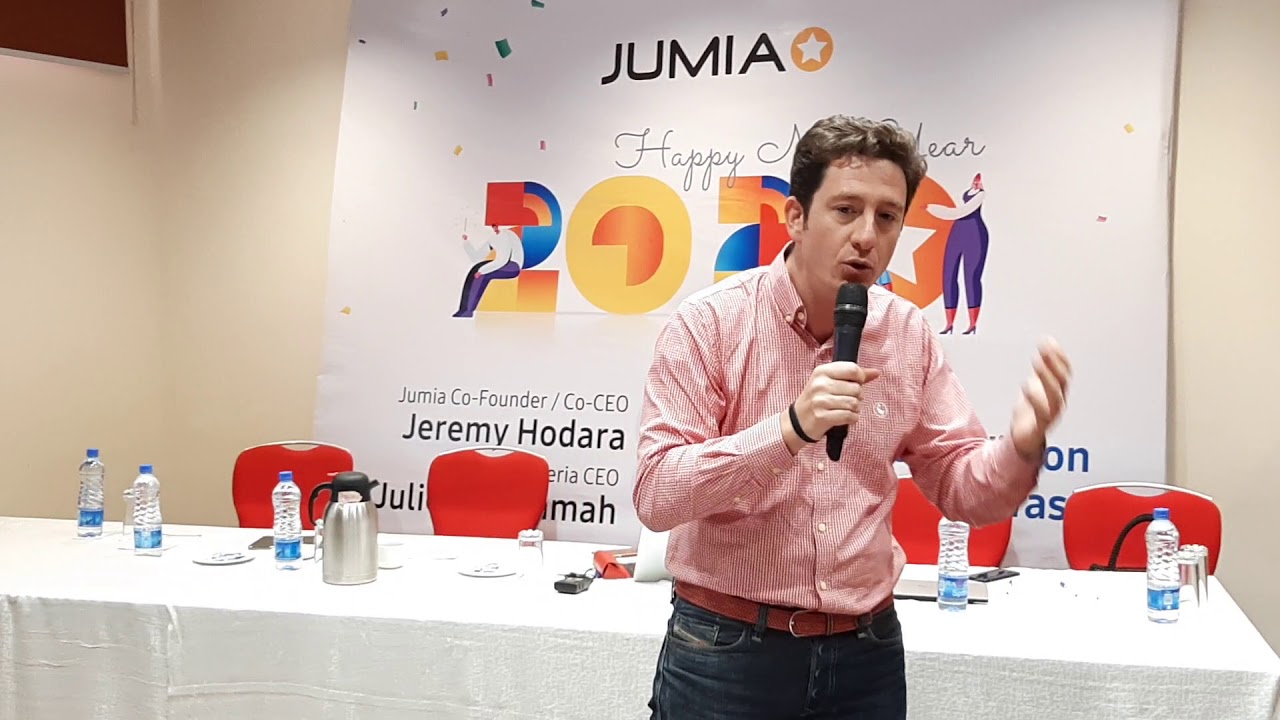
The unfinished part of the decade
Expansion and public recognition did not complete the commercial argument. When Jumia announced Hodara and Poignonnec’s departure on 7 November 2022, the company put profitability at the centre of the leadership change. Francis Dufay became acting CEO. The announced priorities included reducing operating losses, tightening costs and concentrating resources on the core e-commerce business. Those priorities are part of the founders’ record too.
A fair account can hold the construction and the unfinished economics together. The company had built services used by consumers and sellers across multiple countries. It also needed a more efficient organisation and a clearer route to profit. The listing belongs in Hodara’s biography; so does the fact that he left before that central operating question had been resolved.
His farewell turned toward the people around the business. He thanked staff, sellers, partners and investors, and credited the partnership with Poignonnec. He singled out a company value about leadership without a formal title. In a message announcing the end of his own title, that was a pointed choice. He also celebrated former employees who were carrying entrepreneurial experience into other ventures.
There are smaller glimpses of his work alongside the formal announcements. In 2022, Jumia Kenya described a visit during which he sought feedback and suggestions from different teams. It is a modest episode, but a useful one. A co-founder’s view of a company can depend heavily on who gets time to explain what is happening inside it.
“You don’t need a title to be a leader”
A Jumia value highlighted by Hodara in his 2022 farewell
A garden, a classroom and the freedom to choose
After leaving Jumia, Hodara began describing a working life with several commitments. In a 2023 interview, he discussed supporting entrepreneurs, advising investment firms and serving on boards. His criteria for a business remained practical: a problem customers would pay to solve, room to grow and a team capable of doing the work. He cautioned against founding a company solely in order to sell it.
Then came EasyGarden. In a February 2024 post, he announced the landscaping and maintenance venture with his wife, Angela. The business would operate in the Middle East; its current website offers garden, pool and landscape care in Dubai. After years of being associated with a continent-spanning marketplace, he was introducing a family business concerned with the space outside people’s homes.
He framed the decision around “freedom”. His explanation was about choosing where to be and pursuing several interests, rather than following other people’s expectations. He also described coaching entrepreneurs working on AI in Africa and continuing as a senior adviser to McKinsey. The movement was familiar, even as the work changed. Gardening had joined a career that had already found room for Malaysia, Mumbai, New York and Nigeria.
By October 2026, Stern at NYU Abu Dhabi lists him as an adjunct associate professor of management and organizations. His faculty biography also records board and investment committee work and his McKinsey advisory role. The classroom offers another setting for a career spent connecting business ideas with the difficulties of operating them. A parcel that needs an address makes a rather useful companion to a slide about growth.
The garden venture gives his story an unexpectedly domestic final image. It would be easy to treat it as a joke about a founder putting down roots. Hodara’s own explanation is more interesting: he wanted room to choose his work. Having spent years helping build systems for other people’s transactions, he was making a decision about the shape of his own days. There is room in that decision for both a board meeting and a garden.
Continue the conversation
- EasyGarden - garden, pool and landscape care
- Jeremy Hodara on LinkedIn
- Faculty biography at Stern at NYU Abu Dhabi
- 2023 conversation about founders and investment
- Jumia’s November 2022 leadership announcement
- 2019 interview on trust and cash on delivery
- Watch: CNBC’s 2019 report on Jumia (historical context)
- Watch: Hodara interviewed in French, 2016