The mortgage closes when the drama is supposed to be over. A buyer has found the place, negotiated the price and imagined the furniture. Then comes the machinery: disclosures, signatures, compliance checks, data validation, notarization and the custody of electronic records. The emotional story is obvious. The technical story is mostly invisible. Jennifer Stanley works in the narrow passage between them.
As chief marketing officer of DocMagic, the Torrance, California company whose software sits inside digital lending workflows, Stanley has to explain a system that performs best when nobody notices the system at all. A document arrives correctly. A signature lands where it should. A rule is checked before it becomes a problem. The product is partly software and partly reassurance, and reassurance is a difficult thing to put in a launch plan.
Her route to this work did not begin with loan files. It began with talent, famous brands and the entertainment business. Seen from a distance, the move from Hollywood to mortgage technology looks like a sharp turn. Seen through Stanley's particular craft, it is a continuation. Both worlds run on attention, trust and the ability to make a complicated collaboration feel coherent.
An apprenticeship in attention
Stanley began at the William Morris Agency, working in New York and Los Angeles. A talent agency is an education in compressed narratives. A person, project or possibility must become vivid before a crowded room loses interest. She later earned an MBA from Stanford Graduate School of Business, after a B.S. in Commerce from the University of Virginia, and used the degree to move her career more deliberately toward marketing.
At Creative Artists Agency, she worked with clients including Coca-Cola and Harley-Davidson. They sell very different products, but both have spent decades turning preference into identity. The experience ignited Stanley's interest in strong brand marketing. A fizzy drink and a motorcycle can each become a badge of belonging. Features matter, yet the lasting relationship lives somewhere less tidy than a specification sheet.
That lesson traveled. Stanley held marketing leadership roles at Warner Bros. Entertainment, where colleagues remembered both her digital instincts and her ability to motivate a team. She went on to become senior vice president of marketing and communications at Vubiquity, an entertainment-technology company. Later, at the Annenberg Foundation, the subject changed again: communication served a philanthropic institution rather than a studio or commercial brand.
A career carried by one transferable craft
William Morris + CAA
Warner Bros.
Vubiquity
Annenberg Foundation
DocMagic
There were entrepreneurial chapters, too. Stanley founded BrandPop, a Los Angeles consulting company, and worked as a fractional CMO for Apex Social Group. She also became a consultant with Gatehouse Admissions, helping MBA applicants present the clearest account of where they have been and where they mean to go. It is personal positioning with unusually high stakes, and a neat counterpart to corporate brand work: fewer campaign assets, more consequence per sentence.
The mortgage file meets the brand brief
Stanley arrived at DocMagic in 2021. The company develops the infrastructure around document generation, electronic signatures, automated compliance, eClosings and electronic vaults. Its customers need accuracy and interoperability; its marketing must give technical buyers enough substance without burying them in the product diagram.
She began modernizing the marketing function, building a data-driven team and tying its work more closely to business outcomes. The assignment extended beyond campaigns. It included sharper positioning, a broader digital footprint, a refreshed brand identity and go-to-market plans for an expanding digital mortgage portfolio. She also became an adviser to the executive team, where marketing could shape a decision before it had to explain one.
Her mortgage loan originator and real-estate salesperson licenses matter here. A marketer can learn the vocabulary of an industry from a product sheet. Licensing asks for more: rules, responsibilities and the sequence in which a real transaction moves. For Stanley, that domain knowledge closes the distance between the message and the people who must trust it.
The sentence is brief, but its grammar is revealing. “We've built” gives the achievement to the group. “What's ahead” keeps the attention on the next piece of work. Stanley's leadership has been described in similarly practical terms by people around her: collaborative, curious, accountable, attentive to detail and willing to give team members ownership. The recurring picture is not of marketing as performance. It is marketing as an operating discipline.
A loyalty lesson in an unlikely room
The word “loyalty” sounds natural beside Harley-Davidson and slightly peculiar beside compliance software. That is precisely why Stanley's career makes an interesting case. Consumer marketing taught her to notice attachment. B2B work taught her that attachment cannot float free of utility. In mortgage technology, the brand promise must survive an audit trail.
A lender does not adopt an eClosing platform for a slogan. The decision involves integrations, legal requirements, staff habits, customer experience and operational risk. Yet the choice is not emotionless. Confidence, frustration, relief and professional pride all enter the room. The disciplined B2B marketer does not pretend those feelings are absent. She gives them a factual foundation.
This helps explain why Stanley's breadth is useful rather than decorative. Talent agencies trained the quick story. Stanford supplied a strategic frame. Global consumer brands showed how identity gathers around a product. Warner Bros. added the coordination of a large entertainment business. Vubiquity joined content to technology. Annenberg placed communications in a civic and philanthropic setting. Consulting required entering a new organization, diagnosing the problem and earning influence without the comfort of tenure.
At DocMagic, those strands meet in an industry that is both intimate and procedural. A mortgage is a financial instrument, but it is also attached to a kitchen, a commute, a school district and a future imagined in rooms not yet occupied. The software is several steps removed from that picture. Marketing's job is to connect them honestly.
Recognition, then another launch
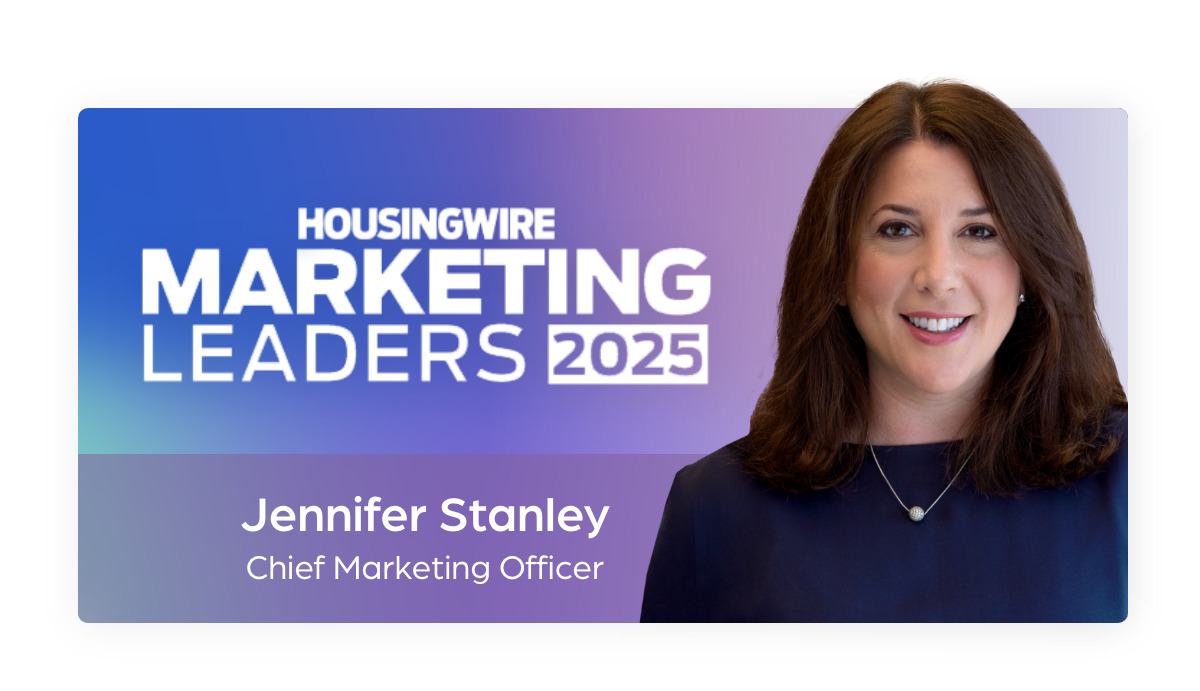
HousingWire named Stanley a 2025 Marketing Leader after four years of her work at DocMagic. The recognition highlighted the modernization of the marketing team, its closer alignment with measurable outcomes and the launch strategy surrounding a new group of products. It also noted her role in raising the company's presence at major industry events.
Awards can turn a working career into a still photograph. Stanley's own response returned quickly to motion. She spoke of tremendous change, pride in what the team had built and excitement about what came next. The company was preparing more launches. The lending environment was still shifting. The useful work remained verbs: refine, test, explain, align.
Her parallel work with MBA candidates makes the pattern even clearer. Whether the subject is an applicant or an eMortgage platform, positioning is not cosmetic. It is the selection and arrangement of truth. What belongs at the center? What can be left out? Which detail proves the larger claim? Stanley has spent a career moving those questions across industries.
The work also depends on restraint. Mortgage technology is crowded with terms that are precise inside the industry and opaque outside it. Replace every term with a breezy metaphor and the expertise disappears. Preserve every term and the reader disappears. Stanley's advantage is having lived on both sides of that tension. Her consumer-brand years reward memorability; her technical years demand fidelity. The message has to travel, but it must arrive with its meaning intact.
That balance reaches into team design. A data-driven marketing group can see which messages attract attention, which prospects move and where a launch loses momentum. Numbers make the work answerable. They do not make judgment unnecessary. Someone still decides what the company should stand for, how much complexity an audience needs and when a neat line has become too neat. Stanley's operating style joins measurement to taste, then places both in service of a commercial goal.
The colorful brands from her agency years offered obvious symbols. Mortgage technology offers fewer. Its drama appears in the avoided error, the compliant document and the closing completed with less friction. The marketer who can make that visible without exaggeration performs a kind of public service for the sales team, the customer and, indirectly, the person waiting for the keys.
Stanley has made that translation the center of her work. Her career is not a straight line from entertainment to fintech. It is a collection of increasingly demanding rooms in which attention must be earned and trust must be kept. Hollywood supplied the lighting. Mortgage technology supplied the fine print. She learned to work with both.