The silver dollar came in a jewelry box. It was an early campaign at Jeffrey Barnhart’s agency, aimed at chief financial officers who needed a reason to care about the lights above their heads. Energy efficiency could sound like an engineering problem. Barnhart’s team gave it the unmistakable weight of money.
A follow-up package contained a magician’s box that produced a dollar bill, along with a brochure explaining potential savings of a dollar per square foot in an office building. The idea was almost cheerfully literal: put the benefit in the buyer’s hand. An advertising agency had found a perfectly respectable business use for a magic trick.
Barnhart remembers the campaign bringing calls from around the country. It also supplies a useful introduction to the founder and CEO of CMA Results, the New Jersey marketing and association management business he started in 1987. His career keeps returning to the space between an interesting idea and somebody deciding it is useful enough to act on.
A building-sized calculation.
Silver dollar → magic box → a case for energy savings
The boy watching the advertisements
As a boy, Barnhart paid attention to television commercials and wondered how they were made. Watching Bewitched, he identified with Darrin Stevens, the advertising executive married to a witch. A sitcom offering supernatural powers had somehow recruited a future marketer through its office scenes. His interest was already unusually specific.
He graduated from Hopewell Valley Central High School in 1973 and went on to Rider University, where he studied journalism with a marketing minor. Rider identifies him as a member of its class of 1978. Writing and selling were close neighbors in his education, a useful arrangement for someone who would spend his career translating business propositions into stories.
Before CMA, he spent eight years at Philips Lighting. As a marketing executive, his responsibilities included bringing sales and marketing together through three company mergers. Lighting gave him a technical subject to learn; mergers added the problem of getting different groups to work toward a common purpose.
He also experienced agencies from the buyer’s chair. His complaint was practical: some wanted to sell services before understanding the business buying them. That experience became the premise for his own firm. CMA would function as an extension of a client’s marketing department, with strategy guiding the choice of services.
A business with two clocks
Starting the agency meant a less polished kind of integration. In Barnhart’s recollection, his wife and other family members sometimes answered the office phones. Philips became an early major campaign client. The founder had left the client side of the table, but brought his knowledge of the lighting business with him.
That familiarity helped CMA establish a foothold in electrical and lighting work. Another client, a card manufacturer seeking a new identity, opened a different door. Barnhart saw an industry whose manufacturers, personalizers, equipment suppliers and materials businesses needed a shared forum. He went beyond developing a client’s brand and helped create an organization around the sector.
The International Card Manufacturers Association dates its founding to 1990. Barnhart became its founder and executive director. The work connected an agency in New Jersey to an international manufacturing community, with conferences, publications and opportunities for people in the trade to compare experience.
Association management also gave CMA a second line of business with a different rhythm. Barnhart’s explanation is that marketing agencies feel downturns early and recover early, while association management feels the effects later. Putting the two together was his way of spreading exposure across the economic cycle.
It is a revealing answer to the question of how a creative business survives. Barnhart talks about the structure beneath the work: recurring responsibilities, complementary demand and a company that can keep investing as conditions change. The jewelry box attracted attention. The less photogenic business model helped keep the agency operating.
The founder gives up a few chairs
By 2015, CMA had brought in Christian Amato as chief operating officer. Barnhart described the move as a way to put daily operations in the hands of a strong operating executive while freeing himself to concentrate on the company’s direction and strategy. Amato later became president.
For a founder, that division requires more than a revised organization chart. Barnhart has written about the difficulty of stepping back from a company after doing so many of its jobs yourself. His proposed exercise is to imagine removing yourself from the organization, then examine the functions it actually needs.
At CMA, the leadership team used an accountability chart drawn from Gino Wickman’s book Traction. They looked at the basic functions of the company and who owned each one. The exercise asked whether responsibilities were clear and whether people were working in roles that suited their abilities.
Barnhart describes himself as someone drawn to the larger picture. Pairing that inclination with an operator’s attention to detail was a deliberate management choice. It gave the company a way to distinguish responsibility for its destination from responsibility for the daily work of getting there.
His writing about business metrics follows the same practical instinct. He recommends a short set of figures reviewed weekly, with someone accountable for each. The purpose is to catch a problem while there is still time to respond. A founder’s enthusiasm may start the meeting; payroll, proposals and sales figures should get a turn to speak.
“People do business with people they like and trust.”Jeffrey Barnhart, 2017
A return to the school assembly
In October 2016, Barnhart returned to Hopewell Valley as an inductee in its Distinguished Graduates Hall of Fame. A photograph places him between two high school seniors before his introduction to the student body. The former pupil was now the visiting example, an odd promotion that adulthood occasionally arranges.
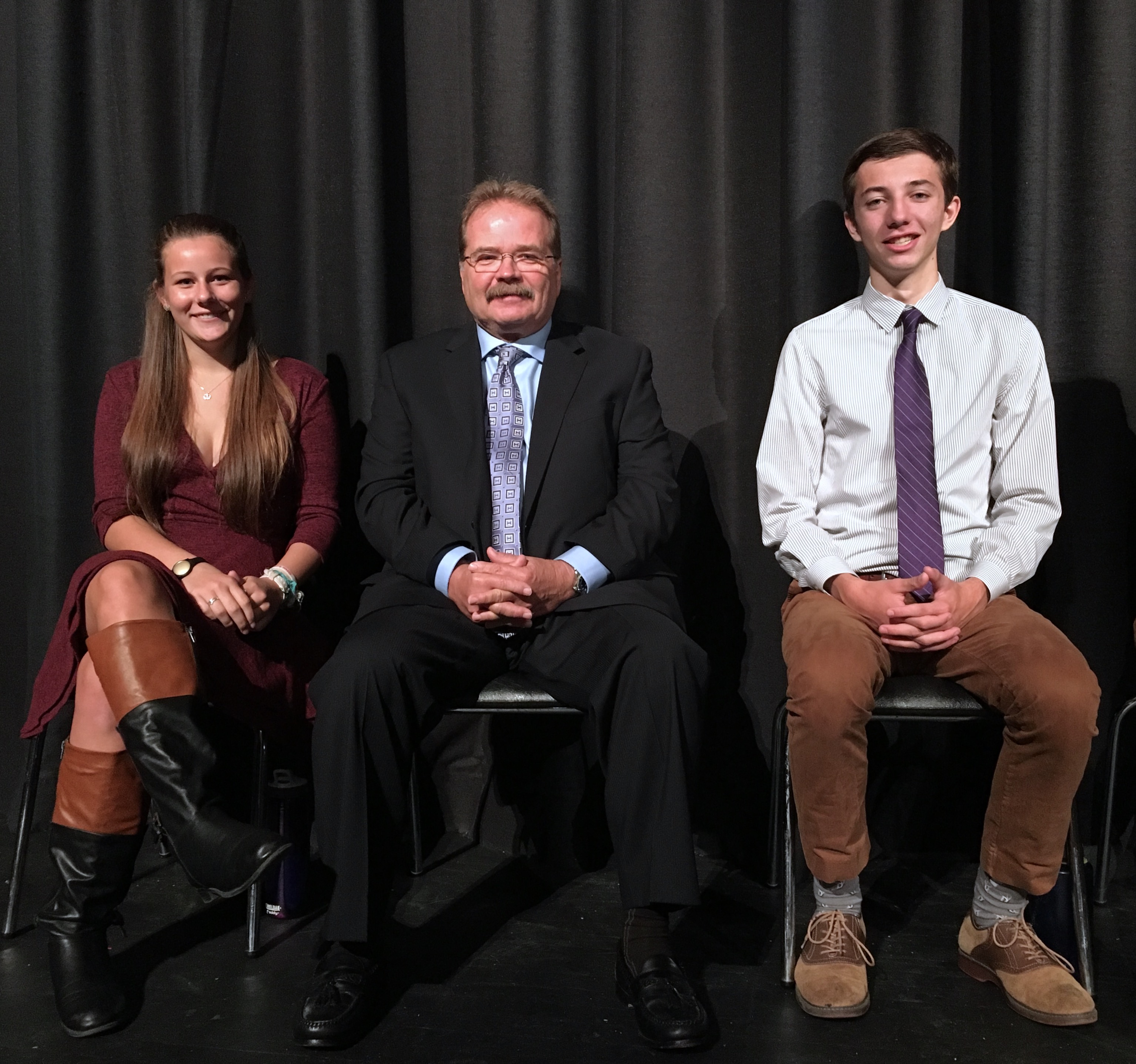
That December, Rider announced that he would receive its Leadership Legacy Award. At the time, CMA had 32 employees. More than ten people had worked there for over a decade, and some for more than twenty years. Those dated figures offer a more personal measure of the business than a list of campaigns.
The firm used individual quarterly goals, performance reviews and employee recognition, while giving staff a way to discuss the direction of their careers. Its internship program brought students into the business to work alongside professionals. Developing people had become part of the operation, with processes attached.
Barnhart’s advice to his old school included a willingness to make mistakes and learn from them. His own career had progressed from writing and marketing to owning a business, building an association and sharing operating responsibility. Each move enlarged the group of people whose work he needed to understand.
“I love Mondays.”Jeffrey Barnhart, on his 2016 school recognition
The dogs have already joined the meeting
There is another account of life at CMA, and it has more fur. Barnhart says the firm has welcomed dogs since its founding. In a 2016 description of the office, he wrote about colleagues greeting both an employee and the dog arriving beside him, with pets turning up near desks and in conference rooms.
One office dog, Jet, had a habit of taking other dogs’ toys. Returning the stolen property sent its owner around the workplace, starting conversations with colleagues. It is an unusually modest example of internal communications: an agency whose business includes bringing people together also had a small, unauthorized toy-distribution service.
Barnhart’s own three dogs appeared with him in an office photograph. The policy depended on employees judging whether their animals would fit in. The atmosphere matters because it makes his preference for an approachable workplace concrete. Summer barbecues and team activities belonged to the same everyday effort.

Away from the office, Barnhart is a boater and fisherman with a U.S. Coast Guard 100 Ton Master Captain’s License. His interests take him to waters off New Jersey and Florida, from the Atlantic to Charlotte Harbor and the Gulf of Mexico. His personal website lists fishing clubs in both states. There is an actual captain behind the occasional business talk about setting a course.
Different tools, a familiar question
The agency’s methods have changed considerably since those mailed boxes. CMA brought social media marketing in-house in 2012, moved further into digital public relations in 2014 and established an in-house content marketing team in 2018. A website-company acquisition in 2019 expanded its capabilities again. Barnhart has described those decisions as investments in what clients would need next.
The changes also altered the founder’s public role. He has written about CEOs participating on social platforms, sharing company work and adding their own perspective. His suggestion is manageable: learn one platform, establish a routine and respond to people before adding another. It is advice from someone who has watched the available channels multiply.
In June 2024, CMA introduced new branding and a redesigned website. Its announcement described expanded services and a larger team of specialists. Barnhart remained founder and CEO, with Amato as president. A business built to advise other organizations about their presentation was taking a turn at revising its own.
Meanwhile, the association he helped establish reached its thirty-fifth anniversary in 2025. That May, Barnhart announced ICMA’s Élan Award winners at its Card Manufacturing and Personalization EXPO in Orlando. The program received more than 130 entries from around the world. Decades after spotting a gap between companies, he was still helping give that industry a place to gather.
The silver-dollar campaign is memorable because its logic was so easy to grasp. A coin made an abstract saving concrete; the next package connected the small object to an office building’s larger bill. Across Barnhart’s career, the work has grown to include staff, associations and digital services, each with its own practical demands. The question at the receiving end remains wonderfully plain: what will this help me do?