Tom Doll’s first car was a 1964 Chevrolet Impala SS. He loved it. Eventually, its appetite for oil spoiled the relationship. Years later, when he was running Subaru’s American business, his household drove an Outback and a Legacy. Asked about driving anything else, he supplied a suitably grave verdict: “That would be heresy.” Even an accountant may have a romantic past.
The Impala makes a useful opening to Doll’s story because it puts the customer before the executive. Long before a company could package affection into a campaign, a driver could feel it for a machine that was becoming a nuisance. Cars collect memories as efficiently as they collect repair bills. Doll helped make that familiar attachment the organizing idea of a business.
He spent almost 42 years at Subaru of America, joining in 1982 and officially retiring in January 2024. He became president in 2013 and CEO in 2018. Those dates matter: the transformation associated with him was underway well before he occupied the largest chair. His influence accumulated through finance, operations, marketing, and relationships with the independent businesses selling the cars.
An education in how things actually work
Doll studied accounting at Villanova University and earned an MBA at Drexel. Before Subaru, he worked at Arthur Young. His entry into the car business came with an assignment unlikely to attract a film producer: documenting operating procedures. It gave him a view across the company. To write down how an organization functions, someone has to ask what everyone does.
There is a particular advantage to arriving through that door. A procedure connects departments that an organization chart keeps neatly apart. Money must move, cars must arrive, retailers must be paid attention to. Doll’s early work offered an education in these connections. The future head of the business began by learning the machinery behind the showroom.
He moved through treasury, accounting, and strategic planning, eventually holding the chief financial officer and chief operating officer jobs together. That pairing helps explain the apparent oddity of his later reputation. Subaru’s advocate for love had spent years dealing in matters that demand precision. A campaign could be emotional; the business supporting it still needed sensible prices and working arithmetic.
One consequential argument concerned what customers should pay. Subaru’s all-wheel-drive technology had encouraged ambitions for premium pricing. American executives pushed for a better fit with the market. Prices were adjusted beginning in 2007; the base price of the 2009 Forester came down by $1,200. Doll had argued for the change. Affection was easier to act on when the invoice made sense.
The word the customers supplied
The marketing problem was different. Subaru had buyers who understood its appeal, particularly in places where all-wheel drive earned its keep. It also needed people elsewhere to consider the brand. Technical distinctions alone were a difficult way to introduce a small car company in a crowded market. A specification could explain a feature without explaining why an owner cared.
Doll’s account of the breakthrough begins with listening to existing owners. They kept saying they loved their Subarus. Reliability, usefulness, durability, and the everyday experience of ownership sat beneath the emotion. The company did not need to invent a more elaborate vocabulary. Its customers had already handed over a word that could travel beyond a snowy driveway.
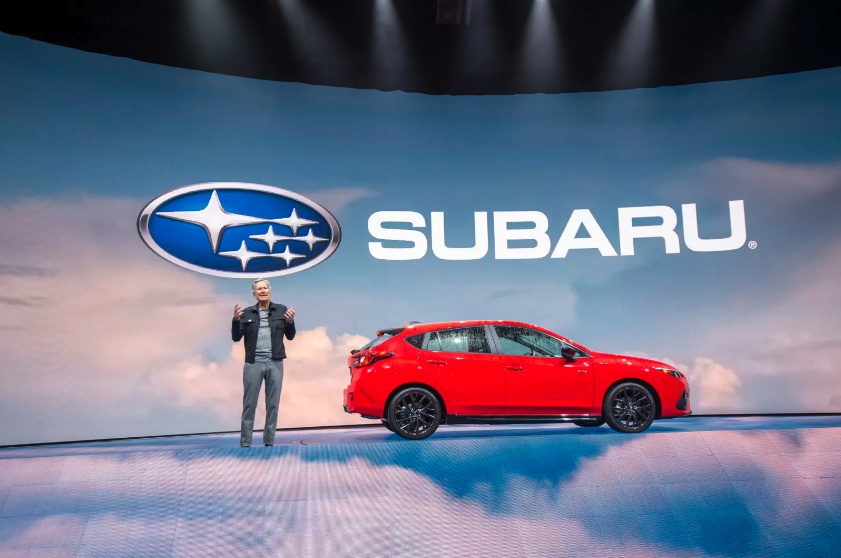
In late 2006, Subaru hired Minneapolis agency Carmichael Lynch. The familiar line about what makes a Subaru a Subaru acquired “Love.” Advertising made room for children, dogs, and the lives around the vehicles. The choice of Animal Planet’s Puppy Bowl as a sponsorship venue was particularly apt. Some advertisers pursue an audience. Subaru could plausibly arrive with treats.
The dogs became more than an occasional visual joke. The Barkleys, a canine family introduced in 2013, gave the brand a small domestic universe of its own. There was humor in the premise, but also discipline. These ads made the vehicle recognizable as part of family life. A buyer could see a version of home before worrying about a trim level.
A feeling with a line in the budget
In 2008, Subaru launched Share the Love. Doll later explained the mechanism in unusually concrete terms: the company took $250 per vehicle from its incentive budget and directed it toward charities that customers could choose. A portion of the money normally associated with moving a car off a lot could now do something beyond that transaction.
That detail gives the idea its weight. “Love” is an inexpensive word to print. Allocating money creates a decision someone has to account for. It also changes the conversation at the point of purchase. The buyer participates, the retailer explains the choice, and the company pays. Three parties have a small piece of a shared undertaking.
A description of the original model, as recalled by Doll in 2024.
It would be too convenient to credit a charitable program with every extra sale. Subaru’s product mix, pricing, and expanding supply all belong in the explanation. The interesting part is how the giving fit the rest of the proposition. Owners already associated their cars with the things and people they cared about. The program gave that association an action.
The annual event also offered repetition. A single donation can disappear into a press release. A recurring event requires retailers and employees to do the work again. Over time, a customer-facing promise becomes a routine with deadlines and responsibilities. For someone who started by documenting procedures, that may have been a familiar route from an attractive idea to an operating habit.
“At its core, our business is about building trusting relationships”
Tom Doll, on receiving the 2024 Legacy of Disruption award
The showroom has its own vote
There was another constituency to persuade. Subaru of America depended on independent retailers, businesses with their own investments and judgments about what worked. Doll’s approach emphasized partnership. An executive could describe the brand from headquarters; a retailer had to make that description credible when a customer walked through the door, or returned for service.
One dealer, George Glassman, was arguing that Doll deserved the CEO job before the appointment arrived. That is a revealing form of endorsement. Manufacturers and retailers do not automatically agree about their respective interests. Doll’s reputation rested partly on treating the people at the selling end of the business as partners in the same enterprise.
His own advice about selling was wonderfully restrained: “You have to let the customer buy.” He described listening to how someone planned to use a car, then finding a vehicle that fit. A showroom is an expensive place to discover that nobody has asked a useful question. Doll’s prescription left room for the customer to finish a sentence.
The sales figures supplied a separate verdict. Subaru sold 187,699 vehicles in the United States in 2008, edging upward in a bruising year for the industry. In 2019, annual sales reached 700,117. Those endpoints are about 3.7 times apart. They describe a company changing scale over eleven years, with many people and decisions involved.
Camden makes the promise local
Subaru’s move from Cherry Hill to Camden in 2018 brought the community argument close to the office. The new headquarters was backed by roughly $118 million in New Jersey tax incentives. Supporters expected investment and jobs to help the city; critics questioned the generosity of public subsidies. A company talking about giving back had entered a debate about what it received.
Doll acknowledged that incentives mattered to the location decision. He also argued that Subaru wanted a role in Camden’s development. The tension deserves to remain in the picture. A corporate address can carry civic ambitions and financial advantages at the same time. Good intentions do not settle the question of what a city gains.
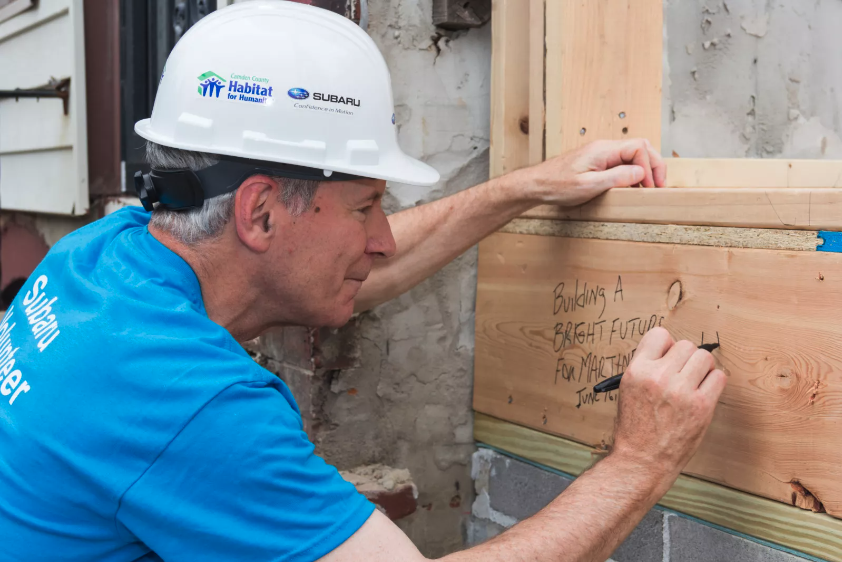
One practical connection was technician training. Before the headquarters opened, Subaru partnered with local organization Respond and supplied equipment for an automotive training garage. Students could enter Subaru University training aimed at dealership technician work. That gave the relationship a specific route from classroom to employment, beyond the hope that nearby office workers might buy lunch.
What survives the corner office
Doll’s recognition came in stages. He received Motor Trend’s 2016 Person of the Year award, announced in November 2015. In March 2024, after his retirement, Newsweek honored him with its Legacy of Disruption award. The first recognized an executive while Subaru was climbing. The later award looked back at what had changed during his long tenure.
He stepped away from day-to-day management in April 2023 and served as a corporate adviser before retiring the following January. His description of the workplace he wanted was plain: “opposing viewpoints and alternative ideas are welcome.” It is an ambition that asks something of a boss. Listening is comfortable until the person speaking disagrees with you.
Retirement has left him with views about the business. At the 2025 New York Automotive Forum, appearing with Subaru of New England’s Ernie Boch Jr., Doll discussed leadership continuity, distributor relationships, tariffs, and affordability. These were recognizable concerns for an executive whose career joined financial discipline to customer loyalty. A beloved brand still has to fit a household budget.
There is a pleasing consistency here. The young accountant learned how the company worked. The senior executive listened to what owners said. The sales philosophy asked retailers to hear how customers lived. Across those episodes, attention preceded persuasion. Love supplied the memorable language. Doll’s contribution was helping give it a price, a process, and people responsible for carrying it out.