In 1985, Linda Rosanio-Talamo sat down at her kitchen table with a couple of friends and a credit card. This is a familiar sort of creation story because entrepreneurs like kitchens. Kitchens make risk sound domestic. A credit card sounds almost quaint. The next scene was an office in Cherry Hill with three months of free rent and three interns. One of those interns would stay long enough to become chief innovation officer and a shareholder.
Thirty years later, the company that became Star Group had grown into one of the largest independent agencies in its region. It handled brands in healthcare, gaming, finance, education, food and public service. Contemporary profiles called it the largest women-owned marketing communications firm in the country. In 2014, after combining its healthcare unit with VoxMedica and Calcium NYC, the group said it had nearly 300 people in six offices.
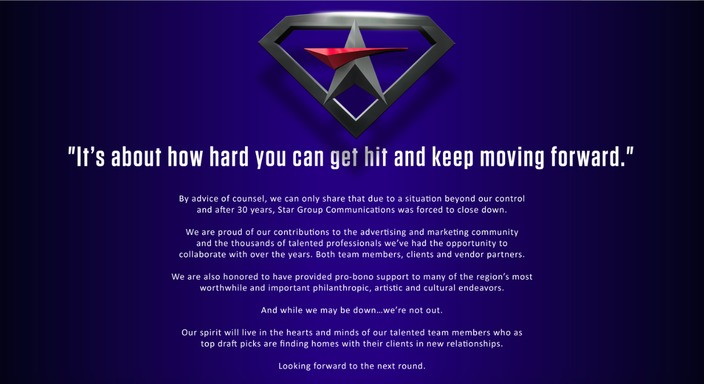
Then, on July 1, 2015, it stopped.
The assignment kept getting bigger
Most agencies sell an output. A commercial. A website. A launch. Star sold involvement. Rosanio called it “incubation,” which is a revealing choice. Incubators do not deliver a clever object and leave. They hover, warm, protect and wait for something to hatch.
For WishUponAHero.com, a South Jersey peer-to-peer charity, Star's work reportedly stretched across web development, business planning, public relations, strategic partnerships and help attracting growth capital. The agency even explored a television series based on wishes fulfilled through the platform. This was not account service in the conventional sense. It was closer to borrowing the client's problem.
“We get more involved and actually help companies get from one stage to another.”Linda Rosanio, describing the agency's approach
The firm gave the method a name: Synegration. It sounds like a word invented during a long meeting with too much coffee, but the operating idea was sound. Advertising, public relations, digital, social, CRM, broadcast production and strategy were not separate products to the customer. They were separate ways of attacking the same obstacle.
Synegration: one problem, many instruments
That breadth put Star between two markets. It could compete with full-service regional agencies such as Sawtooth and Sigma, while its specialist units chased healthcare and hospitality work that might otherwise go to a niche shop. Clients included Comcast, Teva Pharmaceuticals, Wharton, Tropicana Entertainment, Fox Rothschild and Delaware Lottery. A public Delaware contract shows the practical menu: advertising design, media placement, PR, promotion, web development, internet marketing, consultation and measurement.
The business model was the usual agency mixture of fees, production, media-related work and consulting, with one less-usual flourish: an equity group that sought positions in selected ventures and branded products. Star wanted the economics of helping to build the thing, not only announcing it.
The number that looked larger than it was
In a 2011 New Jersey ranking, Star sat atop the agency list with $189 million in 2009 “capitalized billings.” This sounds like revenue. It is not. Agency billings can include money passed through to media and vendors, so a big billings number may coexist with far less income available for payroll, rent and debt. The distinction is dry right up until it becomes decisive.
Service companies have an odd cash cycle. They pay people every two weeks. Clients may pay in 30, 60 or 90 days. Media can demand its money on another schedule entirely. Growth makes the gap bigger before it makes the business richer. A broad agency can be strategically integrated and financially fragmented at the same time.
The later court record describes a $10 million combined credit line. The Talamos said they put roughly $3 million of personal savings into Star in 2013 and 2014. PNC later sought more than $8.7 million from the company or its guarantors. These are litigation facts and allegations, not a complete audited account of the agency's finances.
The turning point was not one bad ad. It was a financing choice. In counterclaims summarized by a federal judge, the Talamos alleged that Star considered an equity infusion in 2010 but continued to fuel growth with comparatively inexpensive bank debt. The bank disputed their broader theory of responsibility. What is undisputed in the public chronology is that debt remained, notes matured, cash tightened and the clock accelerated.
What failed first was time
By late 2014, Star had signed a term sheet for a recapitalization intended to retire the bank debt, reduce accounts payable and leave money for growth. The transaction was expected to close in early 2015. It did not. PNC moved the account to its workout group. In May, the bank sent a default notice. Another plan emerged: Allied Financial Group would buy the debt at a discount. On June 23, Allied withdrew.
The last 220 days
The next day, according to the Talamos' allegations, PNC sent letters to Star clients asserting rights to receivables. One week after Allied withdrew, Star announced that it had to cease operations. More than 150 employees were affected. Three creditors began an involuntary Chapter 7 proceeding in August.
The owners later argued that the bank obstructed the rescues and caused Star's demise. PNC argued that Star had defaulted. In 2017, a federal judge allowed some personal-guarantee and related claims to proceed while dismissing others. That ruling was about which claims could continue, not a tidy verdict naming one villain. The bankruptcy case ultimately closed in 2021.
Copy the client model. Stress-test the plumbing.
Star's central insight has aged well. A customer does not care which department owns the problem. Put the strategist, publicist, designer, developer and media buyer at the same table. Give one person authority over the result. Let specialists argue early, before their separate work hardens into expensive contradictions.
The talent lesson is equally portable. Start with capable generalists. Let interns see consequential work. Promote the person who understands how the pieces connect. Rosanio's favorite part of the job was “the people.” Her least favorite part was also “the people.” It is funny because it is a more honest culture statement than most company handbooks.
Organize around the client's obstacle, combine disciplines early, and charge for the business thinking hidden inside creative work.
Healthy cash reserves, low client concentration, clear receivables control, and financing whose maturity matches the time needed to integrate acquisitions.
The model is less likely to work when every new capability adds fixed payroll, when a few accounts carry the firm, or when borrowed money stands in for patient equity. It also breaks when “full service” means a collection of departments rather than a genuinely shared operating system. Integration creates value only if someone integrates.
Star Group's history is tempting to read as a parable about ambition. That is too easy. Ambition built the firm. The narrower lesson is about matching the shape of the money to the shape of the promise. Star promised to stay with the whole problem. In the end, its own problem arrived all at once.