Long before Jeff Zotara was explaining zero-party data, predictive analytics and the mechanics of travel rewards, he had a job description that was both humbler and more vivid. He called himself the “puzzlemaster.” The puzzle was a school. The pieces were architects, engineers, builders, manufacturers, corporate sponsors, volunteers, parents, teachers and students. None could make the project happen alone. Zotara’s work was to persuade them to fit.
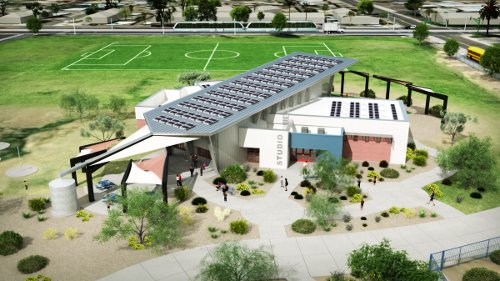
The phrase came from his time at Cause and Effect Evolutions, the Carlsbad consulting firm behind the Green Schoolhouse Series. The plan was unusually concrete: gather donated materials and professional labor, then build sustainable facilities on low-income public-school campuses. The buildings would work as classrooms during the day and community spaces after school. Solar power, efficient fixtures, adaptable rooms and abundant daylight were not decorative virtues. They were parts of a building designed to keep earning its footprint.
It is tempting to treat this as the worthy prologue before the “real” executive career. It is more useful to see it as the blueprint. Zotara’s later roles moved through connected devices, private-label travel software and loyalty marketing, yet his public comments keep returning to the same operating instinct: ask the people who will use a system what they need, then make the system flexible enough to answer.
A building that had to listen
In 2012, when the first Green Schoolhouse projects were breaking ground in Phoenix, Zotara described design meetings that included students, parents, teachers and other users. A school in Chicago, he argued, should not simply duplicate one in Phoenix. One community wanted a performing-arts center, so the plan changed. Rooms were intended to shift with the hour: a classroom in the morning, a training space at night, perhaps a gathering place when the walls opened.
There is a nice bit of occupational foreshadowing here. Today, Zotara talks about white-label travel platforms that cannot be rolled out identically to hundreds of organizations. Different brands serve different members. Their existing systems differ. Their travelers want different things. His vocabulary has migrated from movable walls to integrations and configurations, but the argument is almost architectural: build for the life that will happen inside.
“We’re the puzzlemaster.”Jeff Zotara, on coordinating the Green Schoolhouse Series
The project also reveals something about his preferred scale of work. He was not merely promoting an object. He was organizing a network. An industry biography from that period credited him with implementing and leading 516 community revitalization programs. In the schoolhouse initiative, his father, Marshall Zotara, worked alongside him. Their firm served as the connective tissue among organizations that each possessed a necessary resource and needed a reason to contribute it.
When the customer had four paws
The next public chapter makes an excellent left turn. Zotara became a senior marketing leader at Snaptracs, a former Qualcomm subsidiary whose Tagg product put GPS tracking on a pet’s collar. In 2013 and 2014, he discussed features that sound familiar to anyone who now glances at a smartwatch: location, activity over time, battery life, waterproofing and environmental alerts.
A connected-pet product creates an odd translation problem. The buyer is a person; the user cannot read the dashboard. Data must become reassurance or a useful action for the owner. Zotara emphasized patterns rather than a single excited greeting at the door. The meaningful signal came from activity accumulated across a day or compared over time.
That experience sits neatly between schoolhouse and loyalty platform. Each takes raw inputs and asks for a human consequence. A sensor reading must mean something. A room must accommodate somebody. A customer preference must improve an offer. Technology, in this view, is less a spectacle than a translator.
The thread, not the ladder
Turning points into anticipation
At SOR Technology, Zotara moved directly into travel software, leading digital transformation and the expansion of private-label platforms. At arrivia, where he is chief marketing officer, the canvas is broader. The company provides travel booking and loyalty infrastructure to other brands. Zotara’s remit spans growth, marketing technology, advertising, merchandising, creative work and member experience across business and consumer audiences.
Travel loyalty is an abstract product dressed in vivid clothes. Behind the beach photographs sit reward currencies, pricing rules, inventory feeds, booking engines and customer-service operations. The marketer’s task is to make the machinery disappear at the precise moment a member imagines going somewhere. Points must become possibility.
Zotara’s formulation is “combined value”: a real discount paired with an option relevant to the member. Price without relevance is noise. Relevance without value is flattery. Put them together and a rewards program can help a person take the trip, while giving the sponsoring brand a reason to be remembered.
“We want to know the customer and know where they want to go before they know.”Jeff Zotara, on marketing and member engagement
Read too quickly, that sentence sounds like the usual promise of corporate clairvoyance. The rest of his argument is more grounded. Listening is the bedrock, he says. Feedback comes from ordinary interactions with members. Preferences can be requested directly: What kind of cruise do you enjoy? Which destinations interest you? What is your budget? What sort of trip fits your family?
This is what marketers call zero-party data, an inelegant term for information a person intentionally provides. Zotara’s bargain is straightforward. Members offer preferences with the understanding that the company will use them for a more targeted experience. In return, they should see offers that fit and fewer messages that do not. Consent is not a footnote to personalization; it is the useful beginning.
The relevance bargain
The postcard beside the prediction engine
Zotara is bullish on automation, artificial intelligence and predictive analytics. He has described AI as a way to analyze large amounts of data, recognize patterns, tailor recommendations and streamline operations. He has also named the catch: the output is only as useful as the data behind it. High-quality, relevant information is a prerequisite, not something a clever model can wish into existence.
Yet one of the most tangible honors attached to his arrivia tenure belongs to paper. In 2022, the company’s iCruise team ran a direct-mail postcard campaign for people who had booked cruises before travel restrictions and had not returned. The campaign was designed to accelerate bookings and won a Gold MarCom Award in print media.
The postcard is revealing because it refuses a false choice between old channels and new technology. Good marketing is not a devotion to whichever tool had the liveliest conference booth. It is a decision about audience, timing, message and medium. Sometimes the answer is predictive. Sometimes it has postage.
That practicality also explains Zotara’s repeated emphasis on flexibility. He has called it a core behavior driver for travelers. Plans change, budgets differ and the same reward means different things to different households. On the company side, a Fortune 500 organization and a mid-sized business cannot be handed the identical platform with a fresh coat of paint. Choice has to live in the architecture.
An operator’s favorite verb
Arrivia’s biography of Zotara describes a leadership philosophy built around collaboration, measurable performance and alignment between brand strategy and scalable technology. The words are respectable, if a little boardroom-polished. His earlier anecdotes supply the texture. He jokes about preserving green frogs with virtual classroom dissections. He invites children and teachers into design meetings. He calls himself a puzzlemaster rather than an impresario.
Across the years, his favorite working verb appears to be “listen.” Listening gave a performing-arts school the right rooms. It helped a pet owner distinguish a greeting from a pattern. It lets a travel member trade volunteered preferences for a less generic experience. Listening, in each case, is not politeness at the edge of the work. It is an input to the design.
The tools will keep changing. Zotara is now pushing toward more automation, better segmentation and predictive experiences. The aspiration is to make a complicated global travel platform feel responsive in real time. The danger, as ever, is that a system becomes so impressed with its own intelligence that it forgets whom it serves.
His career offers a modest corrective. Begin with the lives inside the system. Let a school become what its community needs after three o’clock. Let a loyalty platform vary by client and member. Let data arrive with permission and leave behind something useful. Then fit the pieces together.