There is a decent chance arrivia has sold you a vacation while pretending to be somebody else. The booking portal may have worn the colors of your bank, airline, employer or membership club. The points balance looked familiar. The confirmation email carried a trusted logo. Behind the curtain, a company in Scottsdale was matching loyalty currency to cruise cabins, hotel rooms and rental cars, then handling the untidy business of payment, fulfillment and support.
That discretion is the product. Arrivia is a white-label travel company: it gives consumer-facing brands a ready-made travel business without making them negotiate with hundreds of suppliers, build a booking engine or staff a midnight call center. Its partners get the applause. Arrivia runs the stage machinery.
The company started in 1997 as International Cruise & Excursions, founded by John and Marcia Rowley. The original name was wonderfully literal and eventually inaccurate. Acquisitions of travel-platform developer SOR Technology and cruise retailer WMPH Vacations pushed the business beyond its old boundaries. In 2020, ICE became arrivia - a mash-up of “arrive” and “via.” The pin in its logo is the small visual joke: every trip ends somewhere, even if the company getting you there remains unseen.
The loyalty program is the storefront
The basic customer problem is easy to recognize. A bank has millions of cardholders and billions of points, but points are only exciting when they buy something memorable. An airline wants members to earn and redeem beyond flights. A telecom company wants one more reason not to cancel. None of them necessarily wants to become a full-stack online travel agency.
Arrivia plugs into that gap. It can launch a branded portal, connect through APIs and single sign-on, accept an existing rewards currency, or issue a new one. Members can earn, burn, or combine points with cash. The same system merchandises inventory, adjusts margins, runs personalized campaigns and sends complicated bookings to human agents. Publicly listed partners include American Express, USAA, T-Mobile, Marriott Vacation Club and Hilton Grand Vacations. Airline programs from Air India, AirAsia, Spirit and Singapore Airlines have used the company’s cruise capabilities.
One booking, four layers
The economics are flexible rather than posted on a pricing page. A deal can include implementation and service fees, subscription revenue, booking commissions and retained margin. Arrivia negotiates private rates for closed member groups; the partner decides how much savings to pass through and can keep part of the spread as ancillary revenue. The sales pitch is not simply “give your people discounts.” It is “make travel a reason to stay, spend and return.”
That puts arrivia in a curious market position. It is too operational to be ordinary loyalty software and too deliberately anonymous to behave like Expedia or Booking.com. The big online travel agencies compete for the traveler’s attention; arrivia helps a partner keep that attention inside its own ecosystem. The relevant unit is not merely a reservation. It is the additional card spend, renewed subscription or deeper member relationship surrounding the reservation. Travel becomes both merchandise and retention tool.
Its expertise is similarly hybrid. Engineers maintain commerce and integration layers. Revenue managers shape offers from supplier feeds. Marketers watch searches, clicks and redemptions for signals. Cruise specialists explain cabin categories that resist a neat drop-down menu. Multilingual agents handle the moment when a tidy digital itinerary collides with weather, cancellations or family logistics. A competitor can reproduce a booking screen much faster than it can reproduce all of those functions working together.
The company’s scale is real, though private-company figures require care. Travel Weekly recorded $931 million in 2018 sales and $700 million in 2021, while current revenue and valuation are not publicly disclosed. LinkedIn places the workforce between 1,001 and 5,000 people; arrivia reported 2,000 employees for 2021. Its network now reaches ten countries, which matters because a portal that sells globally must also settle currencies, localize offers and answer customers when Scottsdale is asleep.
A loyalty point is an IOU with better typography. Arrivia makes it spendable.
What failed first
Then travel stopped. In 2020, arrivia’s gross sales dropped roughly 81% to 85%. Its head count fell from about 2,100 to 1,572, and its real-estate footprint was cut in half. Cruise - the category where the company had its deepest expertise - was among the last forms of leisure travel to restart. The thing that failed first was not the software. It was demand.
Arrivia moved 14 offices to remote work, equipped home-based agents and spent months helping travelers rebook or preserve credits. It pointed demand toward domestic hotels and drive-to destinations while cruise remained parked. By early 2021, booking activity had recovered to roughly 75% of its pre-pandemic level. The rebound was uneven, but it exposed a durable advantage: software can show a fare; a service operation can untangle a ruined holiday.
The crisis also changed the investment argument. Rather than treating personalization and remote service as nice extras, arrivia accelerated work on data segmentation, marketing automation, points redemption and agent productivity. In 2021 it hired more than 1,000 people. One personalization program later produced a reported 30% to 50% lift in weekly marketing-attributable bookings, according to CMO Jeff Zotara. A traveler searching Miami got Miami offers; a family browsing Alaska cruises stopped receiving the digital equivalent of junk mail.
Why the cruise obsession still works
Arrivia now sells nearly every mainstream travel category, but cruise remains its useful oddity. Cruise shopping is messy: dozens of lines, cabin types, fare rules, packages and itineraries. That complexity favors specialists with supplier relationships and trained agents. It also produces larger, more emotional purchases than a routine hotel night. For a loyalty program, a seven-day voyage is a better memory machine than a toaster.
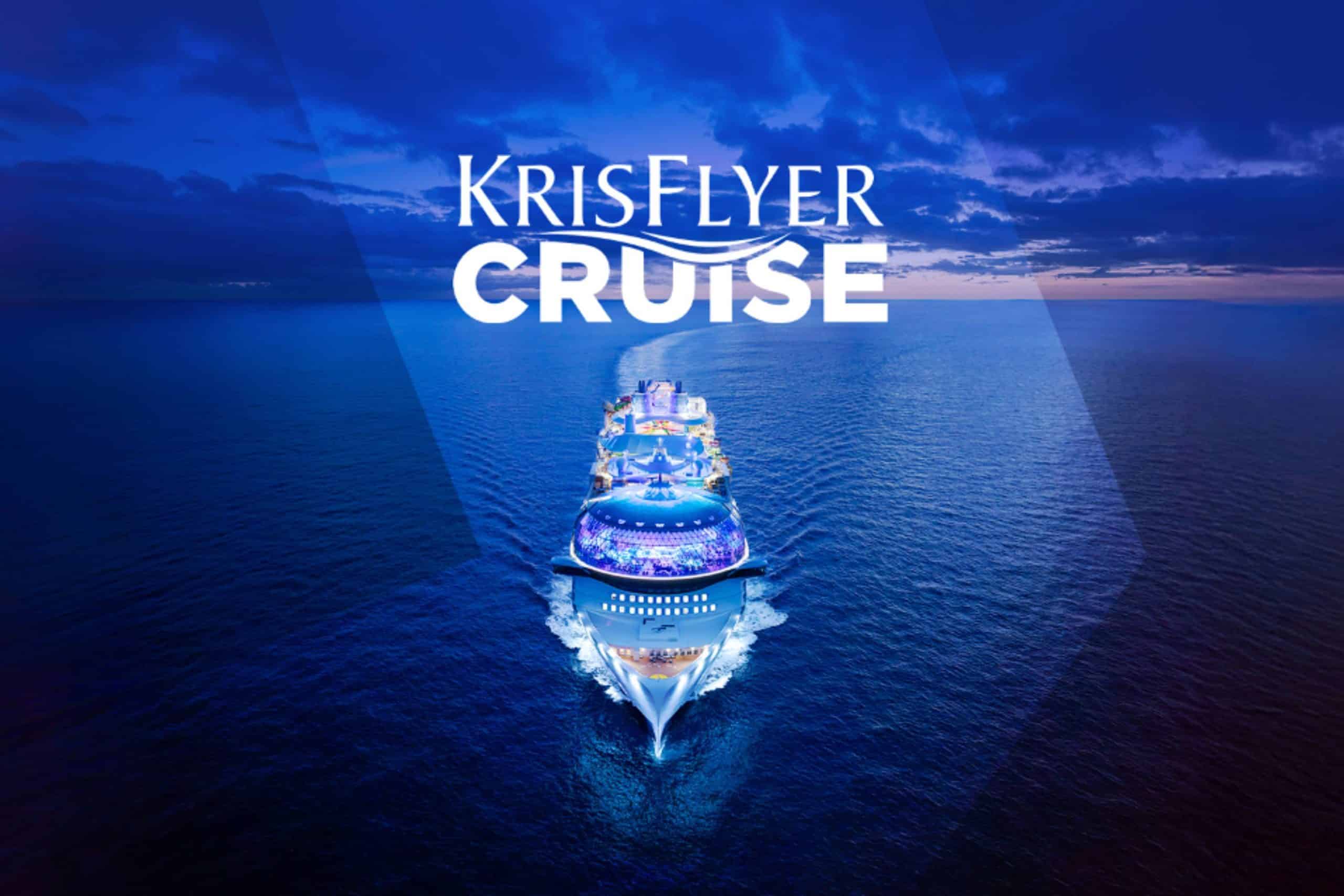
Recent deals make the strategy visible. Air India’s Flying Returns lets members earn points on cruises. Free Spirit Cruises gives Spirit Airlines members another place to engage. AirAsia Rewards launched a dedicated cruise platform. In June 2026, KrisFlyer expanded from earning to redemption, allowing miles plus cash across more than 30,000 itineraries. In January, arrivia acquired 40-year-old Bon Voyage Travel, adding advisor-led luxury expertise to its scalable engine.
The competitive field includes Switchfly, Ascenda, Odynn, loyalty-software vendors and large online travel agencies. A sufficiently determined enterprise can also build the whole stack itself. Arrivia’s distinction is the bundle: deep travel supply, flexible currency, branded commerce, marketing and 24/7 service in more than 20 languages. It does not ask a partner to choose between an API and a person who knows what happens when a cruise cabin changes.
What it cost
3i disclosed an investment of about $150 million in 2018 for a majority stake, alongside the founders and management. The 2025 transfer to an Oaktree-led consortium had no public price. Partner pricing is also private and varies by configuration, usage and service level.
The copyable playbook - and its limits
The lesson is not to launch a cruise agency. It is to find a complicated capability that many brands need but few want to own. Build the integrations once. Aggregate enough demand to negotiate better supply. Let customers keep their identity. Then add the operational work - payments, marketing, fraud controls and support - that makes the software credible. The least photogenic pieces often create the stickiest business.
There is another useful choice here: arrivia did not abandon its original wedge when it broadened. Cruise became the sharp end of a much larger platform. The company changed its name because acquisitions and customer demand had changed the truth, not because a branding workshop wanted fresher adjectives. That is a rebrand worth copying.
The model is not automatic. White-label travel works best when a partner has a sizable, engaged member base; enough booking volume to create meaningful economics; good data and permission to personalize; and a reason for travel to reinforce the core relationship. It is weaker for a small audience, a brand unwilling to educate members, or an organization that needs complete control over every supplier and service decision. Private pricing also depends on a genuinely closed group. Remove the exclusivity and the advantage thins out.
Arrivia’s next wager is an “intelligent operating system” for travel loyalty: predictive offers, agentic assistance, smarter search and automated support. That language deserves skepticism until the product proves it can handle missed connections and anxious travelers, not merely recommend Bali. But the company has the right raw material - millions of member interactions, global inventory and nearly three decades of awkward edge cases.
By 2026, arrivia had logged an 11th straight appearance on Travel Weekly’s Power List, while iCruise earned national recognition among online cruise platforms. Those badges matter less than the underlying trick. Arrivia has spent years making a huge travel operation feel like a feature inside somebody else’s loyalty program. Invisible, in this case, is not overlooked. It is the assignment.