Jeff Thorness’s route into payments included a small but persuasive piece of automotive research. He was a contract programmer. A former client suggested he examine the Automated Clearing House network, better known as ACH. Thorness remembered a difference between their cars: his was a Beetle; the client’s was a Porsche. Opportunity had arrived with rather better upholstery.
He followed the suggestion. In 1998, he started the business that became Forte Payment Systems. He began in Southern California and later moved the company to the Dallas area, weighing talent, transport and costs. By October 2014, the bootstrapped operation employed 115 people. Its founder still enjoyed coding, squeezing experimental projects into roughly one weekend a month. The chief executive’s chair had come with a small deprivation: less time to make things himself.
There is something pleasingly practical about this beginning. A programmer encountered a useful financial mechanism with room for better tools. He built around it. The business would eventually change its name, broaden its services and find a corporate buyer. Through those changes, Thorness kept returning to the same questions: what happens around a payment, and how much trouble can be removed?
The bill at the government counter
One early answer appeared in a place few people visit for entertainment: the motor vehicle office. In 2008, Thorness was president of ACH Direct. Its Federal Payments service addressed a mundane obstacle to accepting cards. Public agencies faced processing costs, and rules could constrain how those costs reached the payer. A usable system had to accommodate the economics as well as the terminal.
The service used a convenience fee, disclosed to customers choosing to pay by card, to cover processing. More than 500 terminals had been installed in one state’s motor vehicle offices after the August rollout. By November, Thorness reported approximately 30,000 monthly transactions, worth more than $2 million. These were the ordinary errands of public life, given another way to reach the cashier.
That example makes his work easier to picture than a catalogue of software features. Someone needs to pay. An agency needs to collect. Between them sit rules, equipment and costs. Each has a vote. A payment product earns its living by getting them to agree.
A company grows out of its name
ACH Direct became Forte in early 2013 as its services expanded beyond bank-account payments. The curly braces around the former logo carried a programming reference: a set of strengths. Thorness also associated them with the team. Even the punctuation had a job.
Recognition followed that September with Forte’s sixth consecutive appearance on the Inc. 5000. The ranking considered revenue growth from 2009 through 2012. For Thorness, the repeated inclusion affirmed the usefulness of the company’s products in a competitive industry. A recurring place on a growth list offered a different sort of evidence from a single busy month: revenue had grown across the measurement period.
The distinction matters for a company built around other people’s transactions. Payment volume passes through a processor; revenue belongs to the business. Neither figure should be allowed to dress up as the other. Forte’s expanding activity was substantial, but the business still had to turn the work of moving money into a durable operation.
Many doors, one customer
By April 2014, Forte reported serving more than 27,000 merchants and processing over $16 billion in web, retail and mobile payments during 2013. Thorness was announced as a keynote speaker at the CNP Expo, joining a programme that also included security journalist Brian Krebs and entrepreneurs Sarah McIlroy and Greg Selkoe. His subject was the connection between physical and digital commerce.
The premise was straightforward. A shop, a website and a mobile screen all served people who could move between them. Treating each location as an isolated business created unnecessary seams. The conference invitation put Thorness in front of merchants and service providers grappling with those seams, carrying experience from the systems behind the sale.
In a June digital discussion with Karen Webster, he demonstrated how a customer identifier could connect purchases across channels. A person buying in a store could later be recognised online, even when using a different payment method. Tokenized information helped carry that continuity. The interesting part was the relationship between transactions: what the business remembered, and whether that memory remained useful when the customer changed doors.
For smaller retailers, he emphasised the role of vendors in synchronising information. A merchant could offer several ways to buy and still struggle to connect the resulting records. His discussion brought attention to that less visible work. A checkout button is a remarkably small object to ask to conceal so much administration.
Back among the developers
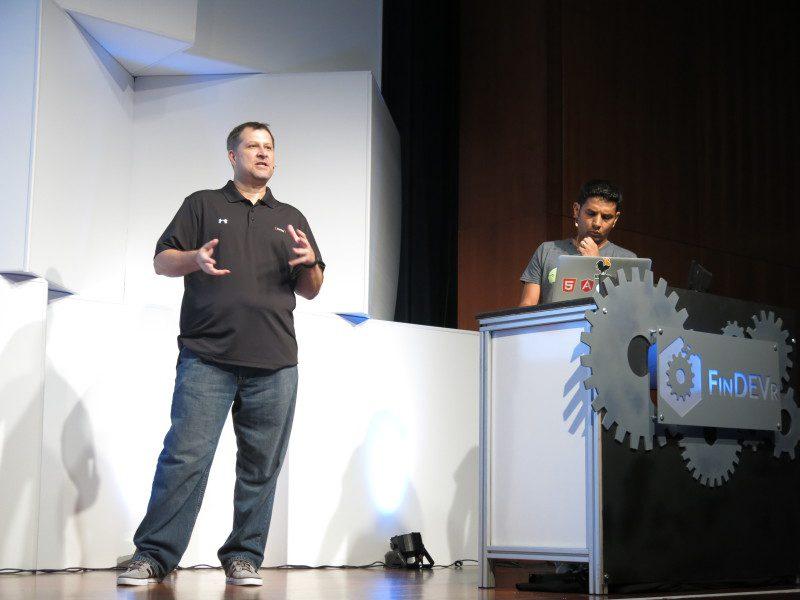
Thorness’s conference appearances retained the vocabulary of his original trade. At FinDEVr in 2014, Forte presented RESTful APIs for adding payment capabilities to applications. The proposition was developer to developer: give software builders access to payment services without requiring them to construct every underlying component themselves. Integration was part of the product, rather than an awkward appointment after the sale.
He returned in 2015 alongside developers Mithun Patel and Li Zhou. Forte’s presentation introduced a platform for building payment-enabled software. Its established customer sectors included government, property management and utilities. Those are settings where collecting money belongs inside a larger workflow, often repeated month after month. A developer building that workflow needs room to accommodate its particulars.
There was a companion argument about the network underneath. In a January 2015 conversation with Webster and NACHA president Jan Estep, Thorness described ACH as the mechanism that ultimately funded much payment activity, including merchant settlement after card transactions. New ways to initiate a payment could still depend on established bank-to-bank infrastructure. The fashionable front end and the familiar back end had business together.
That helps explain his sustained interest in ACH. A network need not be newly invented to offer room for new services. Better access, better information and easier integration can make an established mechanism useful to another business. The builder’s opportunity lies partly in the distance between what infrastructure can do and what a customer can conveniently accomplish with it.
The inconvenient details deserve a budget
Growth also placed demands on the systems supporting Forte itself. An Enghouse Interactive case study described its move towards cloud-based payment processing and contact-centre operations. Capacity needed to expand around peaks such as month-end bill payments. Security and availability mattered alongside the ease of adding payment options. Forte selected Amazon Web Services and Enghouse Interactive as partners.
The case is a useful corrective to the idea that a software company scales simply by acquiring more customers. More customers arrive with calendars. They call, pay and need assistance at inconveniently similar times. Flexible capacity and self-service tools addressed that pattern. Thorness’s business had to make its own infrastructure accommodate the very payment habits it helped merchants serve.
He could be blunt about industry preparation, too. Asked to assess the American EMV transition in 2015, he answered, “Performance Improvement Needed.” He pointed to insufficient merchant awareness and education, along with the difficulty of certification. New card technology required merchants to understand a liability change and establish a migration plan. A technical rollout also demanded explanation.
“Performance Improvement Needed.”
Jeff Thorness on the US EMV transition, 2015
By 2019, his comments on ACH drew another careful distinction: faster settlement did not eliminate the period in which a payment could be returned. He discussed account verification and the difficulty of obtaining immediate intelligence about bank accounts. Speed was useful, but a merchant also wanted confidence that a payment would hold. The interval between receiving money and trusting it could still command attention.
A buyer, and the work that carried on
On October 1, 2018, CSG acquired Forte. Its quarterly filing described a purchase of all the company’s equity for approximately $85 million, or roughly $80 million net of acquired cash, with potential future earn-out payments. Two decades separated the founding from the sale. The transaction gave the company a place inside a larger revenue-management and payments business.
When the agreement was announced, Thorness described the prospect of extending a unified payment experience through CSG’s reach. The buyer wanted Forte’s cloud-based capabilities and relationships with merchants, resellers and software vendors. The fit lay in connecting payment handling with a broader commercial system. An acquisition announcement can contain a great deal of polished language; the underlying attraction here was a working business with useful connections.
Thorness continued discussing the practicalities. In April 2020, identified as Forte’s president, he described government payment adoption and the business information that must accompany a transfer. Remittance data needed to arrive in a form that back-office systems could apply. He also stressed security and the challenge of reducing fraud as payments accelerated. The money’s journey and the information’s journey had to remain intelligible to each other.
Still a taste for the machinery
Away from work, Thorness described interests in motor racing, road circuits, football and games with friends. As a child, he had imagined Formula 1 cars and military aircraft. In 2016, he also spoke candidly about needing to become a better leader as the company grew. The progression asked him to spend more time choosing people and directing a business, while leaving some coding to others.
His public Wellfound profile supplies a compact description: “Proud Bootstrapper.” It is an economical calling card for a founder whose career developed through payment tools, merchant needs and the patient expansion of a business. The cars make an entertaining opening. The more revealing achievement is the work between them: finding an existing system, understanding its awkward parts, and building something people could use.